Bell Pepper Growing & Harvesting Guide
Bell Pepper (Capsicum annuum) is the crisp, colorful jewel of the vegetable bed. Renowned for its blocky, mild, and wonderfully sweet lobed fruits that contain zero capsaicin, this upright warm-season nightshade is a staple of home vegetable gardens.



How to Identify Bell Pepper
Bell Pepper (Capsicum annuum) is a highly valued edible crop globally. Recognizing its definitive vegetative and fruit/vegetable structures is key to successful companion growing and harvesting.
-
✔
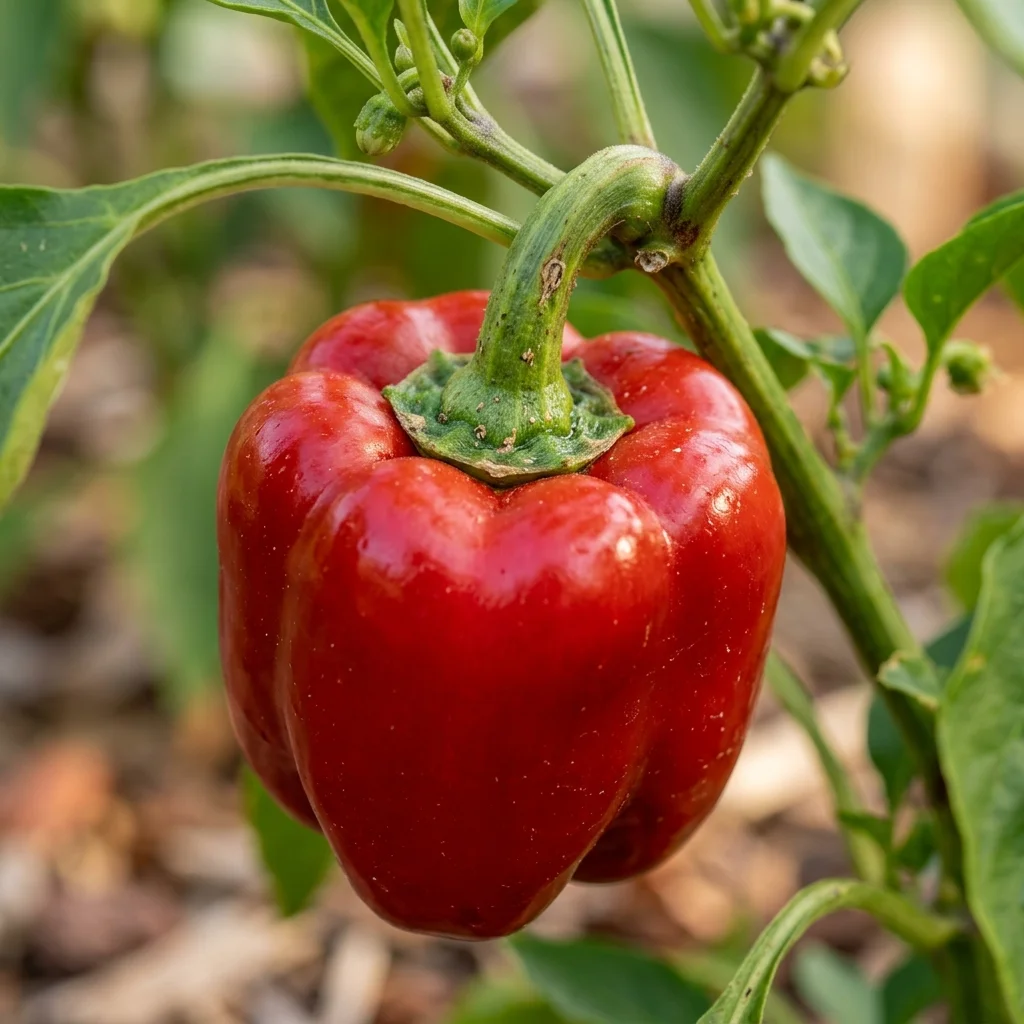
Key Visual Features: Compact, bushy, upright woody green plants (18-36 inches tall) with sturdy branching stems.
-
✔
Leaf & Stems: Smooth, dark green, lance-shaped leaves; produces small, nodding white flowers.
-
✔
Fruit/Edible Part: Blocky, 3-to-4 lobed thick-walled hollow bell-like fruits turning green, red, yellow, or orange.
Complete Growing & Harvesting Guide
Follow our detailed scientific agricultural cultivation guide to keep your Bell Pepper thriving and high-yielding.
Common Diseases & Treatment
Bacterial Leaf Spot
Symptoms: Small water-soaked spots appear on leaves, turning dark brown with yellow halos, causing severe leaf drop.
Sunscald
Symptoms: Light-colored, dry, papery patches develop on the side of the pepper fruit facing direct scorching midday sun.
Frequently Asked Questions
Are green, red, and yellow bell peppers different plants?
No, they are the same plant. Green peppers are simply immature. Left on the vine, they ripen to red, yellow, or orange, getting sweeter.
Why are my pepper plants flowering but dropping blossoms without fruiting?
Blossom drop is triggered by temperature extremes (above 32°C or below 15°C) or erratic, dry soil conditions. Mulch to stabilize.
Should I pinch off the first flowers on my pepper plants?
Yes! Pinching off the very first set of early flowers directs the plant's energy into building a stronger root system and bushier frame.
Is the bell pepper plant toxic to dogs?
The sweet pepper fruit is completely safe and healthy for dogs. However, the green stems and leaves contain solanine and are toxic.