Beetroot Growing & Harvesting Guide
Beetroot (Beta vulgaris subsp. vulgaris) is the earthy, sweet treasure of the cool-season vegetable bed. Celebrated for its deep purple-red, sugar-rich roots and highly nutritious green-red leaves, this robust crop requires consistent moisture and soil boron.




How to Identify Beetroot
Beetroot (Beta vulgaris subsp. vulgaris) is a highly valued edible crop globally. Recognizing its definitive vegetative and fruit/vegetable structures is key to successful companion growing and harvesting.
-
✔
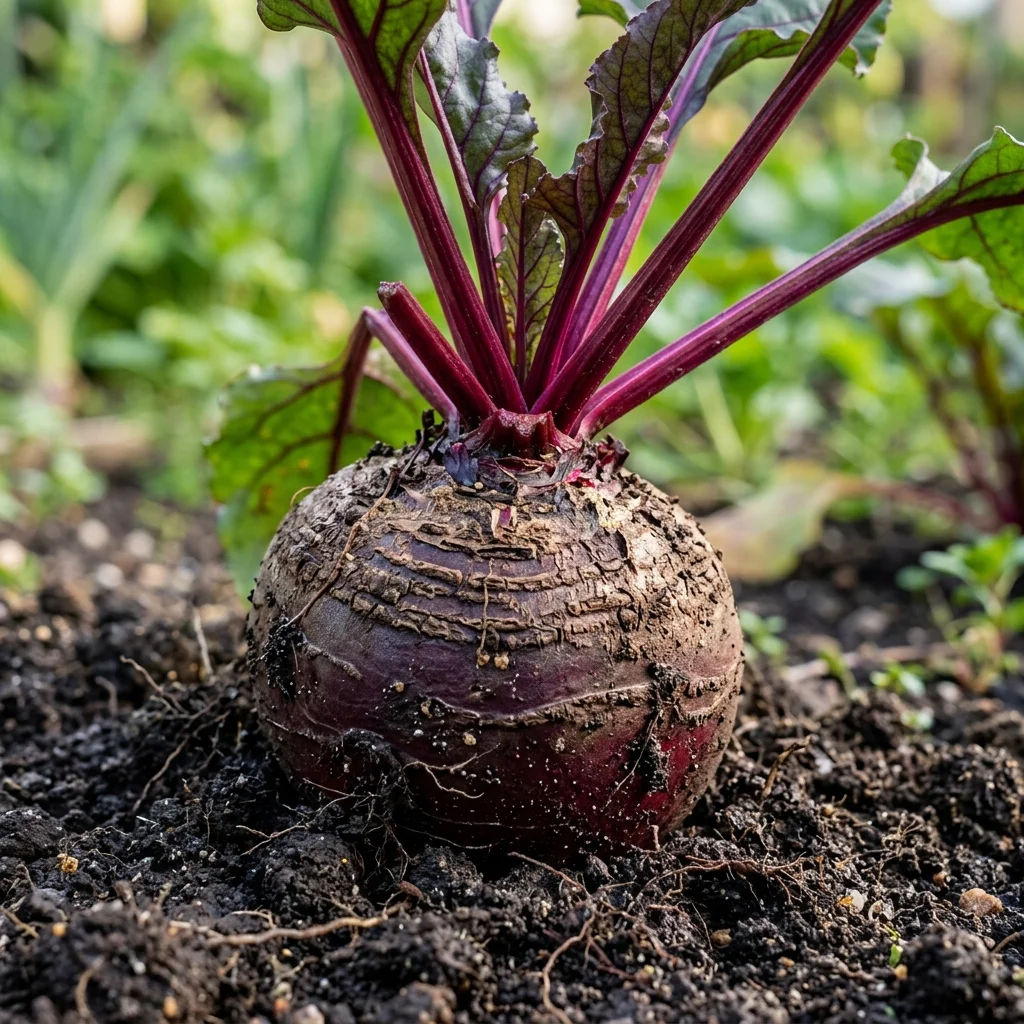
Key Visual Features: Low-growing rosettes of broad, upright green leaves with striking dark red veins.
-
✔
Leaf & Stems: Smooth, glossy green leaf blades with highly prominent ruby-red petioles (stems).
-
✔
Fruit/Edible Part: A single round or flat underground red-purple root, highly sweet and rich in dark red juice.
Complete Growing & Harvesting Guide
Follow our detailed scientific agricultural cultivation guide to keep your Beetroot thriving and high-yielding.
Common Diseases & Treatment
Cercospora Leaf Spot (Fungal)
Symptoms: Leaves develop small, circular, light brown spots with dark purple-red borders, expanding and causing leaf collapse.
Internal Black Spot (Boron Deficiency)
Symptoms: Roots develop hard, black, dry patches inside the sweet flesh, and leaves show stunted growing tips.
Frequently Asked Questions
Why is my beetroot seed growing multiple seedlings?
Beetroot seeds are naturally 'seedballs', which contain a cluster of 2 to 4 separate embryos. Thinning is absolutely necessary.
Can I eat beetroot green leaves?
Yes! Beet greens are highly nutritious, tasting similar to Swiss chard or spinach. Harvest outer leaves sparingly.
How do I prevent my beetroots from turning woody?
Water consistently and deeply. Sudden dry spells cause beetroots to develop tough, fibrous rings inside the root.
Are beetroots safe for pet dogs?
Yes. Beetroot is completely non-toxic and pet-safe in small quantities. Cooked beets provide healthy vitamins and fiber.