Sycamore Maple Care & Identification Guide
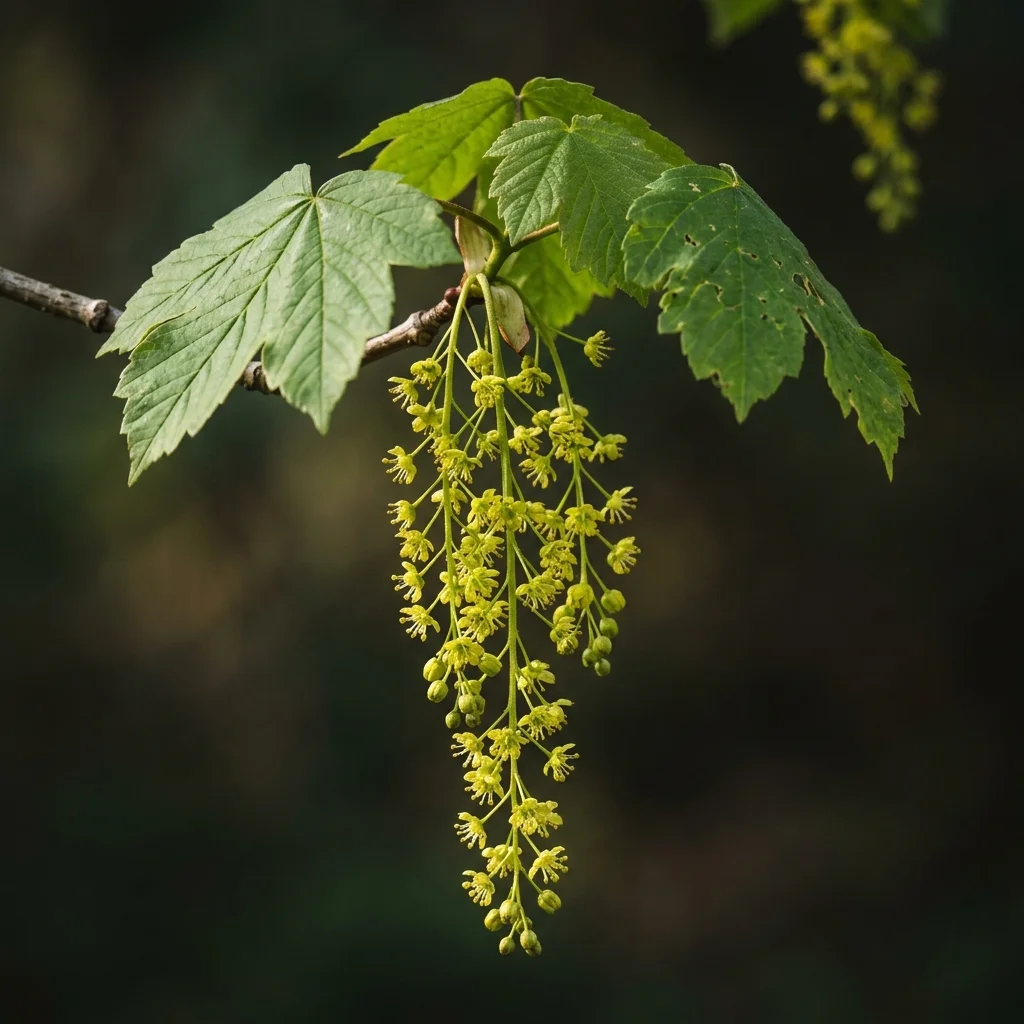
The magnificent Sycamore Maple (Acer pseudoplatanus) is a colossal and highly spectacular deciduous tree native to Europe, celebrated globally for its extreme wind and salt spray tolerance, making it a premier coastal windbreak species. It features large, leathery five-lobed leaves resembling a sycamore. In spring, it produces long, pendulous tassels of yellow-green flowers. **Critical Warning: Its seeds and seedlings contain Hypoglycin A, which is extremely toxic to horses.** It requires rich, moist loam, full sun, and moderate watering.





How to Identify Sycamore Maple
Identify Sycamore Maple immediately by its highly distinct biological features. Native to its specific ecosystem, it showcases spectacular foliage and structural habits optimized for its environment.
-
✓
Distinctive Features: Huge, leathery five-lobed leaves with coarsely toothed margins, long pendulous yellow-green spring flowers, and scaly greyish bark showing pinkish-orange patches underneath.
-
✓
Typical Coloration: Dark forest green summer foliage, turning to a subtle, warm amber-yellow or brownish-gold in autumn.
-
✓
Potential Confusions: Similar to Sycamore trees, but easily distinguished by its opposite leaf arrangement and winged seeds (samaras) instead of ball-like fruits.
11-Step Professional Care & Planting Guide
💧 【Watering & Moisture】 Water moderately. Keep the soil consistently moist for young trees. Established mature specimens have excellent drought-tolerance.
☀️ 【Sunlight & Exposure】 Requires full direct sun. Loves bright, windy open fields and coastal cliffs; needs space.
🪴 【Ideal Soil Mix】 Prefers deep, rich, moisture-retentive loam. Highly tolerant of alkaline, chalky, and salty soils. Blend 50% loam, 30% sand, and 20% compost.
🌡️ 【Temperature & Winter Care】 Extremely cold-hardy (USDA Zone 4-8). Extremely wind-tolerant, resisting severe coastal gales and icy winter freezes.
✂ 【Pruning & Grooming】 Prune in late autumn or winter during dormancy to remove crossing branches. Prune lower limbs to show the beautiful scaly bark.
🧪 【Fertilization】 Apply an organic balanced fertilizer in early spring. Mulch the root zone under the canopy with composted leaf mold.
🏺 【Potting & Garden Planting】 Plant in spacious gardens or windbreak zones. Dig a wide hole twice the root ball, backfill with loam, and water deeply.
🌱 【Propagation】 Propagated by sowing seeds in autumn, which require 90 days of cold stratification to germinate in spring.
🐛 【Common Pests】 Watch out for aphids or caterpillars. Spray manually with organic neem oil or rinse with water.
🦠 【Common Diseases】 Susceptible to sooty bark disease (caused by Cryptostroma fungus, especially in hot summers) and leaf spot. Ensure superior air flow.
🎓 【Botanist Advice】 **Critical warning for horse owners:** The seeds, samaras, and emerging seedlings contain high levels of Hypoglycin A. If horses ingest them, it causes highly fatal Atypical Myopathy. Never plant this tree near pastures!
Frequently Asked Questions
Q: Why is it called 'Sycamore' Maple?
A: Because of its leaves! Its foliage is exceptionally large, broad, and coarsely textured, closely resembling the leaves of true Sycamore trees, although it is a true maple.
Q: Is the Sycamore Maple safe for domestic pets?
A: Yes, Acer pseudoplatanus is safe and non-toxic for dogs and cats. However, its seeds are highly toxic and fatal to horses.
Q: What is Atypical Myopathy in horses?
A: It is a highly fatal muscle disease in horses caused by ingesting Hypoglycin A, a toxin present in the seeds, winged samaras, and young seedlings of the Sycamore Maple.
Q: Why is it widely planted on European coastlines?
A: Because it is virtually indestructible in gales! It is one of the few large shade trees with exceptional tolerance to strong winds, severe salt spray, and sandy coastal soils.