Southern Magnolia Care & Identification Guide
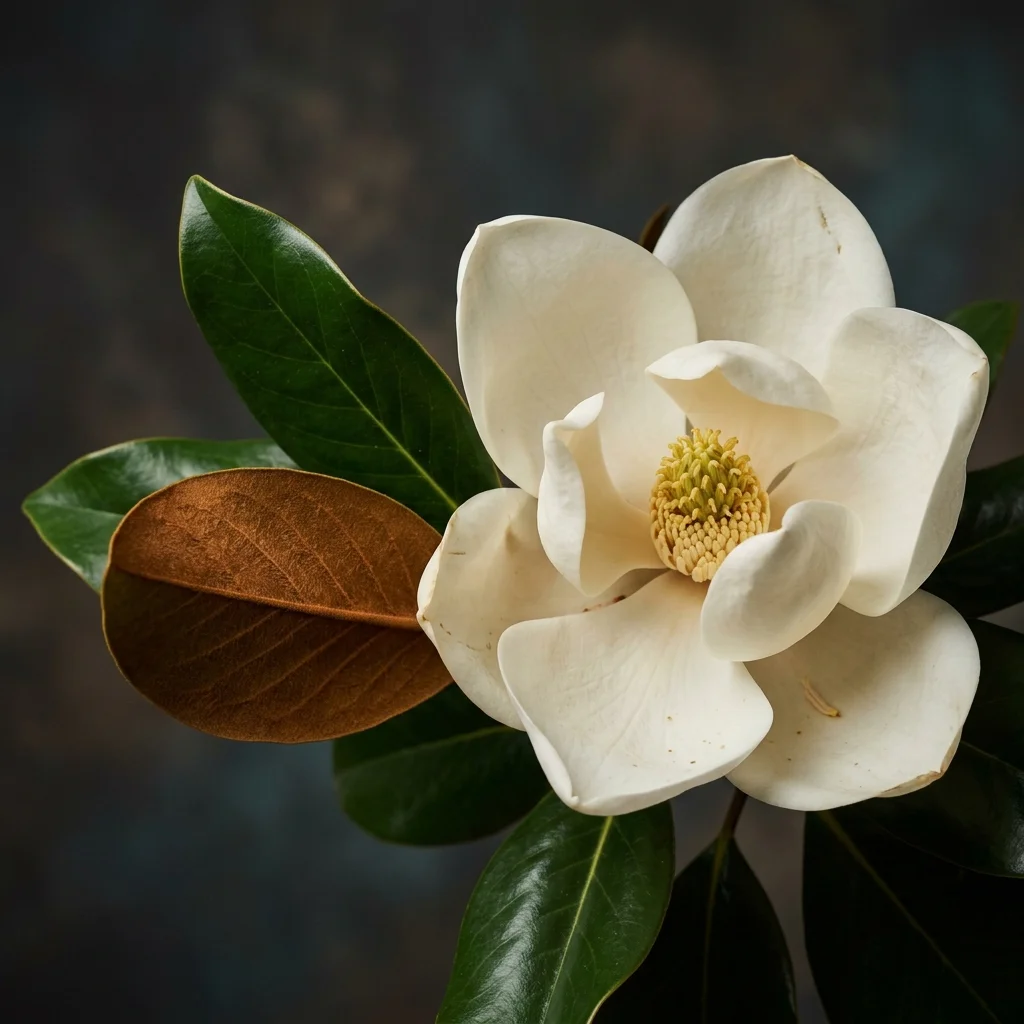
The magnificent Southern Magnolia (Magnolia grandiflora) is a colossal and highly spectacular evergreen native of the Southeastern United States, celebrated globally for its large, fragrant, saucer-shaped creamy-white blooms. It features thick, leathery, dark-green leaves whose undersides are covered in a magnificent, velvet-like copper-brown hair layer known as the rusty indumentum, which naturally locks in moisture. It requires deep, rich, organic acidic soil, full direct sun to partial shade, and moderate watering.





How to Identify Southern Magnolia
Identify Southern Magnolia immediately by its highly distinct biological features. Native to its specific ecosystem, it showcases spectacular foliage and structural habits optimized for its environment.
-
✓
Distinctive Features: Thick glossy evergreen leaves with rich rusty-brown velvety undersides (indumentum), massive cup-shaped white flowers, and large woody cone-like seed pods.
-
✓
Typical Coloration: Glossy dark green upper leaf surface, copper-bronze velvety leaf undersides, and snowy creamy-white flowers with bright yellow stamens.
-
✓
Potential Confusions: Similar to Sweetbay Magnolia, but distinguished by its significantly larger, thicker leathery leaves and massive fragrant blooms (dinner-plate size).
11-Step Professional Care & Planting Guide
💧 【Watering & Moisture】 Water moderately. Keep soil consistently moist for young trees. Established mature specimens have excellent drought-tolerance, but prefer occasional deep irrigation in dry summers.
☀️ 【Sunlight & Exposure】 Thrives in full direct sun to partial shade. Protect young saplings from harsh, freezing winter winds which can cause foliage burn.
🪴 【Ideal Soil Mix】 Requires deep, rich, moisture-retentive organic acidic soil. Blend 50% organic loam, 30% organic peat moss, and 20% coarse sand (pH 5.0-6.0).
🌡️ 【Temperature & Winter Care】 Cold-hardy down to -18°C (USDA Zone 6-10). Dislikes prolonged freezing winter winds; apply a thick layer of mulch over the root ball.
✂ 【Pruning & Grooming】 Prune only in late spring or early summer after blooming. Pruning in winter will cut off next year's early spring flower buds.
🧪 【Fertilization】 Feed in early spring with a slow-release organic acidic fertilizer. Mulch with composted pine bark to preserve soil acidity.
🏺 【Potting & Garden Planting】 Plant in spacious ground. Dig a hole 3 times the width of the root ball. Keep root flare slightly above the soil line, and apply a 3-inch layer of organic bark mulch.
🌱 【Propagation】 Propagated by taking semi-hardwood cuttings in summer, or by sowing seeds in autumn requiring 90 days of cold stratification.
🐛 【Common Pests】 Generally highly resistant. Watch occasionally for scale insects or spider mites. Spray manually with neem oil.
🦠 【Common Diseases】 Susceptible to leaf spot or verticillium wilt. Porous organic acidic soil and superior drainage are essential.
🎓 【Botanist Advice】 The Southern Magnolia has a wide-spreading, shallow root system that dislikes turf competition and soil compaction! Maintain a very wide grass-free, mulched ring under the entire canopy.
Frequently Asked Questions
Q: Why is the underside of the leaf brown and fuzzy?
A: This is the rusty indumentum! It is a natural, highly spectacular adaptation where a thick layer of fine copper-brown velvety hairs covers the leaf underside, serving to reflect intense heat and prevent water loss.
Q: Is the Southern Magnolia safe for dogs and cats?
A: Yes, Magnolia grandiflora is completely non-toxic and pet-safe for cats and dogs.
Q: How large can the flowers grow?
A: They are colossal! The magnificent creamy-white flowers can easily reach dinner-plate sizes of 8 to 12 inches (20-30 cm) in diameter, releasing a heavy, sweet citrus fragrance.
Q: Does it drop its leaves in winter?
A: No! Unlike deciduous magnolias, the Southern Magnolia is fully evergreen, retaining its thick glossy green leaves all year round, shedding only a few older leaves in spring.