Scots Pine Care & Identification Guide
The magnificent Scots Pine (Pinus sylvestris) is a highly spectacular evergreen conifer native to Eurasia, celebrated globally for its extreme hardiness, picturesque irregular crown, and striking, flaky orange-red bark on the upper trunk and branches. It features stiff, twisted blue-green needles arranged in pairs of two, and small woody oval cones. It is the most widely distributed pine on Earth, thriving in sterile soils. It requires well-drained soil, full direct sun, and low watering.





How to Identify Scots Pine
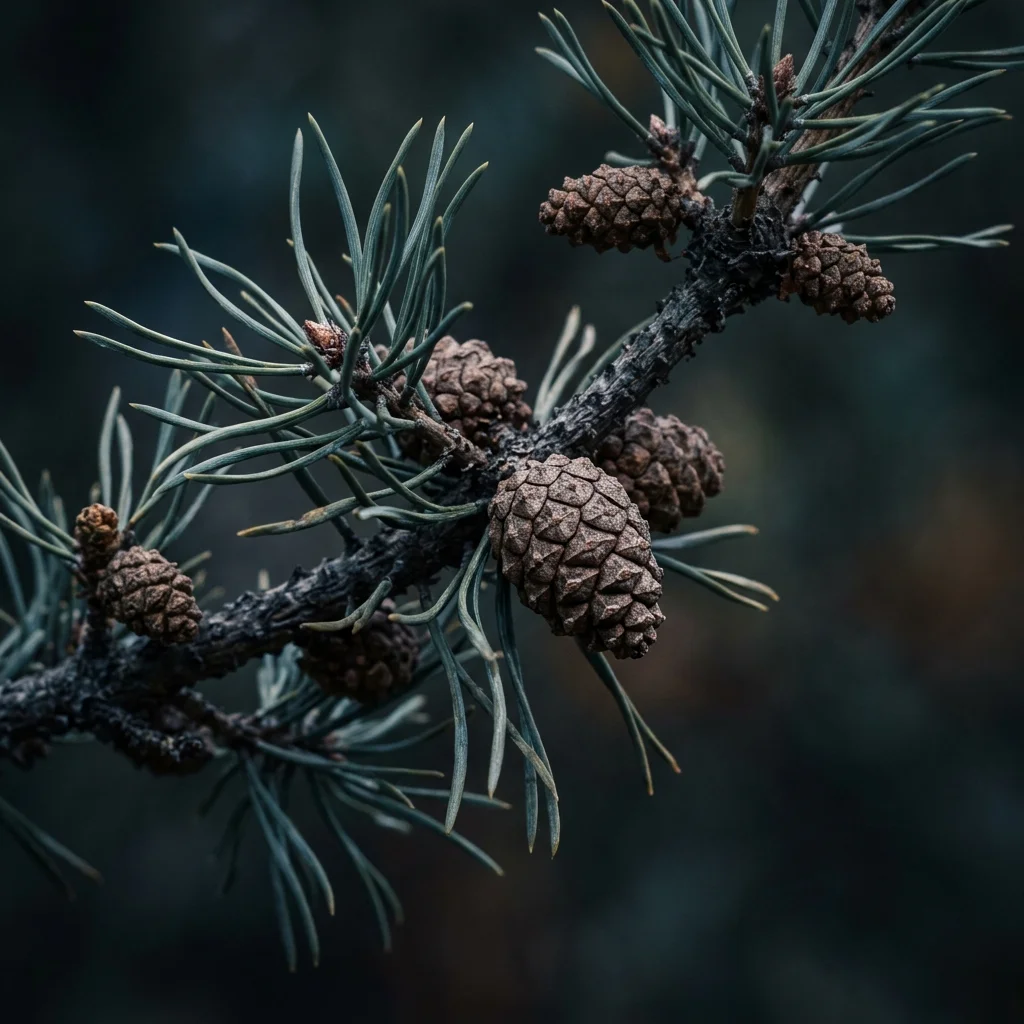
Identify Scots Pine immediately by its highly distinct biological features. Native to its specific ecosystem, it showcases spectacular foliage and structural habits optimized for its environment.
-
✓
Distinctive Features: Twisted blue-green needles in pairs of two, striking flaky orange-red bark on the upper trunk, and small woody oval cones.
-
✓
Typical Coloration: Stiff blue-green needles, grey-brown deeply fissured lower trunk bark, and bright orange-red flaky upper bark.
-
✓
Potential Confusions: Similar to Austrian Pine, but easily distinguished by its shorter needles (2-3 inches long) in pairs, twisted needle habit, and bright orange-red upper bark.
11-Step Professional Care & Planting Guide
💧 【Watering & Moisture】 Water sparingly. Extremely drought-tolerant once established. Highly sensitive to wet, stagnant soils; allow soil to dry out completely between waterings.
☀️ 【Sunlight & Exposure】 Requires full direct sun. Dislikes shade, which causes lower branches to die back rapidly and makes the canopy thin and weak.
🪴 【Ideal Soil Mix】 Extremely adaptable to poor, sterile, dry, sandy, or rocky soils. Dislikes rich, overly fertile soils. Blend 50% sand/gravel, 30% loam, and 20% compost.
🌡️ 【Temperature & Winter Care】 Cold-hardy down to -40°C (USDA Zone 2-8). Extremely cold-tolerant. The twisted needles are naturally protected from severe freezing winter winds.
✂ 【Pruning & Grooming】 Minimal pruning required. Snap 'candles' (new spring shoots) in half in late spring to encourage a denser, more compact rounded crown.
🧪 【Fertilization】 Feed very lightly once in spring with a slow-release organic balanced fertilizer. Avoid heavy fertilization which weakens wood structure.
🏺 【Potting & Garden Planting】 Plant in highly sunny lawn spots or rocky slopes. Dig a wide hole twice the root ball, backfill with gritty sand-loam, and water deeply.
🌱 【Propagation】 Propagated easily by sowing seeds in spring after 30 days of cold stratification.
🐛 【Common Pests】 Susceptible to pine shoot beetles, pine sawflies, or scale insects. Spray manually with organic neem oil or insecticidal soap.
🦠 【Common Diseases】 Susceptible to needle cast fungus in damp, humid climates, or pine wilt disease. Ensure outstanding air circulation and full sun.
🎓 【Botanist Advice】 The flaky orange-red upper bark is a brilliant identifying fingerprint! Plant Scots Pine in a spot where the late afternoon sun hits the trunk, highlighting the glowing orange bark.
Frequently Asked Questions
Q: Why is the upper trunk bark orange?
A: This is its signature feature! Pinus sylvestris naturally sheds its grey lower bark as it grows, exposing a thin, flaky, brilliant orange-red bark layer on the upper trunk and branches.
Q: Is the Scots Pine safe for household pets?
A: Yes, Pinus sylvestris is completely non-toxic and pet-safe for cats and dogs.
Q: What is a candle in pine trees?
A: A candle is the new, tender spring shoot that emerges from the branch tips. Snapping or pinching these candles in half is a classic technique to control size and density.
Q: Does it tolerate clay soils?
A: No, it strongly dislikes heavy, compacted, waterlogged clay which suffocates its roots. Gritty, sandy, or rocky soils are essential.