Sassafras Care & Identification Guide
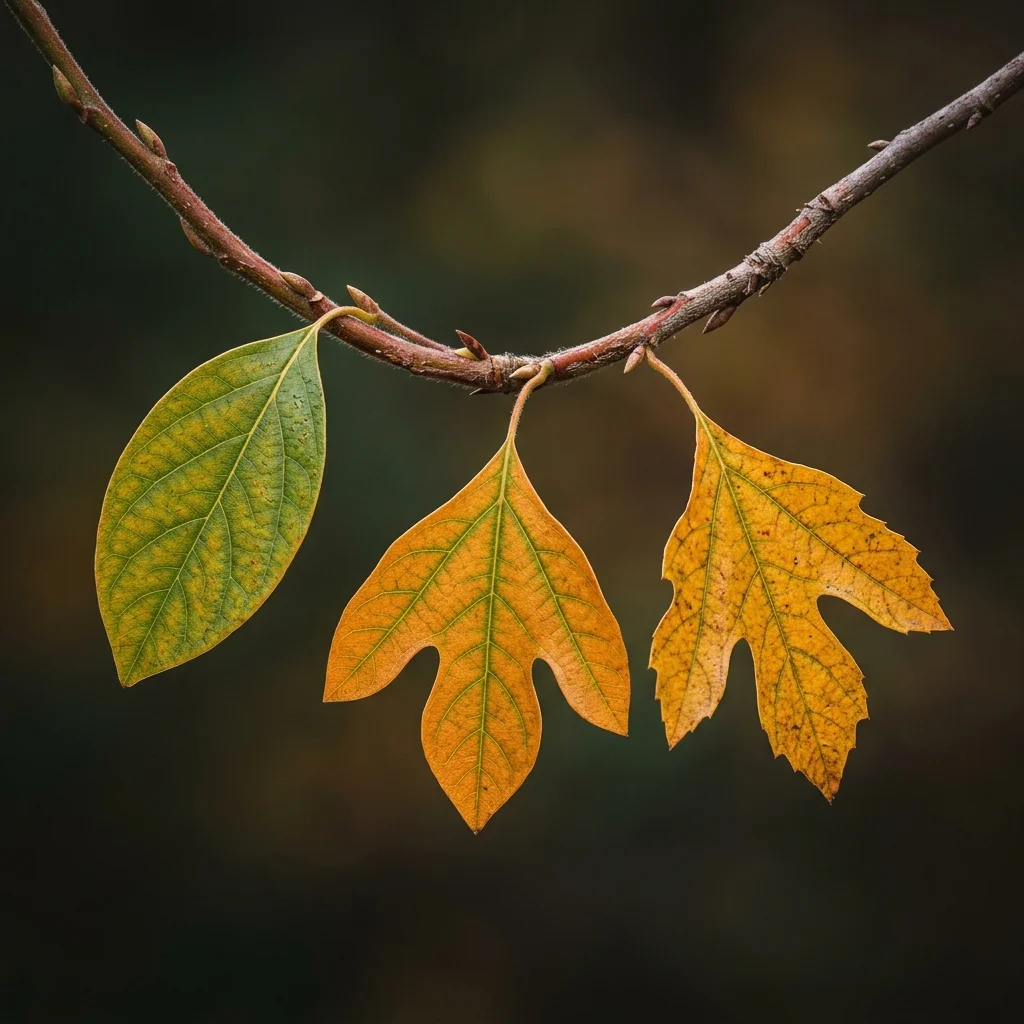
The magnificent Sassafras (Sassafras albidum) is a highly spectacular deciduous tree native to Eastern North America, celebrated globally for its unique leaf polymorphism, where three entirely different leaf shapes grow on the same branch: entire oval, one-lobed mitten-shape, and three-lobed trident. All parts of the tree, especially its roots and leaves, release a highly aromatic root beer and citrus fragrance when crushed. It requires rich, well-drained acidic soil and full sun.





How to Identify Sassafras
Identify Sassafras immediately by its highly distinct biological features. Native to its specific ecosystem, it showcases spectacular foliage and structural habits optimized for its environment.
-
✓
Distinctive Features: Three different leaf shapes on the same branch (oval, mitten, and three-lobed), orange-brown deeply furrowed bark, and spicy aromatic fragrance.
-
✓
Typical Coloration: Bright green leaves in summer, turning to a breathtaking, luminous display of deep orange, bright yellow, and fiery salmon-red in autumn.
-
✓
Potential Confusions: Incredibly unique foliage makes it virtually impossible to confuse; it is the only native tree with this three-leaf shape pattern.
11-Step Professional Care & Planting Guide
💧 【Watering & Moisture】 Water moderately. Keep soil consistently moist for young trees. Established mature sassafras have excellent drought-tolerance.
☀️ 【Sunlight & Exposure】 Thrives in full direct sun to partial shade. Full sun maximizes its brilliant salmon-red autumn color and dense canopy.
🪴 【Ideal Soil Mix】 Requires deep, rich, sandy-loam acidic soil. Blend 50% organic loam, 30% organic peat moss, and 20% coarse sand (pH 5.0-6.0).
🌡️ 【Temperature & Winter Care】 Cold-hardy (USDA Zone 4-9). Thrives in warm summers and freezing winters. Extremely robust.
✂ 【Pruning & Grooming】 Prune only in late winter during dormancy to remove crossing branches. Avoid heavy pruning to protect its spicy bark.
🧪 【Fertilization】 Apply a slow-release organic balanced fertilizer once in early spring. Mulch the root zone with composted leaf mold.
🏺 【Potting & Garden Planting】 Plant in deep soil. Dig a deep planting hole twice the root ball, backfill with rich organic acidic loam, and mulch deeply.
🌱 【Propagation】 Best propagated by root cuttings in late winter, or naturally by root suckering.
🐛 【Common Pests】 Watch out for spicebush swallowtail caterpillars (which feed on leaves). Hand-pick or spray with organic insecticidal soap.
🦠 【Common Diseases】 Highly susceptible to Laurel Wilt disease (spread by redbay ambrosia beetles). Keep trees stress-free and avoid wounding.
🎓 【Botanist Advice】 The Sassafras has a deep taproot and is highly sensitive to root disturbance! Always plant it in its final permanent spot; mature trees suffer severe transplant shock.
Frequently Asked Questions
Q: Why does the Sassafras have three different leaf shapes?
A: It is a fascinating botanical mystery called leaf polymorphism! A single branch naturally grows a mix of entire oval leaves, one-lobed mitten-shaped leaves, and three-lobed trident leaves.
Q: Is the Sassafras safe for pets?
A: Yes, Sassafras albidum is completely non-toxic and pet-safe for cats and dogs.
Q: What does the Sassafras smell like?
A: It is incredibly aromatic! When crushed, the leaves and root bark release a sweet, spicy fragrance that smells exactly like root beer, sarsaparilla, and citrus.
Q: Was Sassafras historically used for root beer?
A: Yes! Sassafras root bark was the original flavoring agent for traditional root beer. However, commercial production now uses artificial flavorings due to FDA regulations on safrole.