Royal Palm Care & Identification Guide
The magnificent Royal Palm (Roystonea regia) is a spectacular and monumental palm native to the Caribbean, celebrated globally for its smooth, light grey, cement-like trunk and vibrant, smooth green crownshaft. It exhibits a self-cleaning habit, naturally shedding its massive feathery fronds to protect its crown during hurricanes. It requires highly fertile organic loam, abundant water, and full direct sun.




How to Identify Royal Palm
Identify Royal Palm immediately by its highly distinct biological features. Native to its specific ecosystem, it showcases spectacular foliage and structural habits optimized for its environment.
-
✓
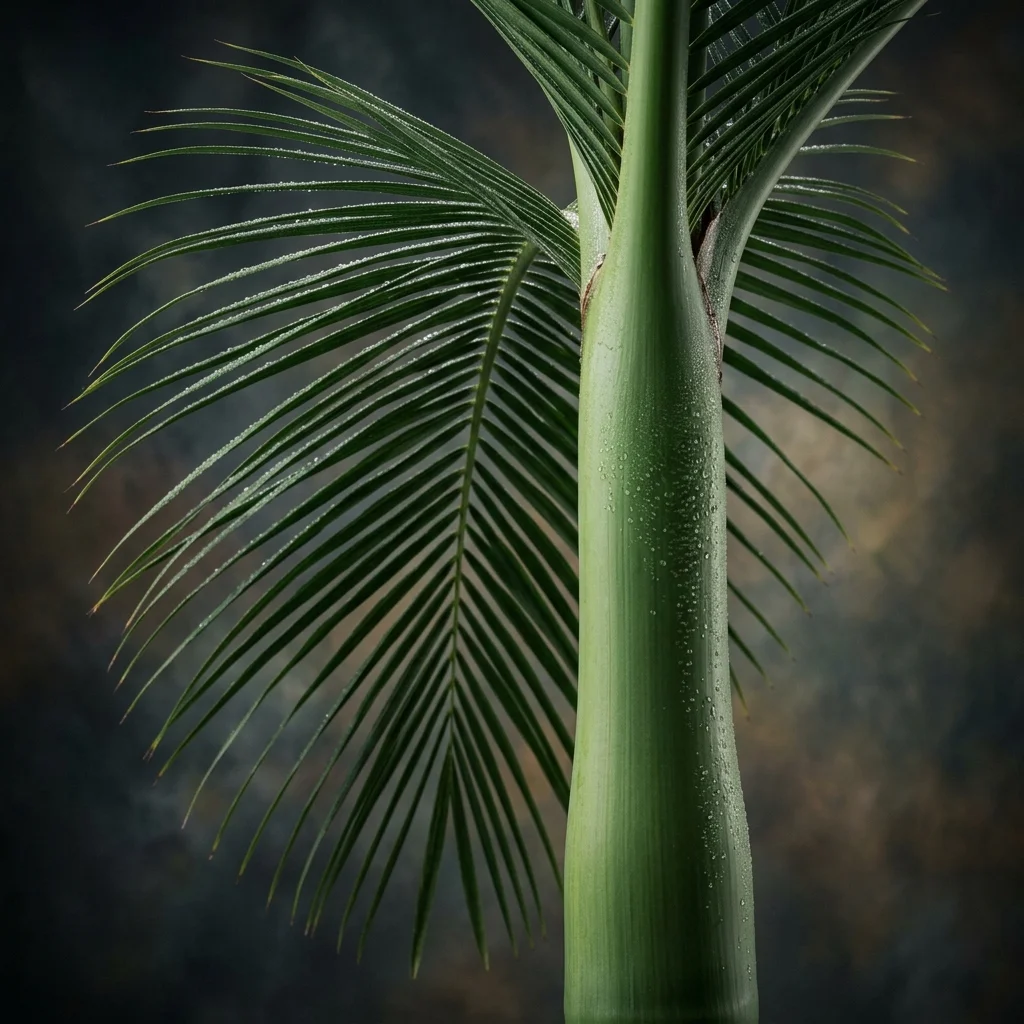
Distinctive Features: Monumental cement-grey smooth column trunk, striking smooth emerald-green crownshaft, and a massive rounded canopy of feathery fronds.
-
✓
Typical Coloration: Light grey trunk, rich emerald-green crownshaft, glossy dark green leaflets, and small purple-black fruits.
-
✓
Potential Confusions: Similar to Imperial Palm, but distinguished by its swollen middle trunk section, glossy bright green leaf stems, and smooth cement-like bark texture.
11-Step Professional Care & Planting Guide
💧 【Watering & Moisture】 Water generously. Prefers consistently moist, organic-rich soil. Extremely sensitive to prolonged drought when young; water deeply twice a week.
☀️ 【Sunlight & Exposure】 Requires absolute full direct sun. Loves intense heat and tropical sunlight to support its massive, rapid growth.
🪴 【Ideal Soil Mix】 Requires highly fertile, organic-rich loam. Blend 40% organic compost, 30% rich loam, 20% peat moss, and 10% coarse sand (pH 6.0-7.5).
🌡️ 【Temperature & Winter Care】 Tropical native (USDA Zone 10-11). Growth slows below 15°C. Dislikes cold winter winds; **lethal foliage and bud damage occur if temperatures drop below -2°C**.
✂ 【Pruning & Grooming】 Excellent **self-cleaning** palm! Old fronds turn yellow and drop off cleanly by themselves, leaf sheath and all. No manual pruning required.
🧪 【Fertilization】 Heavily prone to Potassium and Manganese deficiency! Apply high-quality slow-release palm fertilizer with elevated K and Mn every 3 months.
🏺 【Potting & Garden Planting】 Best planted in open, highly visible garden landscapes where its monumental scale can be appreciated. Ensure deep fertile soil.
🌱 【Propagation】 Propagated by sowing seeds in spring under high temperatures (28°C-35°C), germinating in 2 to 3 months.
🐛 【Common Pests】 Watch out for the Royal Palm Bug, spider mites, and scale insects. Spray young palms with insecticidal soaps or systemic treatments.
🦠 【Common Diseases】 Susceptible to Ganoderma Butt Rot (a lethal wood-decaying fungus). Avoid injuring the trunk with lawnmowers to prevent entry.
🎓 【Botanist Advice】 Look closely at the emerald-green section below the leaves—this is the **Crownshaft**! It consists of tightly wrapped leaf bases. During hurricanes, the palm cleanly sheds its oldest fronds along with their sheath, dramatically reducing wind drag to survive storms.
Frequently Asked Questions
Q: Why are the lower leaf tips of my royal palm turning bronze and frizzled?
A: This is a classic sign of **Potassium Deficiency**! Royal Palms are extremely sensitive to low potassium, which causes leaf margins to frizzle, turn bronze, and dry. Apply specialized high-potassium palm fertilizer immediately.
Q: What is 'Self-Cleaning' and do I need to prune it?
A: Royal Palms are strictly self-cleaning! When an old frond dies, its entire leaf sheath cleanly detaches from the trunk and drops to the ground, leaving a smooth ringed scar. Do not pull half-dead leaves off manually, as it can scar the trunk.
Q: Is the Royal Palm safe for cats and dogs?
A: Yes, *Roystonea regia* is completely non-toxic and pet-safe for cats and dogs, making it highly suitable for luxury pet-friendly tropical landscaping.
Q: Can I grow a Royal Palm in a container?
A: Only as a juvenile! Due to its massive roots and fast, monumental mature growth (up to 20-30 meters tall), it must be planted in open ground to survive long-term.