Quaking Aspen Care & Identification Guide
The magnificent Quaking Aspen (Populus tremuloides) is a colossal and highly spectacular deciduous tree native to North America, celebrated globally for its unique leaves that tremble and rustle in the wind. This shimmering motion is caused by their exceptionally long, flattened leaf stalks (petioles). It has smooth, greenish-white bark and forms massive underground clonal colonies (like the famous Pando). It requires well-drained acidic soil, full sun, and moderate watering.





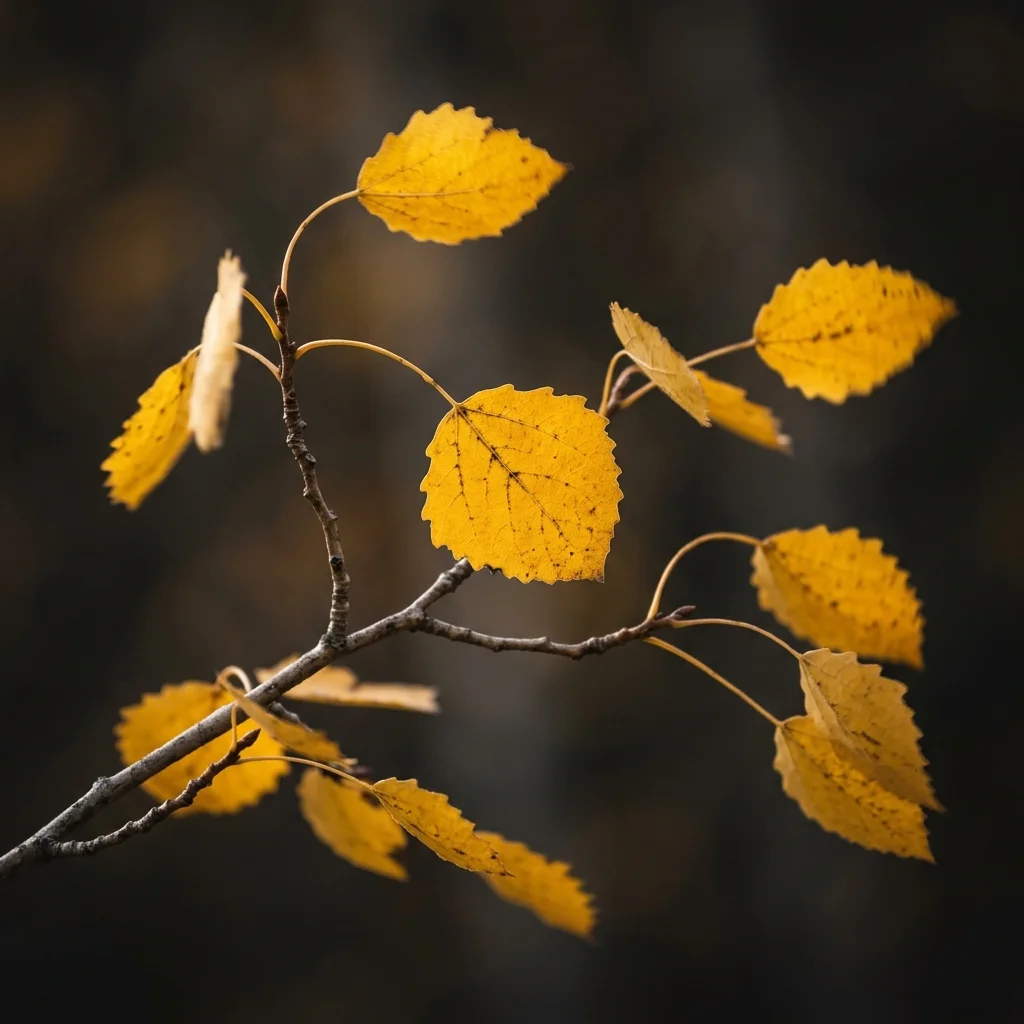
How to Identify Quaking Aspen
Identify Quaking Aspen immediately by its highly distinct biological features. Native to its specific ecosystem, it showcases spectacular foliage and structural habits optimized for its environment.
-
✓
Distinctive Features: Smooth, light greenish-white bark, rounded-to-ovate leaves with fine teeth and long, flattened petioles that cause leaf fluttering.
-
✓
Typical Coloration: Lively bright green foliage in summer, turning to a breathtaking, luminous bright golden-yellow in early autumn.
-
✓
Potential Confusions: Similar to Paper Birch, but easily distinguished by its smooth, non-peeling bark and rounded leaves with flattened stalks.
11-Step Professional Care & Planting Guide
💧 【Watering & Moisture】 Water moderately. Keep soil consistently moist but never waterlogged. Young saplings need deep watering once a week.
☀️ 【Sunlight & Exposure】 Requires full direct sun. Dislikes shade and will rapidly thin if crowded by larger trees; needs open sky.
🪴 【Ideal Soil Mix】 Prefers rich, deep, sandy-loam or gritty well-drained soil. Blend 50% loam, 30% perlite, and 20% organic compost (pH 5.5-6.5).
🌡️ 【Temperature & Winter Care】 Superbly cold-hardy (USDA Zone 1-6). Thrives in freezing northern winters. Dislikes hot, humid southern summers.
✂ 【Pruning & Grooming】 Prune only in late winter during complete dormancy to remove dead wood. Avoid heavy pruning to protect its thin bark.
🧪 【Fertilization】 Apply a slow-release organic balanced fertilizer in early spring. Mulch the root zone with composted leaf mold.
🏺 【Potting & Garden Planting】 Plant in spacious ground. Dig a wide hole twice the root ball, backfill with sandy loam, and mulch deeply.
🌱 【Propagation】 Propagated by root cuttings in late winter, or naturally by root suckering which forms clonal colonies.
🐛 【Common Pests】 Watch out for tent caterpillars or leafminers. Spray manually with organic neem oil.
🦠 【Common Diseases】 Susceptible to cankers, rust, or powdery mildew. Ensure excellent air circulation and avoid compacted soils.
🎓 【Botanist Advice】 The Quaking Aspen is one of the largest living organisms on Earth, spreading via clone root systems! Plant it in cool, high-altitude climates and let its shimmering golden leaves fill your garden with rustling sounds.
Frequently Asked Questions
Q: Why do Quaking Aspen leaves flutter so easily?
A: It is a genius structural adaptation! The leaf stalks (petioles) are exceptionally long and flattened at a right angle to the leaf blade, causing the leaves to wobble and flutter in even the gentlest breeze.
Q: Is the Quaking Aspen safe for pets?
A: Yes, Populus tremuloides is completely non-toxic and pet-safe for cats and dogs.
Q: What is a clonal colony?
A: It is an ancient forest miracle! A single Aspen seed can sprout and spread underground via root suckers, growing into thousands of individual trees that are genetically identical clones connected by a single massive root system.
Q: Why does it have greenish-white bark?
A: It is a survival trick! The thin, greenish-white bark contains chlorophyll, allowing the tree to carry out photosynthesis and generate energy even in winter when it has shed all its leaves.