Pecan Tree Care & Identification Guide
The magnificent Pecan Tree (Carya illinoinensis) is a colossal deciduous giant native to the Mississippi River Valley, celebrated globally for its grand architectural scale, sweeping vase-like canopy, and premium, buttery-flavored edible nuts. It features large alternate, pinnately compound green leaves with 9 to 17 sickle-shaped leaflets. In autumn, it produces clusters of green, four-valved husks that split open to release the smooth, thin-shelled reddish-brown pecan nuts. It requires deep moist soil, full sun, and moderate watering.





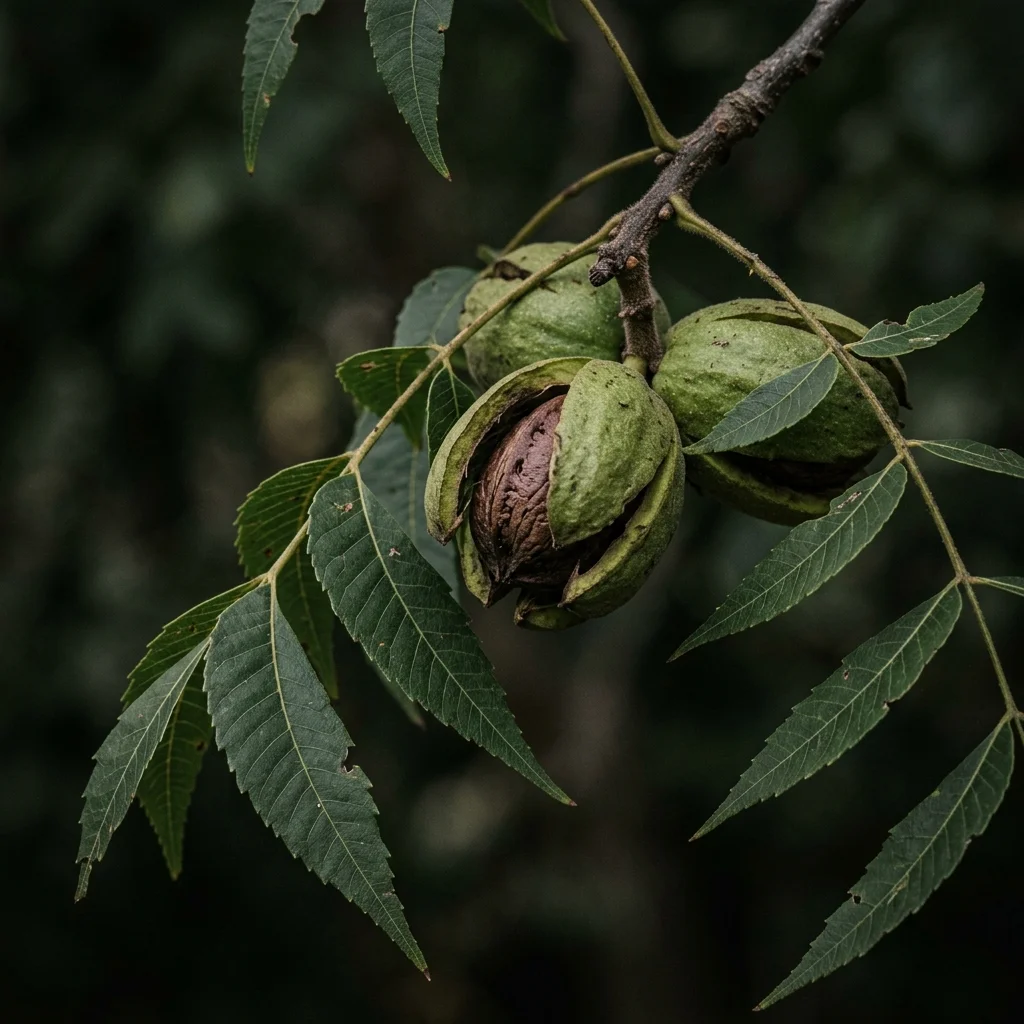
How to Identify Pecan Tree
Identify Pecan Tree immediately by its highly distinct biological features. Native to its specific ecosystem, it showcases spectacular foliage and structural habits optimized for its environment.
-
✓
Distinctive Features: Colossal growth habit with a broad rounded crown, pinnately compound leaves with curved sickle-shaped leaflets, and 4-valved green husks enclosing smooth oval nuts.
-
✓
Typical Coloration: Rich green summer foliage turning golden-brown in autumn, yellowish-green catkins, and deeply furrowed dark grey bark.
-
✓
Potential Confusions: Similar to Black Walnut, but distinguished by its sickle-shaped curved leaflets (Walnut leaflets are straight) and thin-shelled sweet nuts (Black Walnut has extremely thick, hard, deeply ridged husks).
11-Step Professional Care & Planting Guide
💧 【Watering & Moisture】 Water moderately. Requires deep, consistent soil moisture. Highly water-demanding during active nut development in summer; drought will cause empty nut shells.
☀️ 【Sunlight & Exposure】 Requires full direct sun. Needs open, sweeping lawns and unobstructed sky to support its colossal energy demands and heavy nut crops.
🪴 【Ideal Soil Mix】 Requires exceptionally deep, rich, moisture-retentive alluvial loam. Blend 60% organic loam, 20% organic compost, and 20% sand (optimal pH 6.0-7.0).
🌡️ 【Temperature & Winter Care】 Cold-hardy (USDA Zone 5-9). Thrives in hot, humid summers and cool winters. Apply organic mulch to insulate root zone.
✂ 【Pruning & Grooming】 Prune in late winter when dormant to remove weak, narrow crotches and crossing limbs. Establish a strong central leader trunk early.
🧪 【Fertilization】 High fertilizer demands! Requires regular spring feeds with a slow-release organic balanced fertilizer containing Zinc (essential to prevent zinc rosette leaf disease).
🏺 【Potting & Garden Planting】 Plant only in very spacious ground away from houses. Dig a colossal hole twice the root ball, backfill, and stake firmly.
🌱 【Propagation】 Propagated by bark grafting premium cultivars (like Stuart or Desirable) onto hardy seedling rootstocks in spring.
🐛 【Common Pests】 Susceptible to pecan weevils, aphids, and hickory shuckworms. Treat with organic insecticides and clean up fallen husks.
🦠 【Common Diseases】 Highly susceptible to pecan scab fungus causing black lesions on leaves and nut husks. Grow scab-resistant cultivars.
🎓 【Botanist Advice】 Zinc deficiency causes 'rosette', where leaves turn tiny, yellow, and bunched! Always apply a zinc sulfate soil drench in spring to keep your pecan tree vibrant.
Frequently Asked Questions
Q: Why are the leaves on my pecan tree small, yellow, and clustered?
A: This is Zinc Rosette! It is a highly common nutritional deficiency in alkaline soils where zinc is locked up. Apply a zinc sulfate foliar spray or soil drench to correct it.
Q: Are pecans safe for dogs?
A: Fresh pecans are technically non-toxic, but old, fallen pecans are highly dangerous! They easily grow toxic molds (like Penicillium) that produce tremorgenic mycotoxins, causing seizures in dogs.
Q: How long does it take for a pecan tree to bear nuts?
A: Grafted trees grow relatively fast and can begin producing premium nuts in 5 to 7 years, whereas wild seedling trees take 10 to 15 years to bear crops.
Q: Do I need two pecan trees for cross-pollination?
A: Yes! Pecan trees are monoecious but shed their pollen at different times than when their flowers are receptive. Plant both Type I (protandrous) and Type II (protogynous) cultivars for success.