Paperbark Maple Care & Identification Guide
The magnificent Paperbark Maple (Acer griseum) is a highly spectacular and rare deciduous small tree native to Central China, celebrated globally for its copper-bronze, paper-thin exfoliating bark that curls off the trunk in shimmering translucent layers. Unlike most maples, it features unique trifoliate (three-leaflet) leaves with fuzzy undersides. It grows slowly, forming a neat, upright oval crown. It requires well-drained acidic loam, full sun to partial shade, and moderate watering.





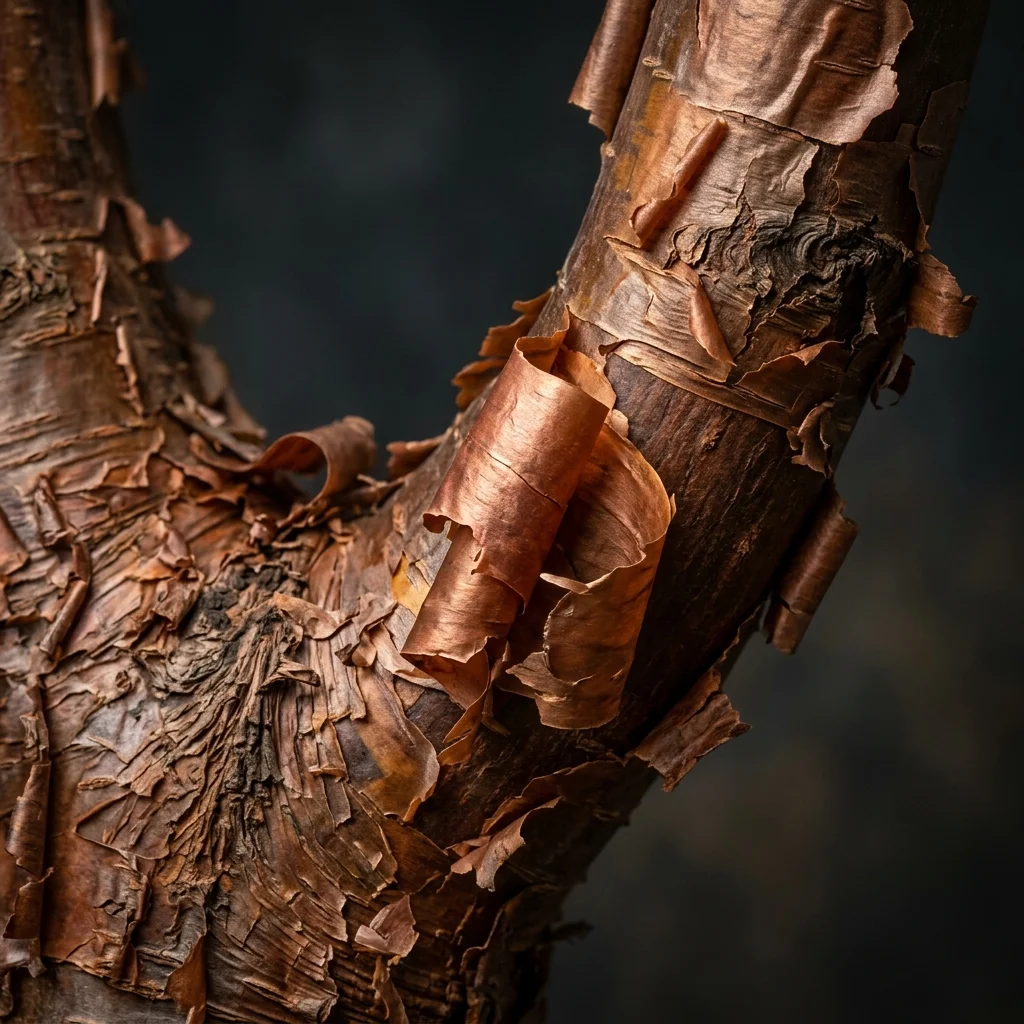
How to Identify Paperbark Maple
Identify Paperbark Maple immediately by its highly distinct biological features. Native to its specific ecosystem, it showcases spectacular foliage and structural habits optimized for its environment.
-
✓
Distinctive Features: Stunning copper-bronze to cinnamon-colored bark that continuously curls and peels, and unique three-leaflet trifoliate leaves.
-
✓
Typical Coloration: Soft dark green leaves with pale silvery-fuzzy undersides, turning to a breathtaking orange-red to brilliant crimson in late autumn.
-
✓
Potential Confusions: Similar to River Birch, but instantly distinguished by its opposite, three-leaflet compound leaves (Birches have alternate, single leaves).
11-Step Professional Care & Planting Guide
💧 【Watering & Moisture】 Water moderately. Keep soil consistently damp for young trees. Established paperbark maples have moderate drought-tolerance; avoid wet clay.
☀️ 【Sunlight & Exposure】 Thrives in full direct sun to partial shade. Full sun maximizes its brilliant crimson autumn foliage and glowing bark reflections.
🪴 【Ideal Soil Mix】 Requires rich, deep, well-draining organic soil. Blend 50% loam, 30% organic peat moss, and 20% coarse sand (pH 5.5-6.5).
🌡️ 【Temperature & Winter Care】 Cold-hardy (USDA Zone 4-8). Extremely cold-tolerant. Its peeling bark looks spectacular when covered in winter snow.
✂ 【Pruning & Grooming】 Prune only in late winter during dormancy to remove crossing branches. Avoid heavy pruning to let its exfoliating trunk stand out naturally.
🧪 【Fertilization】 Apply a slow-release organic balanced fertilizer in early spring. Mulch the root zone with composted leaf mold.
🏺 【Potting & Garden Planting】 Plant in highly visible garden spots. Dig a hole twice the width of the root ball, backfill with organic acidic loam, and mulch deeply.
🌱 【Propagation】 Extremely difficult to propagate! Seeds have a high parthenocarpy rate (up to 95% empty seeds) and require 2 years of warm-cold stratification.
🐛 【Common Pests】 Highly resistant to pests. Watch occasionally for scale insects. Spray manually with neem oil.
🦠 【Common Diseases】 Highly disease-resistant. Susceptible to root rot in waterlogged soils. Ensure superior drainage.
🎓 【Botanist Advice】 The Paperbark Maple is a slow-growing garden masterpiece that can take 20 years to mature. Plant it in a prominent spot where backlighting can highlight its glowing, peeling copper bark!
Frequently Asked Questions
Q: Why is the bark of Paperbark Maple peeling?
A: This is its natural, highly ornamental physiological characteristic! The outer bark continuously peels off in thin, curly, paper-like copper sheets, exposing the smooth cinnamon-colored new bark underneath.
Q: Is the Paperbark Maple safe for pets?
A: Yes, Acer griseum is completely non-toxic and pet-safe for cats and dogs.
Q: Why are Paperbark Maple seeds so hard to grow?
A: It has an exceptionally high parthenocarpy rate, meaning up to 90-95% of its seeds are empty, hollow shells. The few viable seeds require a complex warm-and-cold stratification process lasting two years.
Q: How big does it grow?
A: It is a perfect small-scale tree, growing slowly to a height of 20 to 30 feet, making it an ideal ornamental choice for small courtyards and residential landscapes.