Linden Care & Identification Guide
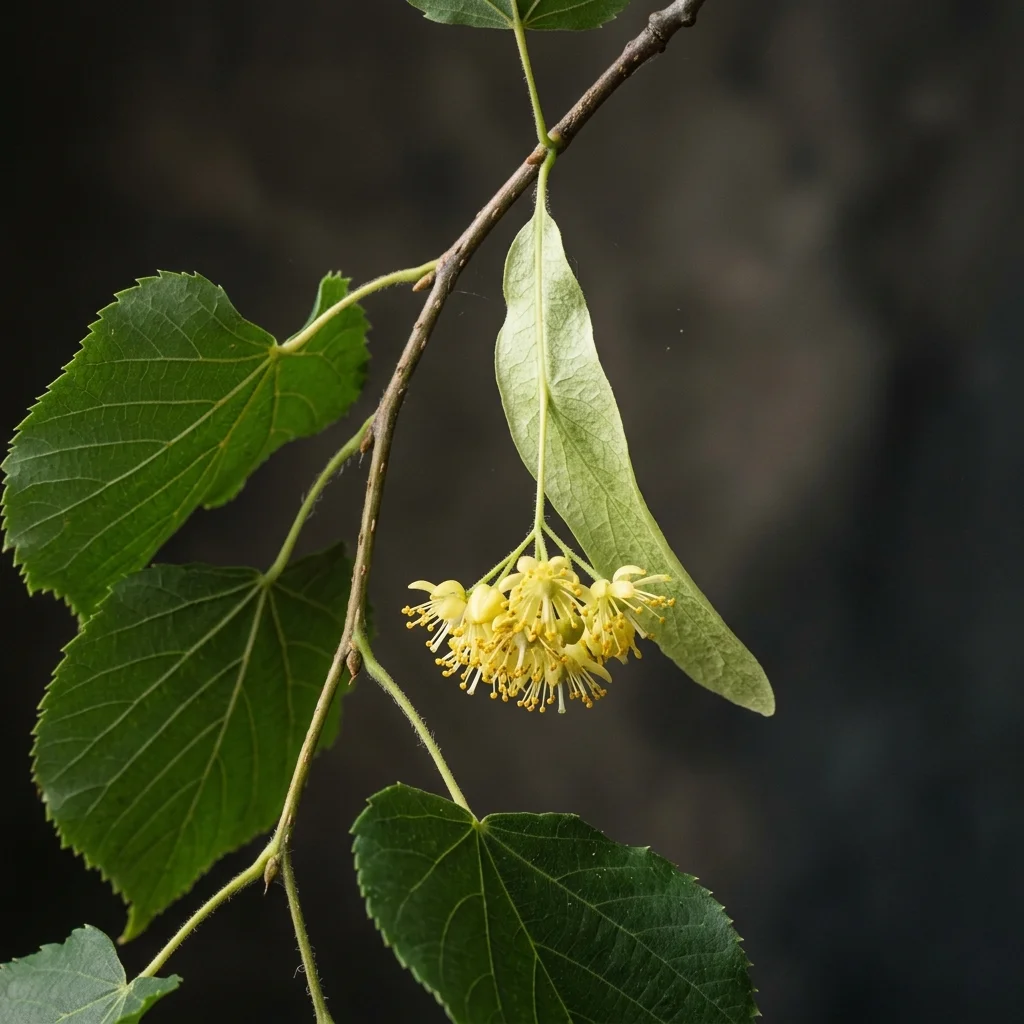
The magnificent Linden (Tilia americana), also commonly known as American Basswood or Lime Tree, is a majestic deciduous tree celebrated globally for its dense, symmetrical pyramidal canopy and exquisitely fragrant, honey-scented summer blossoms. The small, pale yellow flower clusters hang from highly unique, light-green, tongue-shaped leafy bracts. It produces large, heart-shaped (cordate) leaves with sharply serrate margins. Its wood is highly prized by carvers, and its blossoms attract thousands of bees. It requires moist, rich, organic loam, full sun, and moderate watering.





How to Identify Linden
Identify Linden immediately by its highly distinct biological features. Native to its specific ecosystem, it showcases spectacular foliage and structural habits optimized for its environment.
-
✓
Distinctive Features: Large, asymmetrical heart-shaped (cordate) leaves with sharp saw-tooth edges, and fragrant yellow flower clusters suspended from pale green, tongue-like bracts.
-
✓
Typical Coloration: Deep green leaves turning bright buttery-yellow in autumn, pale creamy-yellow flowers, and dark brown furrowed bark.
-
✓
Potential Confusions: Similar to Littleleaf Linden (Tilia cordata), but distinguished by its much larger leaves (typically 4-8 inches long) and fuzzy rust-colored tufts in the leaf vein axils.
11-Step Professional Care & Planting Guide
💧 【Watering & Moisture】 Water moderately. Prefers consistently moist, well-draining soil. Young trees need deep weekly irrigation during hot, dry summer months; avoid waterlogged roots.
☀️ 【Sunlight & Exposure】 Thrives in full direct sun to partial afternoon shade. Tolerates urban environments well, but benefits from shelter from dry, scorching winds.
🪴 【Ideal Soil Mix】 Requires deep, rich, organic-rich loamy soil. Blend 60% premium loam, 20% organic compost, and 20% peat moss. Tolerates slightly alkaline soil (pH 6.5-7.5).
🌡️ 【Temperature & Winter Care】 Cold-hardy (USDA Zone 3-8). Extremely cold-tolerant. Protect young trunks from winter sunscald by wrapping them in commercial tree guard paper.
✂ 【Pruning & Grooming】 Prune in late winter or early spring when dormant to maintain a strong central leader trunk. Remove lower branches and weak crotches to increase structural strength.
🧪 【Fertilization】 Feed in early spring with a balanced organic slow-release fertilizer. Apply a 3-inch layer of wood mulch to preserve root moisture and add organic matter.
🏺 【Potting & Garden Planting】 Plant in spacious landscape lawns. Dig a wide, shallow hole three times the width of the root ball. Stake young saplings to protect them from high winds.
🌱 【Propagation】 Propagated by sowing seeds in autumn requiring complex double-stratification (warm then cold), or by taking semi-hardwood cuttings in summer.
🐛 【Common Pests】 Highly susceptible to aphids, which secrete sticky honeydew that hosts black sooty mold. Also watch for Japanese beetles or spider mites. Treat with insecticidal soap.
🦠 【Common Diseases】 Susceptible to leaf spot, powdery mildew, or verticillium wilt. Ensure outstanding air circulation and avoid overhead watering to protect the beautiful heart-shaped leaves.
🎓 【Botanist Advice】 The tongue-like leafy bracts are a fantastic evolutionary tool for wind-dispersal of seeds! Linden wood is exceptionally soft and premium for woodcarving, and its flowers make world-class herbal tea.
Frequently Asked Questions
Q: Why is the foliage covered in a sticky, shiny substance?
A: This is honeydew! It is excreted by aphids feeding on the sap of the Linden tree. While it does not kill the tree, it can attract ants and host black sooty mold, which is easily washed off with a strong blast of water.
Q: Are Linden trees safe for dogs and cats?
A: Yes, Tilia americana is completely non-toxic and pet-safe for cats and dogs.
Q: What is Linden flower tea used for?
A: Linden flowers (Tilleul) are highly prized globally for brewing a soothing, aromatic herbal tea, traditionally used to promote relaxation and soothe colds.
Q: Do Lindens tolerate heavy clay?
A: Yes, mature Linden trees have strong roots that tolerate heavy clay soils, but they perform far better in rich, organic-amended loam with good drainage.