Japanese Black Pine Care & Identification Guide
The magnificent Japanese Black Pine (Pinus thunbergii) is an exceptionally spectacular evergreen conifer native to the windswept coastal cliffs of Japan and South Korea, celebrated globally as the ultimate structural backbone of Japanese bonsai art. Known for its extremely rigid, dark-green needles and deeply cracked, scaly charcoal-grey bark, it exhibits remarkable resistance to sea salt, winds, and rocky drought. To cultivate its picturesque, windswept form, it requires full direct sunlight, gritty sandy-clay soil, and minimal watering.





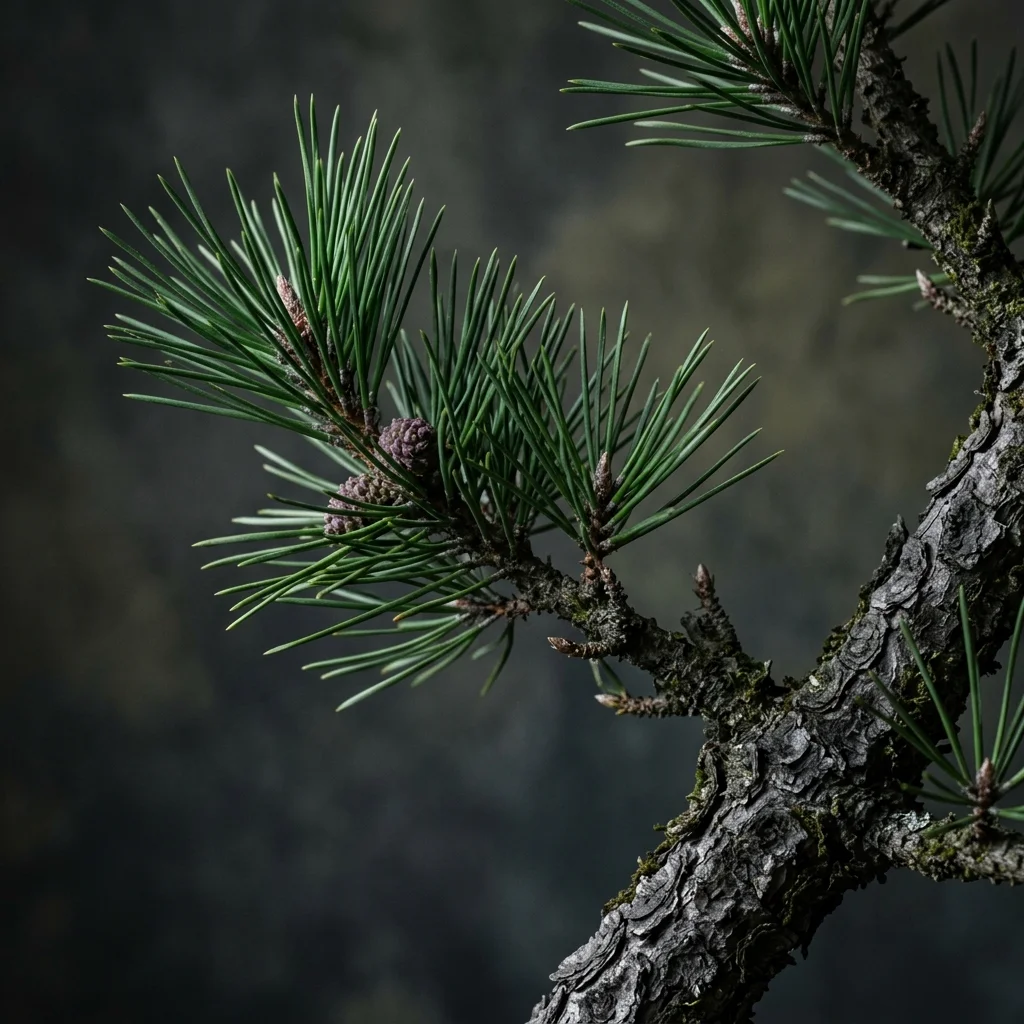
How to Identify Japanese Black Pine
Identify Japanese Black Pine immediately by its highly distinct biological features. Native to its specific ecosystem, it showcases spectacular foliage and structural habits optimized for its environment.
-
✓
Distinctive Features: Extremely stiff, sharp dark-green needles in pairs of two, with deeply furrowed scaly charcoal-black bark.
-
✓
Typical Coloration: Rich dark emerald foliage, with grey-black rough textured bark and silvery-white winter buds.
-
✓
Potential Confusions: Similar to Japanese Red Pine, but easily distinguished by its rigid dark-green needles (Red Pine has soft needles) and grey-black bark.
11-Step Professional Care & Planting Guide
💧 【Watering & Moisture】 Water sparingly. It is highly drought-tolerant. Allow the gritty potting soil to dry out fully between waterings; avoid soggy roots.
☀️ 【Sunlight & Exposure】 Requires full direct sun. Needs intense, hot light to maintain compact needle clumps and strong winter bud growth.
🪴 【Ideal Soil Mix】 Must be highly porous and gritty. Blend 50% coarse sand/pumice, 30% gritty sandy-clay, and 20% organic compost.
🌡️ 【Temperature & Winter Care】 Cold-hardy (USDA Zone 5-9). Highly resistant to salt winds, sea spray, and coastal heat. Protect from freezing winter drafts.
✂ 【Pruning & Grooming】 For Bonsai or shaping: pinch back the new spring 'candles' in early summer and pluck old needles in autumn to shape.
🧪 【Fertilization】 Feed very lightly once in early spring with a low-nitrogen organic fertilizer to prevent leggy, long needles.
🏺 【Potting & Garden Planting】 Grows beautifully in shallow terracotta bonsai pots or sandy coastal gardens. Ensure multiple drainage holes.
🌱 【Propagation】 Propagated easily from fresh seeds harvested from small woody cones, requiring cold stratification for 4 weeks.
🐛 【Common Pests】 Watch for pine needle scale or tip moths. Spray manually with neem oil or treat with organic insecticidal soap.
🦠 【Common Diseases】 Susceptible to pine wilt disease. Ensure superior air circulation, bright sunlight, and avoid overwatering.
🎓 【Botanist Advice】 The Japanese Black Pine is the king of Bonsai! Grow it in a shallow, wide terracotta pot, prune its spring candles regularly, and place it in the windiest, sunniest spot to develop its rugged windswept bark!
Frequently Asked Questions
Q: Why is it the king of Bonsai?
A: Its rugged scaly black bark, strong winter buds, and sharp needles respond beautifully to wiring and candle-pruning, developing stunning ancient styles.
Q: Is the Japanese Black Pine safe for pets?
A: Yes, Pinus thunbergii is completely non-toxic and pet-safe for dogs and cats.
Q: How salt-tolerant is this conifer?
A: Extremely! It is native to windswept sandy Japanese beaches, thriving under constant salty sea spray and high wind gale storms.
Q: What is candle pruning?
A: It is a technique where new spring shoots (candles) are snapped or cut in early summer to stimulate a second flush of smaller, more compact needles.