Green Ash Care & Identification Guide
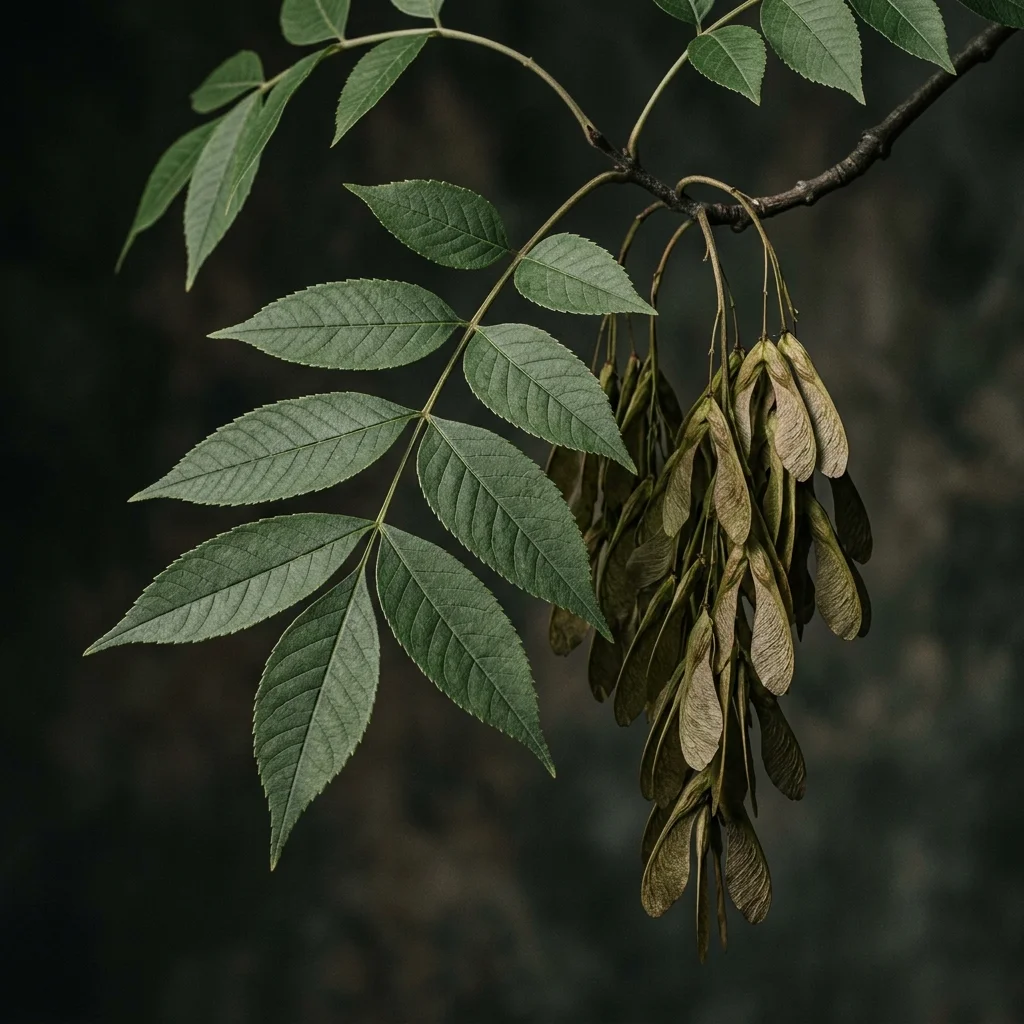
The magnificent Green Ash (Fraxinus pennsylvanica) is a highly spectacular deciduous native of North America, celebrated globally for its rapid growth rate, broad rounded canopy, and extreme adaptability to tough urban soils. It features pinnately compound green leaves with 5 to 9 lanceolate leaflets that turn a stunning gold in autumn. Female trees produce clusters of graceful, paddle-shaped winged seeds called samaras. Critical Warning: It is under severe threat globally from the devastating invasive insect, the Emerald Ash Borer. It requires moist loam, full sun, and moderate watering.





How to Identify Green Ash
Identify Green Ash immediately by its highly distinct biological features. Native to its specific ecosystem, it showcases spectacular foliage and structural habits optimized for its environment.
-
✓
Distinctive Features: Opposite, pinnately compound leaves with 5-9 leaflets, diamond-patterned ash bark, and dense clusters of single-winged paddle-like samara seeds.
-
✓
Typical Coloration: Emerald-green summer leaflets turning bright yellow-gold in autumn, and grey-brown deeply fissured bark.
-
✓
Potential Confusions: Often confused with White Ash (Fraxinus americana), but distinguished by its leaflets which are green on the undersides (White Ash leaf undersides are distinctly whitish/pale).
11-Step Professional Care & Planting Guide
💧 【Watering & Moisture】 Water moderately. Prefers moist soils and can even tolerate brief flooding. Established mature trees have outstanding drought-tolerance.
☀️ 【Sunlight & Exposure】 Requires full direct sun. Dislikes shade, which drastically reduces foliage density and compromises its graceful rounded canopy.
🪴 【Ideal Soil Mix】 Extremely adaptable! Thrives in wet clay, compacted urban parkways, or sandy loam. Optimal performance in fertile, organic-rich loam (pH 6.0-7.5).
🌡️ 【Temperature & Winter Care】 Cold-hardy (USDA Zone 3-9). Excellent winter hardiness, tolerating freezing temperatures easily. Apply compost mulch over the root system.
✂ 【Pruning & Grooming】 Prune in late winter or early spring to establish a strong central leader trunk. Remove co-dominant stems and crossing branches.
🧪 【Fertilization】 Feed in early spring with a slow-release organic balanced fertilizer. Mulch with composted wood chips to preserve soil moisture.
🏺 【Potting & Garden Planting】 Plant in spacious lawns. Dig a wide hole twice the root ball, backfill, pack soil firmly, and stake young trees to ensure upright growth.
🌱 【Propagation】 Propagated by sowing seeds (samaras) in autumn, which require 60-90 days of cold stratification to break dormancy.
🐛 【Common Pests】 Extreme, catastrophic threat from the Emerald Ash Borer (EAB)! This metallic-green beetle larvae bore beneath the bark, killing trees in 2-3 years. Apply systemic treatments.
🦠 【Common Diseases】 Susceptible to ash rust, leaf spots, and cankers. Porous soils and proper sanitation of fallen leaves help prevent fungal outbreaks.
🎓 【Botanist Advice】 Always inspect Green Ash trees for EAB before planting! Look for D-shaped exit holes, bark splitting, and dieback. Use systemic insecticide drenches annually to protect prize specimens.
Frequently Asked Questions
Q: Can a Green Ash tree survive the Emerald Ash Borer?
A: Only with active human protection! Untreated Green Ash trees are almost 100% fatal to EAB. High-value specimen trees must be treated with systemic insecticides annually to survive.
Q: Are Green Ash trees toxic to dogs and cats?
A: No, Fraxinus pennsylvanica is completely non-toxic and pet-safe for cats and dogs.
Q: How can I distinguish Green Ash from White Ash?
A: Look at the leaf undersides! Green Ash leaves are bright green on both sides, whereas White Ash leaflets have a distinct pale, whitish underside.
Q: What do the seeds look like?
A: They are single-winged, paddle-shaped samaras, about 1-2 inches long, that hang in dense, weeping clusters and are dispersed by the wind.