European Beech Care & Identification Guide
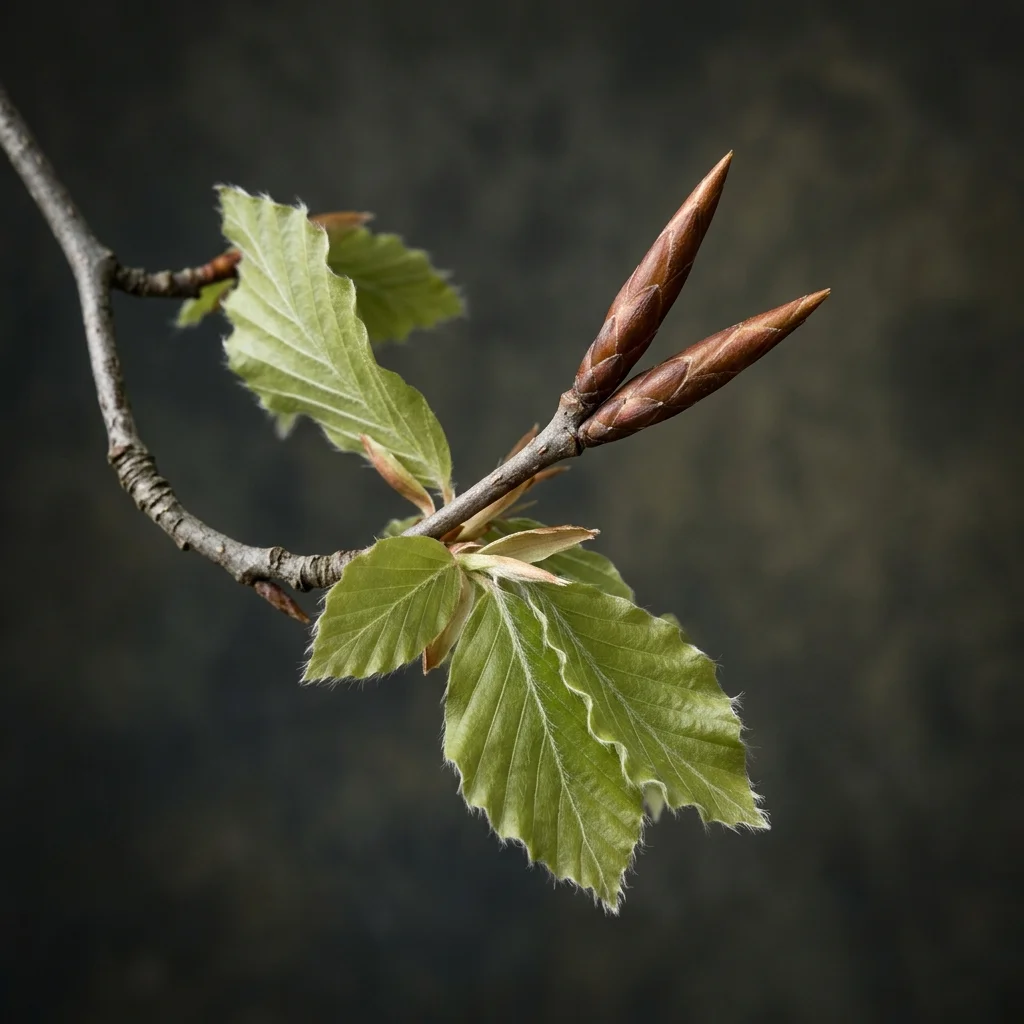
The magnificent European Beech (Fagus sylvatica) is a colossal and highly spectacular deciduous forest tree native to Europe, celebrated globally for its smooth, silver-grey elephant-hide bark, dense foliage, and stately presence. In spring, its emerging green leaves have silky-haired margins, turning wavy and glossy. In winter, it is easily identified by its extremely sharp, long, pointed cigar-shaped copper buds. It requires moisture-retentive organic soil, bright filtered indirect to direct light, and cool summers.





How to Identify European Beech
Identify European Beech immediately by its highly distinct biological features. Native to its specific ecosystem, it showcases spectacular foliage and structural habits optimized for its environment.
-
✓
Distinctive Features: Incredibly smooth silver-grey bark that remains smooth even on ancient trees, and long, pointed cigar-shaped buds.
-
✓
Typical Coloration: Soft bright green in spring with silky white hairs, turning dark glossy green, and copper-bronze to golden-orange in autumn.
-
✓
Potential Confusions: Similar to American Beech, but distinguished by its slightly shorter leaves (5-10cm) with wavy, non-toothed margins.
11-Step Professional Care & Planting Guide
💧 【Watering & Moisture】 Water moderately. Keep soil consistently damp but never waterlogged. Extremely sensitive to soil compaction and standing water.
☀️ 【Sunlight & Exposure】 Thrives in bright indirect light to full sun. Needs protection from intense hot midday sun in southern zones.
🪴 【Ideal Soil Mix】 Requires deep, rich, moisture-retentive organic loam. Blend 50% clay-loam, 30% organic peat moss, and 20% coarse perlite (pH 6.0-7.5).
🌡️ 【Temperature & Winter Care】 Cold-hardy (USDA Zone 4-7). Prefers cool, humid summer climates and snowy winters. Dislikes extreme, dry heat.
✂ 【Pruning & Grooming】 Prune young trees in late winter to establish shape. Extremely responsive to clipping; widely used as a premium formal hedge.
🧪 【Fertilization】 Apply a slow-release organic evergreen or balanced fertilizer in early spring. Mulch the root zone with leaf mold.
🏺 【Potting & Garden Planting】 Plant in open ground. Dig a wide hole twice the root ball, backfill with rich organic loam, and apply thick bark mulch.
🌱 【Propagation】 Propagated by sowing seeds (beech nuts) harvested from bristly cups in autumn, requiring 90 days of cold stratification.
🐛 【Common Pests】 Watch for beech woolly aphids. Spray manually with organic neem oil or insecticidal soap.
🦠 【Common Diseases】 Highly susceptible to phytophthora root rot if soil is compacted and soggy. Porous organic loam is essential.
🎓 【Botanist Advice】 The European Beech has exceptionally smooth bark which is highly sensitive to solar scald! Keep lower branches intact on young trees to shade the trunk.
Frequently Asked Questions
Q: Why is the bark of European Beech unique?
A: Unlike most trees, its bark remains incredibly smooth, silver-grey, and elephant-skin-like even in ancient specimens, making it highly ornamental.
Q: Is the European Beech safe for household pets?
A: Yes, Fagus sylvatica is completely non-toxic and pet-safe for cats and dogs.
Q: What are beech nuts?
A: They are small, triangular, edible nuts enclosed in woody, bristly cupules (beechnuts), highly prized by forest wildlife in autumn.
Q: Can I grow it as a formal hedge?
A: Yes! The European Beech is a world-class hedging plant, tolerating heavy clipping beautifully and retaining its golden-bronze leaves through winter for privacy.