English Walnut Care & Identification Guide
The magnificent English Walnut (Juglans regia), also known as the Persian Walnut, is a highly spectacular deciduous tree native to Central Asia, celebrated globally for its premium, brain-shaped edible fruits and high-value cabinet wood. It features large, pinnately compound green leaves with 5 to 9 oval leaflets that emit a highly aromatic citrus scent when crushed. In autumn, it produces large green fleshy husks that split open to reveal the hard, deeply wrinkled tan-colored walnut shell. It requires deep, well-drained loam, full sun, and moderate watering. Critical Warning: The roots and fallen leaves release Juglone, a toxic chemical that acts as a natural herbicide (allelopathy).





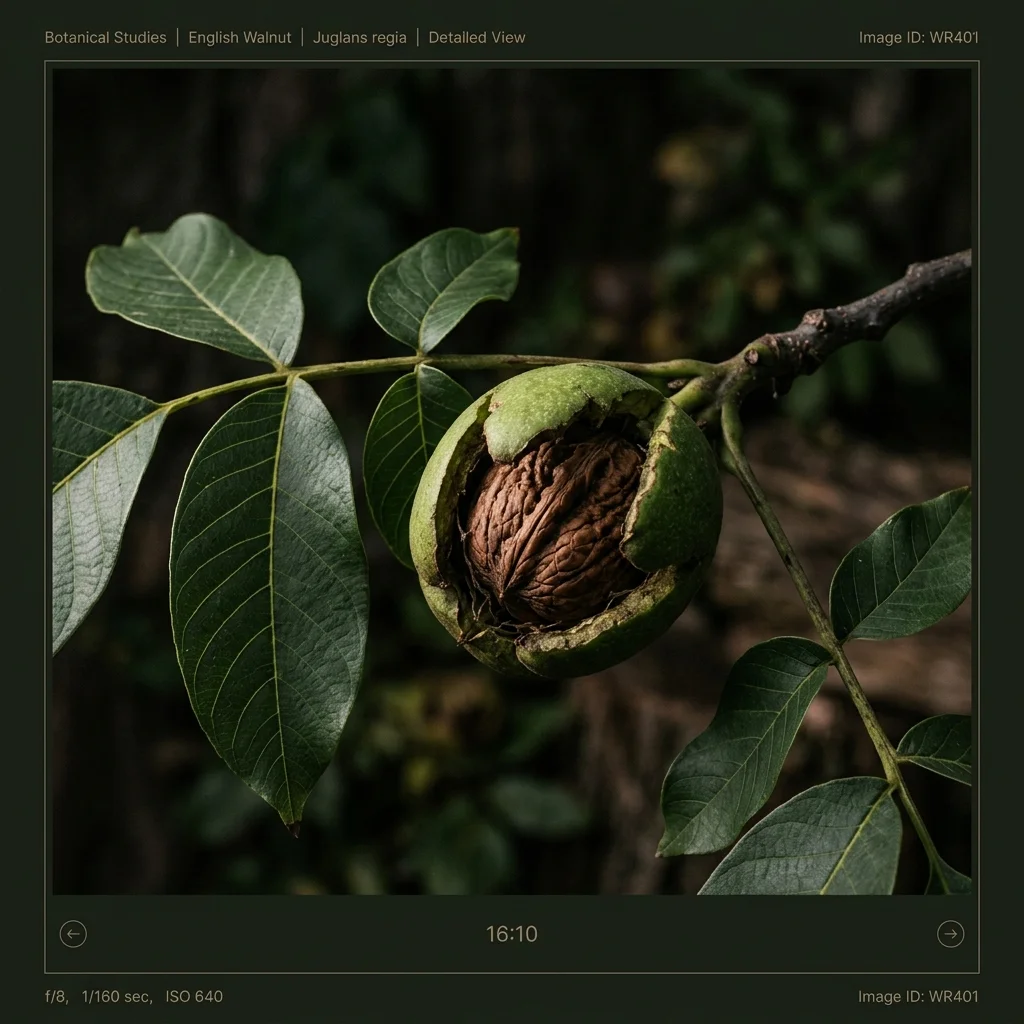
How to Identify English Walnut
Identify English Walnut immediately by its highly distinct biological features. Native to its specific ecosystem, it showcases spectacular foliage and structural habits optimized for its environment.
-
✓
Distinctive Features: Aromatic pinnately compound leaves with 5-9 large leaflets, large rounded green fleshy husks enclosing deeply wrinkled tan nuts, and silvery-grey bark.
-
✓
Typical Coloration: Rich bright green leaves turning warm golden-brown in autumn, and smooth silvery-grey trunk bark that develops deep fissures with age.
-
✓
Potential Confusions: Similar to Black Walnut (Juglans nigra), but easily distinguished by its smooth, easily cracked thin-shelled nuts (Black Walnut has extremely hard, thick black nuts) and fewer leaflets.
11-Step Professional Care & Planting Guide
💧 【Watering & Moisture】 Water moderately. Prefers deep, consistent soil moisture. Needs regular, deep watering during hot summer months to ensure plump walnut kernels.
☀️ 【Sunlight & Exposure】 Requires full direct sun. Loves wide open, sunny locations; the massive canopy requires high sunlight to fuel its large nut crops.
🪴 【Ideal Soil Mix】 Requires exceptionally deep, rich, organic-rich well-drained loam. Avoid heavy, compacted waterlogged clay (pH 6.5-7.5).
🌡️ 【Temperature & Winter Care】 Cold-hardy (USDA Zone 5-9). Requires cool winters and warm summers. Protect young trees from severe spring frosts which ruin catkins.
✂ 【Pruning & Grooming】 Prune only in late summer or early autumn during dormancy. Never prune in spring, as walnuts bleed sap excessively.
🧪 【Fertilization】 Apply a slow-release organic balanced fertilizer in early spring under the drip line. Apply composted leaf mold mulch.
🏺 【Potting & Garden Planting】 Plant away from vegetable gardens! Dig a wide hole twice the root ball, backfill, and stake firmly to protect its taproot.
🌱 【Propagation】 Propagated by whip-and-tongue grafting premium cultivars onto black walnut (Juglans nigra) seedling rootstocks in late winter.
🐛 【Common Pests】 Susceptible to codling moths, walnut husk flies, and aphids. Apply organic systemic treatments and hang pheromone traps.
🦠 【Common Diseases】 Susceptible to walnut blight bacteria causing black spots on leaves and nuts, and root rot in heavy wet soils.
🎓 【Botanist Advice】 Extremely critical allelopathic warning: English Walnut roots, leaves, and husks release Juglone, a highly toxic chemical that kills or stunts surrounding plants like tomatoes, potatoes, apples, and azaleas! Never plant a walnut tree near your vegetable garden.
Frequently Asked Questions
Q: What is Juglone and why is it dangerous?
A: It is a chemical defense! Juglone is a toxic organic compound produced by walnut roots and leaves that acts as a natural herbicide (allelopathy). It stunts or kills sensitive plants like tomatoes, peppers, and roses growing nearby.
Q: Are English walnuts toxic to dogs?
A: The fresh nut is safe, but fallen walnuts that sit in damp weather are highly dangerous! They easily grow a toxic mold (Penicillium) that contains tremorgenic mycotoxins, causing fatal seizures in dogs.
Q: How do I tell English Walnut apart from Black Walnut?
A: Look at the nuts and leaves! English Walnut has thin, easily cracked tan shells and leaves with 5-9 leaflets. Black Walnut has extremely thick, hard, deeply ridged black shells and leaves with 15-23 leaflets.
Q: How long does it take for a walnut tree to produce?
A: Grafted English Walnut trees grow moderately and begin bearing premium nuts in 4 to 6 years, eventually reaching heights of 50 to 70 feet.