English Oak Care & Identification Guide
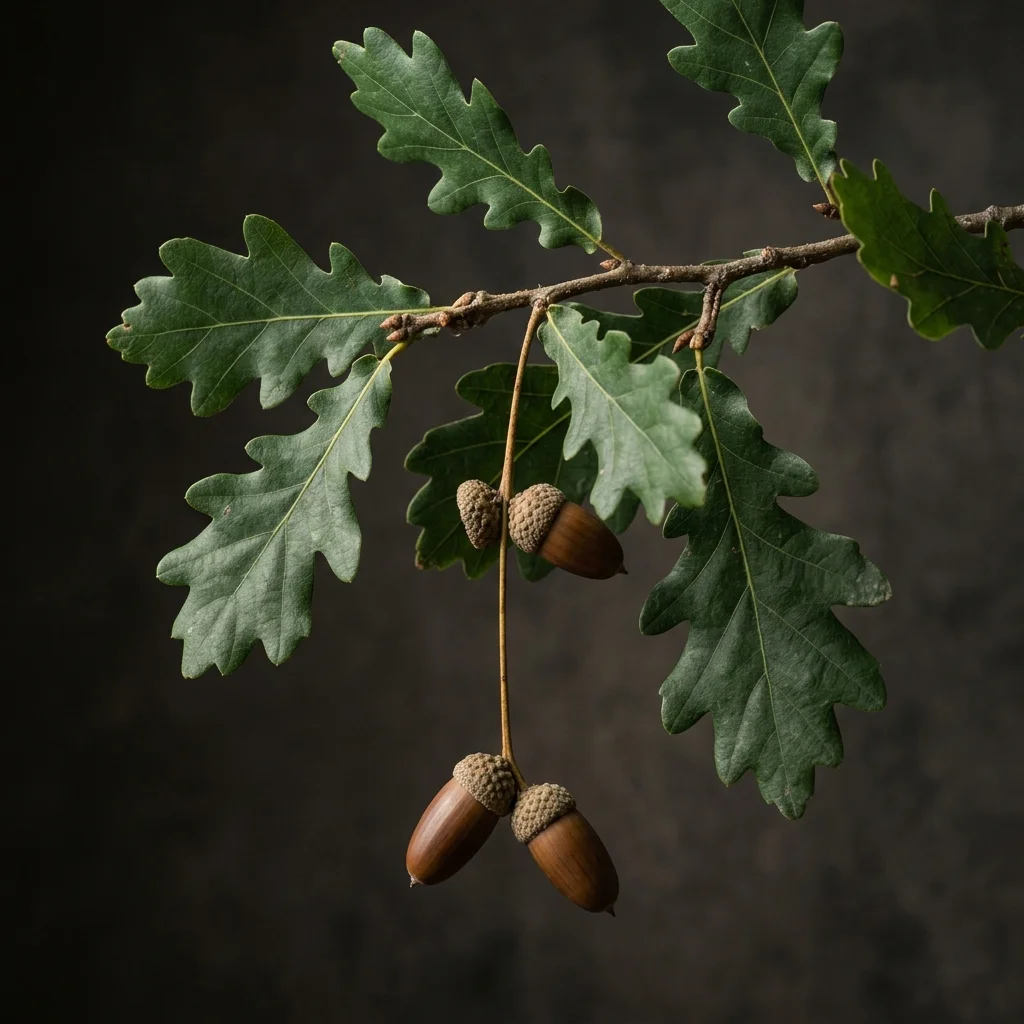
The magnificent English Oak (Quercus robur), also known as the Pedunculate Oak, is a colossal and highly spectacular deciduous species native to Europe, celebrated globally for its stout, massive trunk, immense longevity, and majestic crown. It features classic deeply lobed green leaves that have extremely short leaf stalks (petioles), while its elongated acorns hang in pairs from remarkably long, slender stalks (peduncles). It requires deep, rich, moisture-retentive soils, full direct sun, and moderate watering.





How to Identify English Oak
Identify English Oak immediately by its highly distinct biological features. Native to its specific ecosystem, it showcases spectacular foliage and structural habits optimized for its environment.
-
✓
Distinctive Features: Deeply lobed leaves with tiny auricles (ear-lobes) at the leaf base on very short stalks, and acorns on extremely long peduncles.
-
✓
Typical Coloration: Rich forest green summer foliage, turning to a warm golden-brown or copper-amber in late autumn.
-
✓
Potential Confusions: Similar to White Oak, but easily distinguished by its extremely short leaf stalks (1-2mm) and acorns hanging on long stalks.
11-Step Professional Care & Planting Guide
💧 【Watering & Moisture】 Water moderately. Keep soil consistently damp for young trees. Established English oaks are exceptionally drought-tolerant.
☀️ 【Sunlight & Exposure】 Requires full direct sun. Loves bright, open fields; give it ample room to develop its classic stout crown.
🪴 【Ideal Soil Mix】 Prefers deep, rich, moisture-retentive loamy soils. Blend 50% clay-loam, 30% organic compost, and 20% coarse sand (pH 6.0-7.5).
🌡️ 【Temperature & Winter Care】 Extremely cold-hardy (USDA Zone 4-8). Thrives in cool, damp summers and freezing winters. Extremely robust.
✂ 【Pruning & Grooming】 Prune only in late winter to remove dead wood and open up the dense canopy center to sunlight.
🧪 【Fertilization】 Apply a slow-release organic balanced fertilizer in early spring. Mulch the drip line with composted leaf mold.
🏺 【Potting & Garden Planting】 Plant in deep soil. Dig a very deep, wide planting hole, backfill with rich loam, and water deeply.
🌱 【Propagation】 Propagated easily by planting fresh acorns immediately in autumn. They germinate rapidly and do not require cold stratification.
🐛 【Common Pests】 Watch out for oak leaf rollers and aphids. Spray manually with neem oil or organic insecticidal soap.
🦠 【Common Diseases】 Susceptible to powdery mildew on young leaves in humid, stagnant air. Ensure superior sun and spacing.
🎓 【Botanist Advice】 The English Oak is a stout, long-lived forest legend. Plant it in deep, rich loam and let its horizontal branch layers spread out beautifully over decades!
Frequently Asked Questions
Q: Why is it called the Pedunculate Oak?
A: Because of its acorns! The acorns hang from exceptionally long, slender stalks called peduncles, which is a key identification feature of Quercus robur.
Q: Is the English Oak safe for household pets?
A: Yes, Quercus robur is completely non-toxic and pet-safe for cats and dogs.
Q: What is the leaf auricle?
A: It is a tiny 'ear-lobe' structure! The base of the leaf has two small rounded lobes that wrap slightly around the twig, which is highly characteristic.
Q: How long can an English Oak live?
A: They are ancient legends! Some historic specimens in Europe are confirmed to be over 800 to 1,000 years old, growing extremely stout trunks.