Eastern White Pine Care & Identification Guide
The magnificent Eastern White Pine (Pinus strobus) is an exceptionally elegant and highly spectacular evergreen conifer native to Eastern North America, celebrated for its soft, cloud-like texture and historic prominence in forestry. Highly prized by botanists for its graceful horizontal branching, it features long, slender, flexible needles that grow in highly distinct clusters of five. It requires bright indirect to direct light, consistently moist but fast-draining acidic soil, and cool temperate summers.





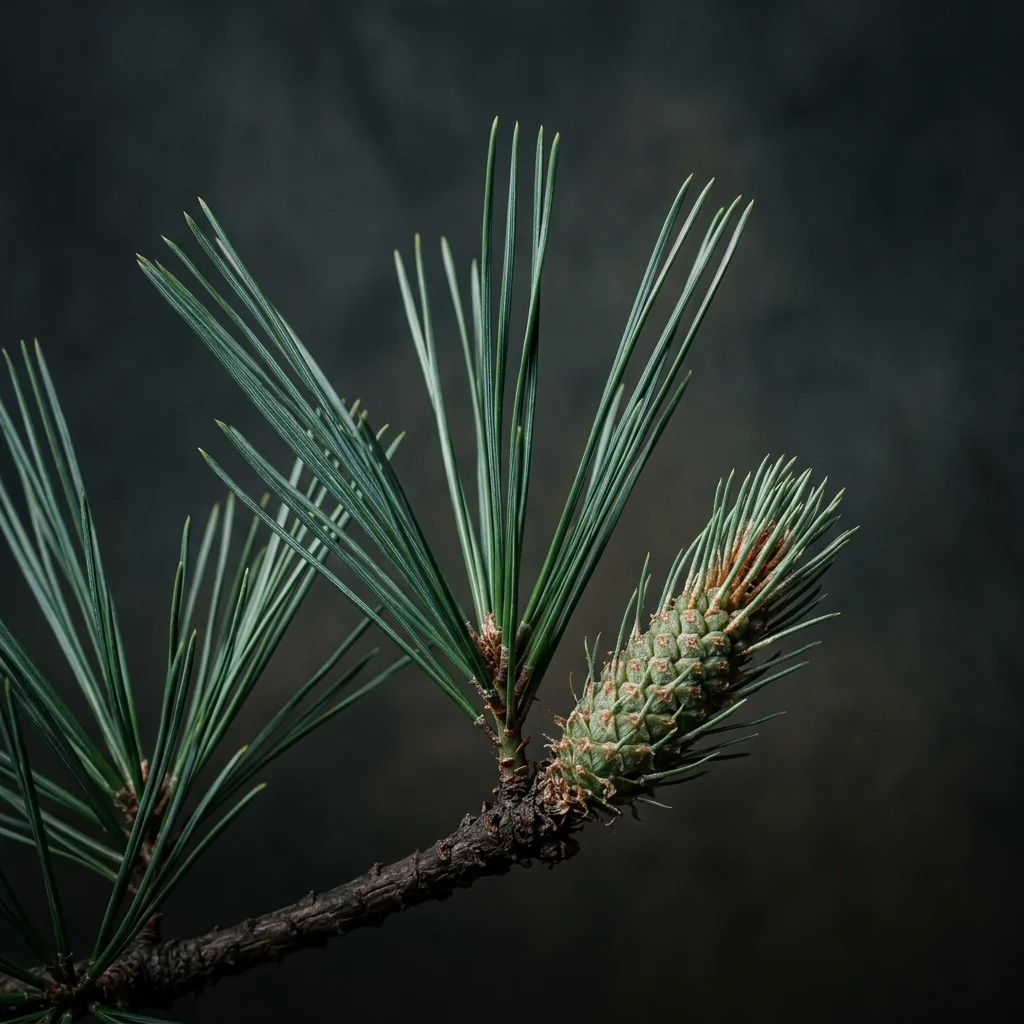
How to Identify Eastern White Pine
Identify Eastern White Pine immediately by its highly distinct biological features. Native to its specific ecosystem, it showcases spectacular foliage and structural habits optimized for its environment.
-
✓
Distinctive Features: Superbly soft, long, slender needles clustered in bundles of five, with long, cylindrical resinous hanging cones.
-
✓
Typical Coloration: Elegant blue-green to silvery-emerald foliage, with smooth grey-green young bark turning rough and dark grey.
-
✓
Potential Confusions: Similar to Loblolly Pine, but distinguished by its bundles of five needles (Loblolly has bundles of three) and soft, non-prickly texture.
11-Step Professional Care & Planting Guide
💧 【Watering & Moisture】 Water moderately. Keep soil damp but never soggy. Established trees are moderately drought-tolerant, but young trees need consistent moisture.
☀️ 【Sunlight & Exposure】 Requires full sun to partial shade. Prefers at least 6 hours of direct sun daily to maintain dense, soft needles.
🪴 【Ideal Soil Mix】 Requires gritty, well-draining acidic soil. Blend 60% sandy loam, 20% peat moss, and 20% perlite (pH 5.0-6.0).
🌡️ 【Temperature & Winter Care】 Extremely cold-hardy (USDA Zone 3-7). Can withstand harsh freezing winter snows. Avoid hot, dry humid winds.
✂ 【Pruning & Grooming】 Prune lightly in late spring by snapping 'candles' (new growth tips) in half to encourage dense branching.
🧪 【Fertilization】 Feed lightly once in early spring with an organic compost mulch or slow-release evergreen food.
🏺 【Potting & Garden Planting】 Dig a wide hole twice the root ball, backfill with acidic sandy loam, water thoroughly, and mulch with pine needles.
🌱 【Propagation】 Easily propagated by sowing seeds harvested from mature resinous cones, requiring cold wet stratification for 60 days.
🐛 【Common Pests】 White pine weevil can damage the central leader. Trim infected leaders immediately and apply organic pesticide.
🦠 【Common Diseases】 White pine blister rust can cause orange spore blisters. Keep wet weeds away from the tree base to prevent spread.
🎓 【Botanist Advice】 Eastern White Pines make excellent soft privacy screens. Snap the new spring growth 'candles' in half to keep the hedge exceptionally thick and compact!
Frequently Asked Questions
Q: How can I identify the Eastern White Pine?
A: Count the needles! It is the only eastern pine with needles grouped in soft, slender bundles of exactly five (Mnemonic: W-H-I-T-E has 5 letters).
Q: Is the Eastern White Pine safe for pets?
A: Yes, Pinus strobus is completely non-toxic and pet-safe for dogs and cats.
Q: Why is my pine tree dropping old needles?
A: This is natural! White pines drop their 2-year-old inner needles every autumn, turning them yellow. As long as the outer tips are green, it is healthy.
Q: Can it grow in alkaline clay soil?
A: No, it will suffer from chlorosis (yellow leaves) and root rot. Acidic, fast-draining sandy loam is essential.