Douglas Fir Care & Identification Guide
The magnificent Douglas Fir (Pseudotsuga menziesii) is a colossal and highly spectacular evergreen giant native to the damp, misty forests of Western North America, celebrated for its towering height, timber quality, and ecological prominence. It is not a true fir (Abies) nor a hemlock (Tsuga), but belongs to its own unique genus. In the wild, it forms majestic conical canopies, carrying long needles with distinct sweet pine-scented resins and highly unique three-lobed bracts hanging out from its cones. It requires acidic organic loam, consistent moisture, and bright filtered sun.





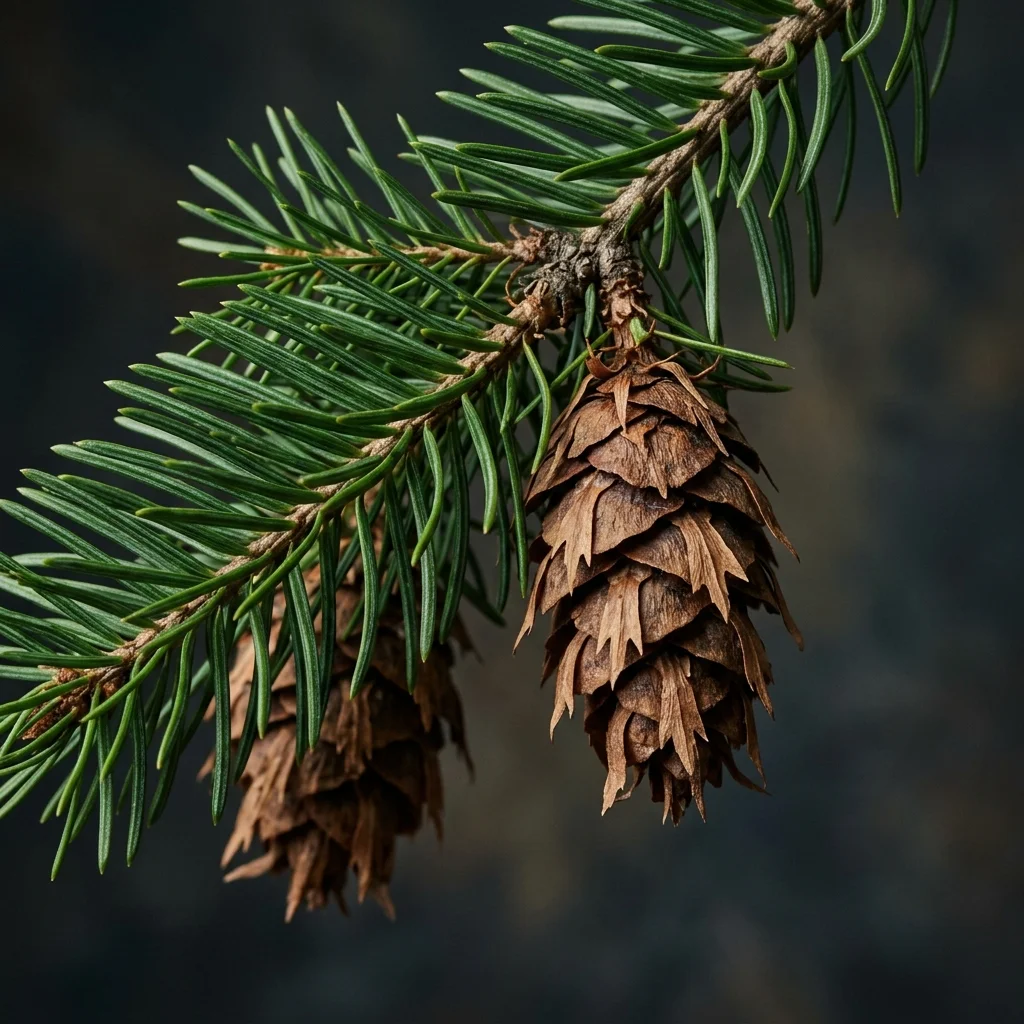
How to Identify Douglas Fir
Identify Douglas Fir immediately by its highly distinct biological features. Native to its specific ecosystem, it showcases spectacular foliage and structural habits optimized for its environment.
-
✓
Distinctive Features: Flat, soft needles arranged spirally around twigs, with highly unique three-lobed 'mickey mouse' bracts sticking out from its dangling cones.
-
✓
Typical Coloration: Lively deep forest green to slightly blue-green foliage, with highly textured reddish-brown fissured bark when mature.
-
✓
Potential Confusions: Similar to true Firs (Abies), but instantly distinguished by its three-lobed cone bracts and prominent pointed glossy buds.
11-Step Professional Care & Planting Guide
💧 【Watering & Moisture】 Water deeply and thoroughly. Allow the top 2 inches of soil to dry out between waterings. Highly sensitive to wet, soggy soil which can cause needle drop.
☀️ 【Sunlight & Exposure】 Requires bright filtered light to full morning sun. Highly tolerant of partial shade when young, but needs direct sun to develop mature density.
🪴 【Ideal Soil Mix】 Requires highly aerated, nutrient-rich acidic forest loam. Blend 40% sandy loam, 30% organic compost, and 30% peat moss (pH 5.5-6.5).
🌡️ 【Temperature & Winter Care】 Extremely cold-hardy (USDA Zone 4-6). Prefers cool, humid summers and snowy winters. Protect young trees from strong freezing winds.
✂ 【Pruning & Grooming】 Pruning is rarely needed. Cut away dry, winter-damaged branches in early spring. Avoid trimming the main leader stem to preserve its pyramid crown.
🧪 【Fertilization】 Apply a slow-release organic evergreen fertilizer once in early spring. Avoid chemical feeds containing heavy salts.
🏺 【Potting & Garden Planting】 Best grown in the ground. When planting in the garden, dig a hole 3 times the width of the root ball, backfill with loam, and apply a 3-inch layer of pine bark mulch.
🌱 【Propagation】 Propagated easily from fresh seeds harvested from mature cones in autumn, requiring cold stratification for 4 weeks before sowing.
🐛 【Common Pests】 Watch out for Douglas fir aphids and spider mites. Spray thoroughly with organic neem oil or insecticidal soap.
🦠 【Common Diseases】 Swiss needle cast can cause needles to yellow and drop in stagnant humid air. Ensure excellent spacing and ventilation.
🎓 【Botanist Advice】 The Douglas Fir is a fast-growing giant! Give it plenty of space in your garden, and always top-dress the root zone with thick bark mulch to retain moisture.
Frequently Asked Questions
Q: Why is it not a true fir?
A: Because it belongs to the genus Pseudotsuga (false hemlock) rather than Abies (true fir). It is easily identified by its unique three-lobed cone bracts and pointed winter buds.
Q: Is the Douglas Fir safe for cats and dogs?
A: Yes, Pseudotsuga menziesii is completely non-toxic and pet-safe.
Q: What soil is best for planting this tree?
A: A deep, rich, well-drained acidic soil. It hates heavy, alkaline clay soils which block root respiration.
Q: How fast does the Douglas Fir grow?
A: It is an incredibly rapid grower, capable of growing 2 to 3 feet per year once established in cool, moist climates.