Northern Catalpa Care & Identification Guide
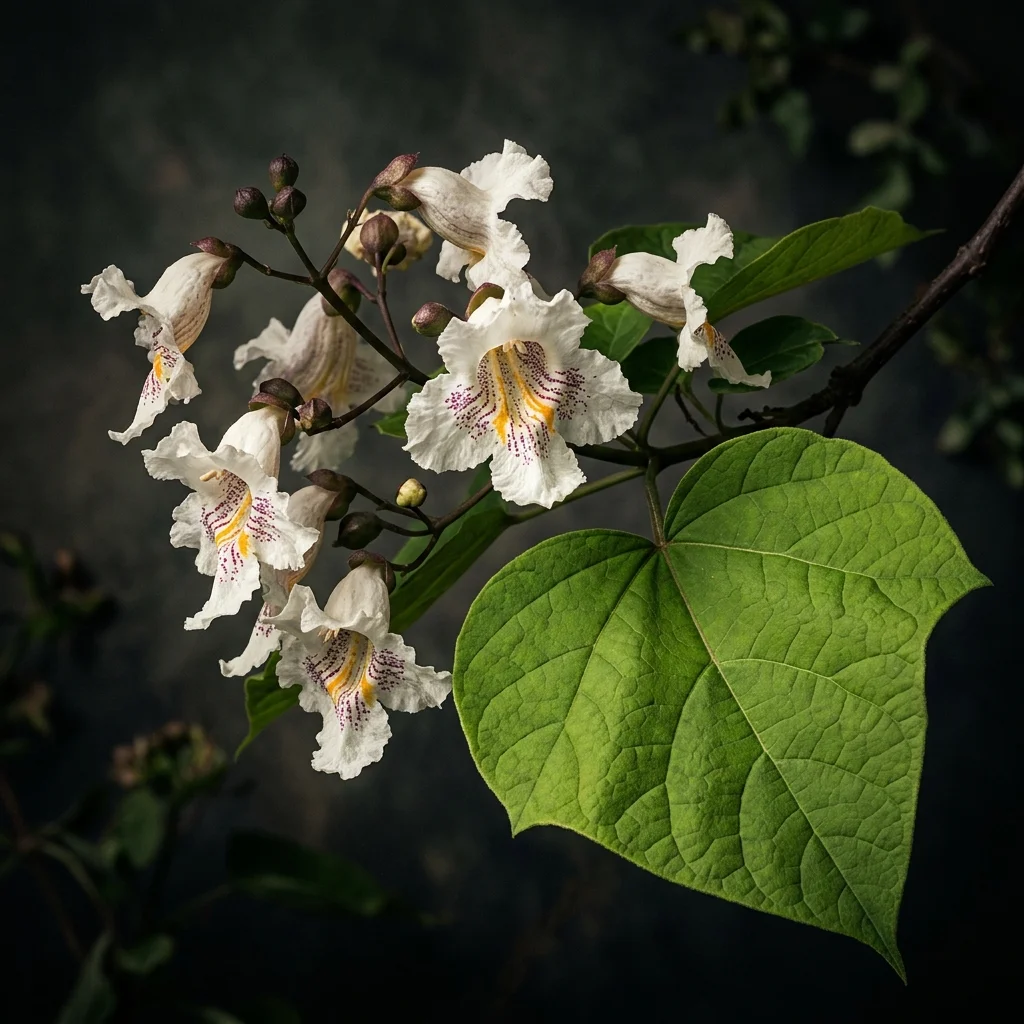
The magnificent Northern Catalpa (Catalpa speciosa), also known as the Cigar Tree, is a highly spectacular deciduous native of the Midwest United States, celebrated globally for its dramatic visual features. It boasts colossal, bright green heart-shaped (cordate) leaves up to 12 inches long, and breathtaking late-spring clusters of showy, white bell-shaped flowers marked with yellow stripes and purple spots inside. In autumn, it produces exceptionally long, cigar-like hanging seed pods. It requires moist, rich soils, full sun, and moderate watering.





How to Identify Northern Catalpa
Identify Northern Catalpa immediately by its highly distinct biological features. Native to its specific ecosystem, it showcases spectacular foliage and structural habits optimized for its environment.
-
✓
Distinctive Features: Colossal bright green heart-shaped leaves, massive upright clusters of white bell-shaped flowers, and exceptionally long cigar-like seed pods hanging in winter.
-
✓
Typical Coloration: Emerald-green giant leaves turning warm yellow-green in autumn, showy white flowers with yellow-purple throats, and dark brown scaly bark.
-
✓
Potential Confusions: Often confused with Southern Catalpa (Catalpa bignonioides), but distinguished by its much larger flowers, thicker leaves, and wider cigar-like seed pods.
11-Step Professional Care & Planting Guide
💧 【Watering & Moisture】 Water moderately. Prefers consistently moist soils but has outstanding drought-tolerance once established in deep loam.
☀️ 【Sunlight & Exposure】 Thrives in full direct sun to partial afternoon shade. Protect from extremely high winds, which can tear the colossal heart-shaped leaves.
🪴 【Ideal Soil Mix】 Extremely adaptable! Performs beautifully in heavy clay, sandy loam, or wet soils (pH 5.5-7.5). Prefers rich, organic-rich loam.
🌡️ 【Temperature & Winter Care】 Cold-hardy (USDA Zone 4-8). Robustly tolerates freezing winter freezes. Protect the root ball with a thick layer of organic mulch.
✂ 【Pruning & Grooming】 Prune in late winter when dormant. Remove low-hanging branches early to allow street clearance and maintain a balanced dome canopy.
🧪 【Fertilization】 Apply a slow-release organic balanced fertilizer in early spring. Mulch deeply with composted leaf mold under the drip line.
🏺 【Potting & Garden Planting】 Plant in spacious yards away from pavements, as fallen flowers and cigar pods can be messy. Dig a wide hole twice the root ball.
🌱 【Propagation】 Propagated easily by taking softwood cuttings in early summer, or by sowing the winged seeds in spring.
🐛 【Common Pests】 Highly susceptible to the Catalpa Sphinx Moth caterpillar, which can completely defoliate the tree, but they make excellent fish bait!
🦠 【Common Diseases】 Susceptible to powdery mildew and verticillium wilt. Ensure superior soil drainage and rake away fallen debris in autumn.
🎓 【Botanist Advice】 The long cigar-like seed pods look spectacular hanging from bare winter branches! Catalpa is a tough, historic tree that provides unmatched summer shade due to its colossal leaves.
Frequently Asked Questions
Q: What are those long cigar-like pods?
A: They are the seed capsules! They are long, narrow, green capsules that turn dark brown and dry in autumn, resembling cigars. They split open in winter to release winged seeds.
Q: Are Catalpa trees safe for dogs and cats?
A: Yes, the foliage and flowers of Catalpa speciosa are completely non-toxic and pet-safe for cats and dogs, though the roots are toxic.
Q: What is the Catalpa Worm?
A: It is the caterpillar of the Catalpa Sphinx Moth. They feed exclusively on Catalpa leaves and can defoliate the tree. However, they are highly prized by fishermen as the ultimate live fish bait!
Q: How large can the leaves grow?
A: They are colossal! The lush, velvety heart-shaped leaves can easily reach 8 to 12 inches (20-30 cm) in length, creating dense, cool shade.