Bur Oak Care & Identification Guide
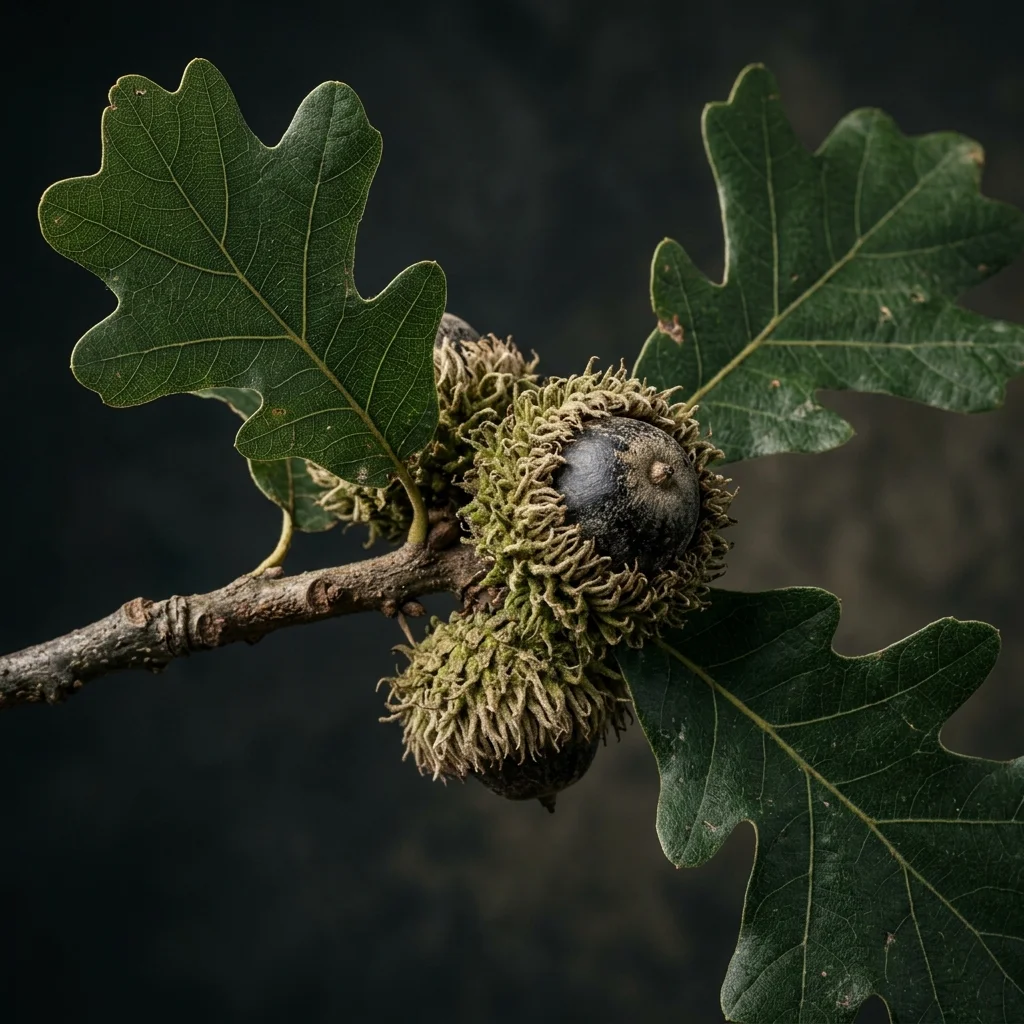
The magnificent Bur Oak (Quercus macrocarpa), also known as the Mossycup Oak, is a colossal and highly spectacular deciduous giant native to Central North America, celebrated globally for its massive trunk, extreme hardiness, and gargantuan acorns. It features large, violin-shaped green leaves and deeply textured, corky bark that naturally insulates it from forest fires. It produces the largest acorns of any North American oak, enclosed in a highly distinct, heavily fringed, mossy bur-like cap. It requires deep loam, full sun, and moderate watering.




How to Identify Bur Oak
Identify Bur Oak immediately by its highly distinct biological features. Native to its specific ecosystem, it showcases spectacular foliage and structural habits optimized for its environment.
-
✓
Distinctive Features: Massive violin-shaped leaves, deeply textured corky bark, and gargantuan acorns enclosed in heavily fringed mossy caps.
-
✓
Typical Coloration: Dark green summer foliage with pale fuzzy leaf undersides, turning to a warm golden-bronze or copper-amber in autumn.
-
✓
Potential Confusions: Similar to White Oak, but easily distinguished by its massive violin-shaped leaves and heavily fringed, giant acorn caps.
11-Step Professional Care & Planting Guide
💧 【Watering & Moisture】 Water moderately. Deeply soak the root zone once a week for young trees. Established mature bur oaks are exceptionally drought-tolerant.
☀️ 【Sunlight & Exposure】 Requires full direct sun. Loves wide open sky space; give it ample room to develop its classic massive spreading crown.
🪴 【Ideal Soil Mix】 Prefers deep, rich, well-drained loamy soils. Highly tolerant of alkaline, calcareous, and clay soils. Blend 50% loam, 30% sand, and 20% compost.
🌡️ 【Temperature & Winter Care】 Extremely cold-hardy (USDA Zone 3-8). Thrives in warm summers and freezing winters. Extremely robust.
✂ 【Pruning & Grooming】 Prune only in late winter during dormancy to remove crossing branches. Avoid pruning in spring/summer to prevent oak wilt.
🧪 【Fertilization】 Apply a slow-release organic balanced fertilizer in early spring under the drip line. Mulch with composted leaf mold.
🏺 【Potting & Garden Planting】 Plant in spacious ground. Dig a very deep, wide planting hole, backfill with deep loam, stake firmly, and water deeply.
🌱 【Propagation】 Propagated by planting fresh acorns immediately in autumn. They germinate rapidly and do not require cold stratification.
🐛 【Common Pests】 Watch for oak lace bugs or caterpillars. Spray manually with neem oil or organic insecticidal soap.
🦠 【Common Diseases】 Highly resistant to disease. Oak wilt can occasionally occur; keep trees stress-free and avoid wounding in summer.
🎓 【Botanist Advice】 The Bur Oak is virtually indestructible, tolerating urban heat, drought, alkaline soil, and severe winter freezes. Give it a deep, sunny spot in your garden and let this epic giant grow!
Frequently Asked Questions
Q: Why is it called the Bur Oak?
A: Because of its acorn caps! The cap is covered in thick, heavily fringed, woody scales that look like a prickly mossy bur (hence 'Mossycup Oak').
Q: Is the Bur Oak safe for dogs and cats?
A: Yes, Quercus macrocarpa is completely non-toxic and pet-safe for cats and dogs.
Q: How large are the acorns?
A: They are gargantuan! They are the largest acorns of any North American oak, growing up to 2 inches in size and enclosed in deep fringed caps.
Q: Is it tolerant of alkaline clay soils?
A: Yes! Unlike many other oaks, the Bur Oak is highly adaptable, easily tolerating alkaline clay, dry gravelly soils, and severe urban pollution.