Bristlecone Pine Care & Identification Guide
The magnificent Great Basin Bristlecone Pine (Pinus longaeva) is a spectacular and legendary conifer native to high-altitude cold deserts of California, Nevada, and Utah, celebrated globally as the oldest non-clonal living organism on Earth, with individual specimens living over 5,000 years. It grows extremely slowly in dry, barren dolomite peaks, creating dense, highly resinous, practically rot-proof amber wood that resists bacteria, rot, and boring pests. It requires rocky grit soil, full sun, and exceptionally dry winters.




How to Identify Bristlecone Pine
Identify Bristlecone Pine immediately by its highly distinct biological features. Native to its specific ecosystem, it showcases spectacular foliage and structural habits optimized for its environment.
-
✓
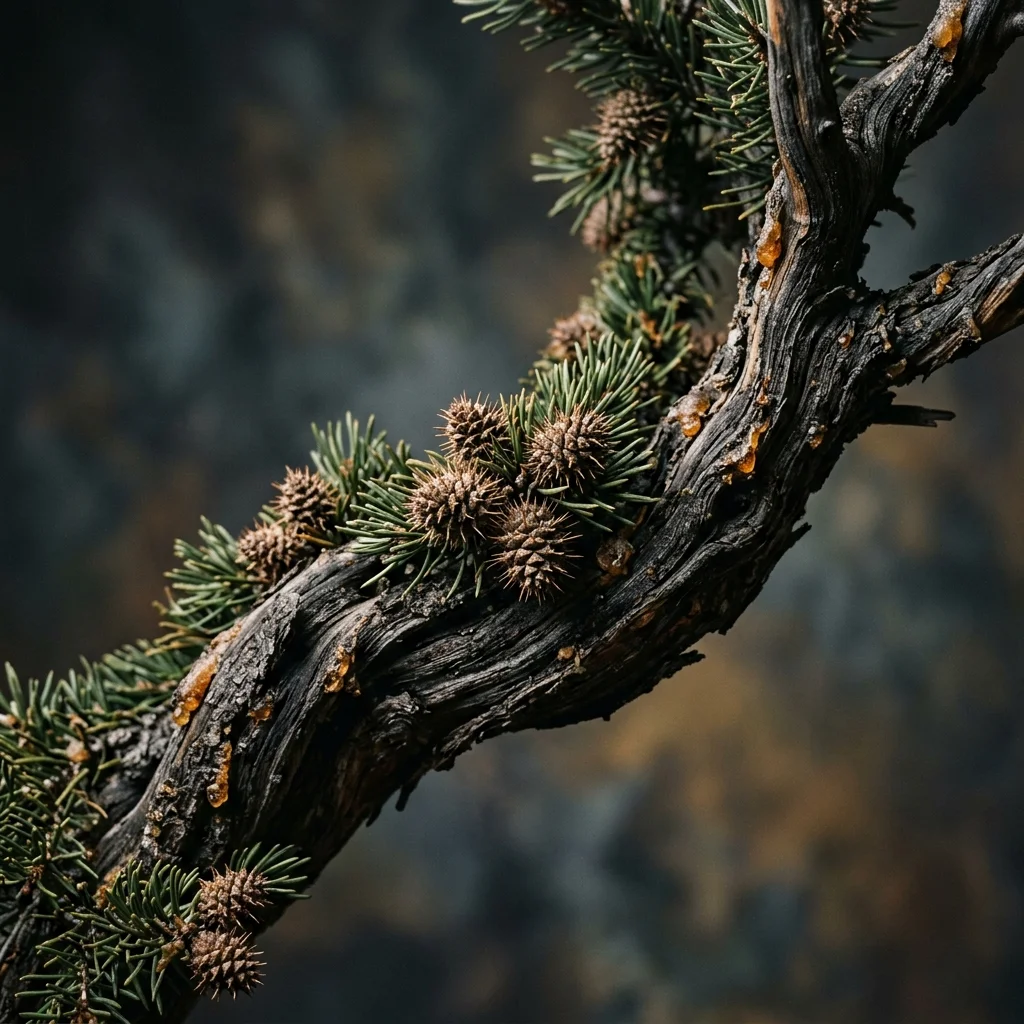
Distinctive Features: Highly gnarled, twisted ancient bare trunk, dark green dense needle tufts (5 per bundle), and small dark brown cones covered in sharp claw-like bristles.
-
✓
Typical Coloration: Dark deep green needles, rugged amber-brown ancient heartwood, and grey scaly outer bark.
-
✓
Potential Confusions: Similar to Foxtail Pine (Pinus balfouriana), but easily distinguished by the sharp, needle-like prickles on the cone scales (Foxtail Pine cones are completely smooth).
11-Step Professional Care & Planting Guide
💧 【Watering & Moisture】 Water sparingly. Adapted to extreme drought in high dry winds. Extremely sensitive to overwatering; allow soil to dry out 100% between waterings.
☀️ 【Sunlight & Exposure】 Requires full direct sun. Highly intolerant of shade. Needs absolute open, exposed, sunny areas to sustain its slow metabolism.
🪴 【Ideal Soil Mix】 Requires exceptionally poor, gritty, highly draining alkaline soil. Blend 60% dolomite or granite grit, 20% coarse sand, and 20% lean sandy loam (pH 7.0-8.5).
🌡️ 【Temperature & Winter Care】 Cold-hardy champion (USDA Zone 4-7). Survives freezing alpine wind down to -35°C. Dislikes high humidity and sultry tropical heat.
✂ 【Pruning & Grooming】 Never prune living branches. The slow growth means every needle is precious. Let its dramatic, wind-sculpted ancient form develop naturally.
🧪 【Fertilization】 Absolutely no heavy fertilizer! High nitrogen causes rapid, structurally weak growth. Apply a trace organic mineral dust in spring if necessary.
🏺 【Potting & Garden Planting】 Highly prized for specialized alpine rock gardens and ancient bonsai displays. Ensure deepest gritty drainage beds.
🌱 【Propagation】 Propagated by sowing seeds in spring after 60 days of cold stratification. Slow-growing seedlings require sandy mineral soil.
🐛 【Common Pests】 Virtually pest-resistant due to high resin concentration. Watch for rare bark beetles in weak plants.
🦠 【Common Diseases】 Susceptible to root rot in wet, organic-rich garden soil. Outstanding drainage is mandatory.
🎓 【Botanist Advice】 The wood of a Bristlecone Pine is so dense and packed with antiseptic resins that it practically never rots! Even when the tree dies after 5,000 years, its bare, beautiful twisted skeleton can remain standing proudly in the wind for another 2,000 years.
Frequently Asked Questions
Q: How old is the oldest Bristlecone Pine?
A: It is named Methuselah! The Great Basin Bristlecone Pine has individual specimens verified to be over **4,850 to 5,060 years old**, surviving since before the construction of the Great Pyramids of Giza.
Q: Is the Bristlecone Pine safe for dogs and cats?
A: Yes, *Pinus longaeva* is completely non-toxic and pet-safe, though its tough needles can be a minor physical choking hazard if chewed by curious kittens.
Q: Why is it called Bristlecone?
A: It is named after its female cones! The woody scales of the immature dark purple cones feature a highly distinct, sharp bristle or claw-like prickle on the tip of each scale, designed to deter seed predators.
Q: Can I grow a Bristlecone Pine in a hot subtropical garden?
A: No, it is highly unsuited. The tree requires dry, cold alpine air and cool rocky root runs; high humidity and hot nights will trigger rapid fungal root rot, killing the specimen.