Black Spruce Care & Identification Guide
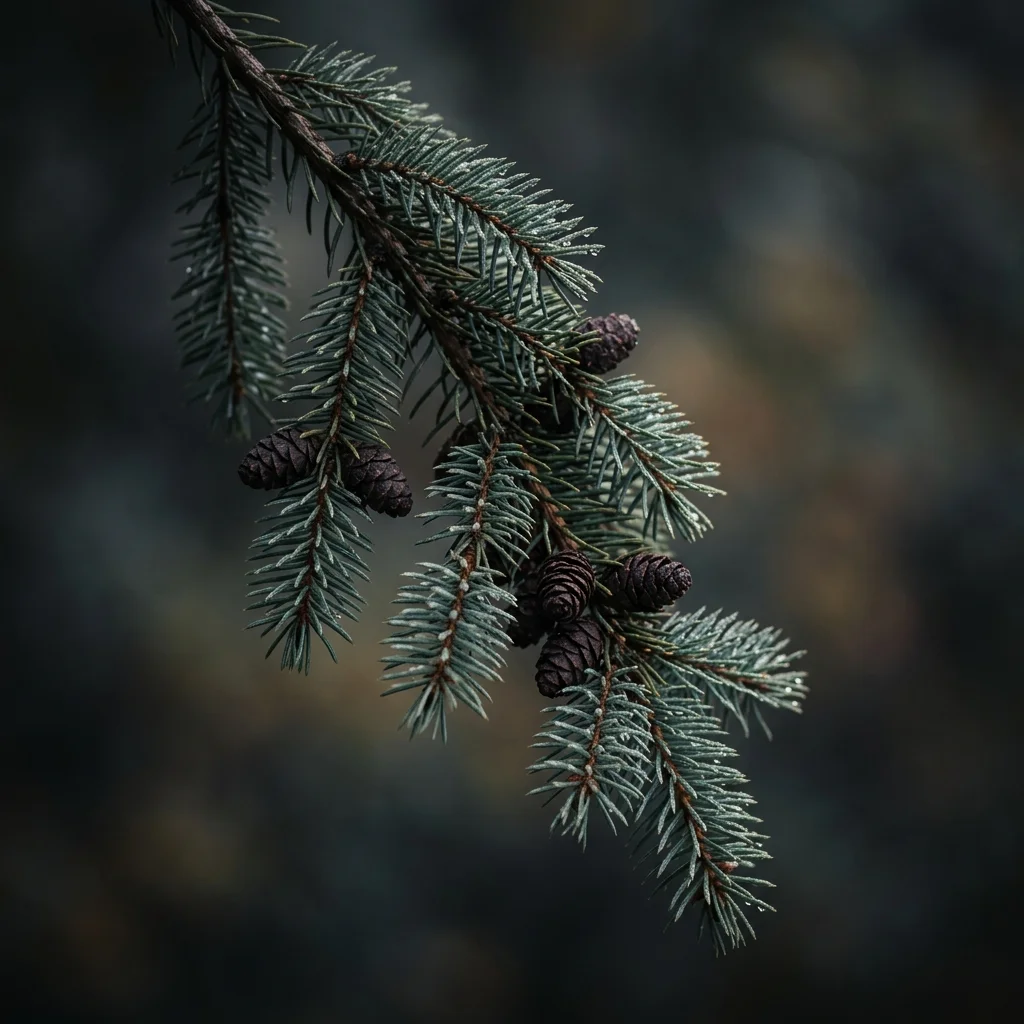
The magnificent Black Spruce (Picea mariana) is a spectacular and narrow-crowned evergreen conifer native to the subarctic forests and wetlands of North America, celebrated globally for its ability to thrive in cold, acidic peat bogs. Its foliage consists of short, stiff, bluish-green needles. Its cones are semi-serotinous, remaining closed on the tree for years until the heat of a forest fire triggers them to open and release seeds. It requires acidic boggy soil, full sun, and low to moderate nutrient levels.





How to Identify Black Spruce
Identify Black Spruce immediately by its highly distinct biological features. Native to its specific ecosystem, it showcases spectacular foliage and structural habits optimized for its environment.
-
✓
Distinctive Features: Narrow, slender spire-like crown, short bluish-green needles, and small dark purple to blackish egg-shaped cones clustering at the top.
-
✓
Typical Coloration: Bluish-green dense needles, dark purple to grey-brown woody cones, and scaly greyish-brown inner bark.
-
✓
Potential Confusions: Similar to Red Spruce (Picea rubens), but distinguished by its smaller, darker cones, narrower spire-like crown, and strict preference for wet, acidic bog habitats.
11-Step Professional Care & Planting Guide
💧 【Watering & Moisture】 Water moderately to highly. Highly adapted to wet soils and boggy conditions. Sensitive to hot, dry summer droughts; irrigate regularly to keep roots moist.
☀️ 【Sunlight & Exposure】 Requires full direct sun. Extremely adapted to open, cold landscapes; highly shade-intolerant, lower branches shed naturally if shaded.
🪴 【Ideal Soil Mix】 Prefers wet, organic, highly acidic peat soils. Mix 60% peat moss, 20% organic compost, and 20% sandy loam (pH 4.0-5.5).
🌡️ 【Temperature & Winter Care】 Outstandingly cold-hardy (USDA Zone 2-6). Tolerates severe subzero freezing down to -50°C. Struggles in hot, humid tropical climates.
✂ 【Pruning & Grooming】 Minimal pruning needed. Let its narrow, slender spire-like growth develop naturally. Prune dead or broken branches in late winter.
🧪 【Fertilization】 Adapted to low-nutrient soils. Requires very little fertilization; a light application of acidic fertilizer in spring is sufficient.
🏺 【Potting & Garden Planting】 Excellent choice for wet garden spots, rain gardens, or cold-climate landscapes. Plant in acidic, organic-rich beds.
🌱 【Propagation】 Propagated by sowing seeds in spring after 30 days of cold wet stratification. Seeds are easily gathered from heated, opened cones.
🐛 【Common Pests】 Watch out for spruce budworms and spider mites in dry seasons. Spray with organic neem oil or insecticidal soap.
🦠 【Common Diseases】 Susceptible to needle rust and root rot in stagnant, non-acidic clay. Ensure soil is acidic and highly organic.
🎓 【Botanist Advice】 **Fascinating Fact:** Black Spruce cones are **semi-serotinous**, meaning they use forest fires to reproduce! The cones remain sealed with resin for years, opening only under intense heat to quickly reseed the ash-enriched forest floor.
Frequently Asked Questions
Q: Why is my black spruce growing so slowly?
A: This is its natural biology! Black Spruce is highly adapted to wet, cold, nutrient-poor bog environments, resulting in slow growth (often just a few inches a year) to conserve energy.
Q: Is the Black Spruce safe for pets?
A: Yes, *Picea mariana* is completely non-toxic and pet-safe for cats and dogs, making it a very safe evergreen for residential gardens.
Q: What is a 'Krummholz' form?
A: In extreme wind-swept polar tree lines, Black Spruce develops a stunted, twisted, wind-battered dwarf form called Krummholz (German for 'crooked wood') to survive.
Q: Why are the needles turning yellow?
A: This is likely due to **Iron Chlorosis** caused by alkaline soil (pH above 6.5). Black Spruce requires highly acidic soil to absorb iron. Amend soil immediately with peat moss or elemental sulfur.