Baobab Care & Identification Guide
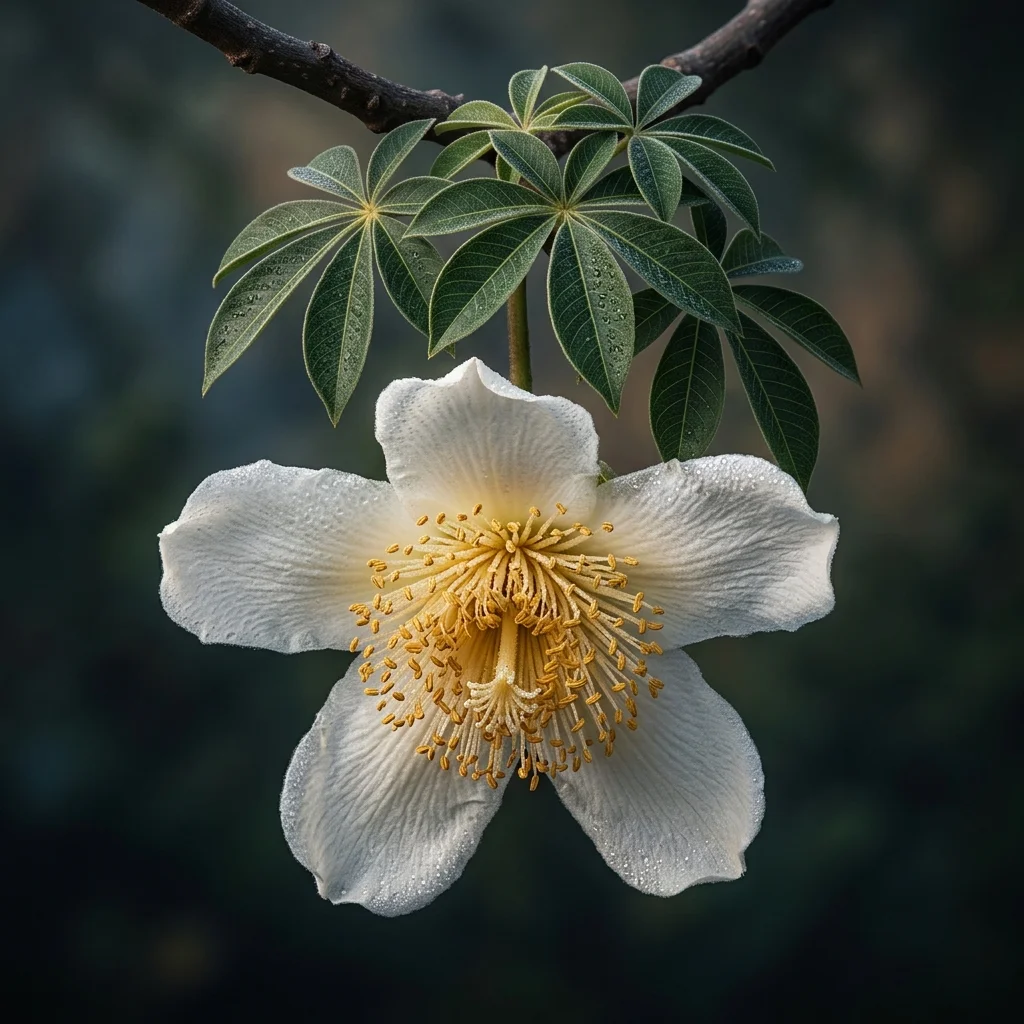
The magnificent Baobab (Adansonia digitata) is a spectacular and long-lived tropical deciduous tree native to the semi-arid savannahs of Sub-Saharan Africa, celebrated globally for its colossal bottle-shaped trunk that stores thousands of liters of water to survive drought. Known as the 'upside-down tree' because its leafless branches resemble roots in the dry season. It produces large, hanging, fragrant white flowers pollinated by bats. It requires sandy mineral soil, full sun, and strictly dry winters.





How to Identify Baobab
Identify Baobab immediately by its highly distinct biological features. Native to its specific ecosystem, it showcases spectacular foliage and structural habits optimized for its environment.
-
✓
Distinctive Features: Colossal, swollen bottle-shaped grey trunk, sparse root-like crown, palmate compound leaves, and large hanging white flowers.
-
✓
Typical Coloration: Grey smooth outer bark, medium green palmate leaves, and large snow-white hanging flowers with yellow stamens.
-
✓
Potential Confusions: Similar to Bottle Tree (Brachychiton), but easily distinguished by its significantly larger size, palmate leaves, and massive hanging white flowers.
11-Step Professional Care & Planting Guide
💧 【Watering & Moisture】 Water sparingly! During the summer growing season, water moderately. In the leafless winter dormant season, **stop watering completely** to prevent fatal root rot.
☀️ 【Sunlight & Exposure】 Requires absolute full direct sun. Loves intense heat and sunlight; plant in the brightest, warmest spot available.
🪴 【Ideal Soil Mix】 Requires exceptionally draining gritty mineral soil. Blend 60% pumice or volcanic grit, 20% coarse sand, and 20% sandy loam (pH 6.5-7.5).
🌡️ 【Temperature & Winter Care】 Extremely frost-sensitive! Growth halts below 15°C. Sustained cold below 10°C triggers dormancy, and **freezing temperatures below 0°C are rapidly fatal**, causing the watery trunk to collapse.
✂ 【Pruning & Grooming】 Minimal pruning needed. Prune in late winter to manage height or shape branches. Tolerates heavy pruning and makes a fantastic bonsai.
🧪 【Fertilization】 Apply a low-nitrogen cactus-like organic fertilizer once in early spring. Avoid heavy fertilization which weakens trunk structure.
🏺 【Potting & Garden Planting】 Plant in very large, deep clay pots or open sandy garden spots in frost-free zones. Backfill with grit and ensure massive drainage holes.
🌱 【Propagation】 Propagated by sowing seeds in spring after soaking in hot water to soften the hard seed coat, or by taking semi-hardwood cuttings.
🐛 【Common Pests】 Watch for mealybugs, scale insects, and spider mites. Treat with insecticidal soaps or manual alcohol swabbing.
🦠 【Common Diseases】 Highly susceptible to root rot and trunk rot from overwatering. Ensure dry soil conditions and outstanding drainage.
🎓 【Botanist Advice】 **Winter Warning:** When the Baobab drops all its leaves in autumn, it is entering dry-season dormancy. **Do not water it at all!** The swollen trunk holds plenty of moisture. Watering during this stage will rot the sponge-like trunk, killing the tree.
Frequently Asked Questions
Q: Why is it called the Upside-Down Tree?
A: It is a visual illusion! During the dry season, the Baobab sheds all its leaves to conserve water. Its bare, gnarly, spreading branches resemble a root system pointing toward the sky, giving the impression that it was planted upside-down by the gods.
Q: Is the Baobab safe for household pets?
A: Yes, *Adansonia digitata* is completely non-toxic and pet-safe. Its vitamin-rich leaves and fruit powder are highly nutritious and safe.
Q: How much water can a Baobab tree store?
A: A mature, giant Baobab tree can store up to **100,000 to 140,000 liters** of water inside its soft, spongy woody fibers, allowing it to easily survive years of severe savannah drought.
Q: Can I grow a Baobab as a indoor bonsai?
A: Yes! Baobabs make exceptionally spectacular bonsai subjects because their fleshy trunks swell rapidly in pots, and they tolerate heavy pruning and dry indoor air beautifully.