Balsam Fir Care & Identification Guide
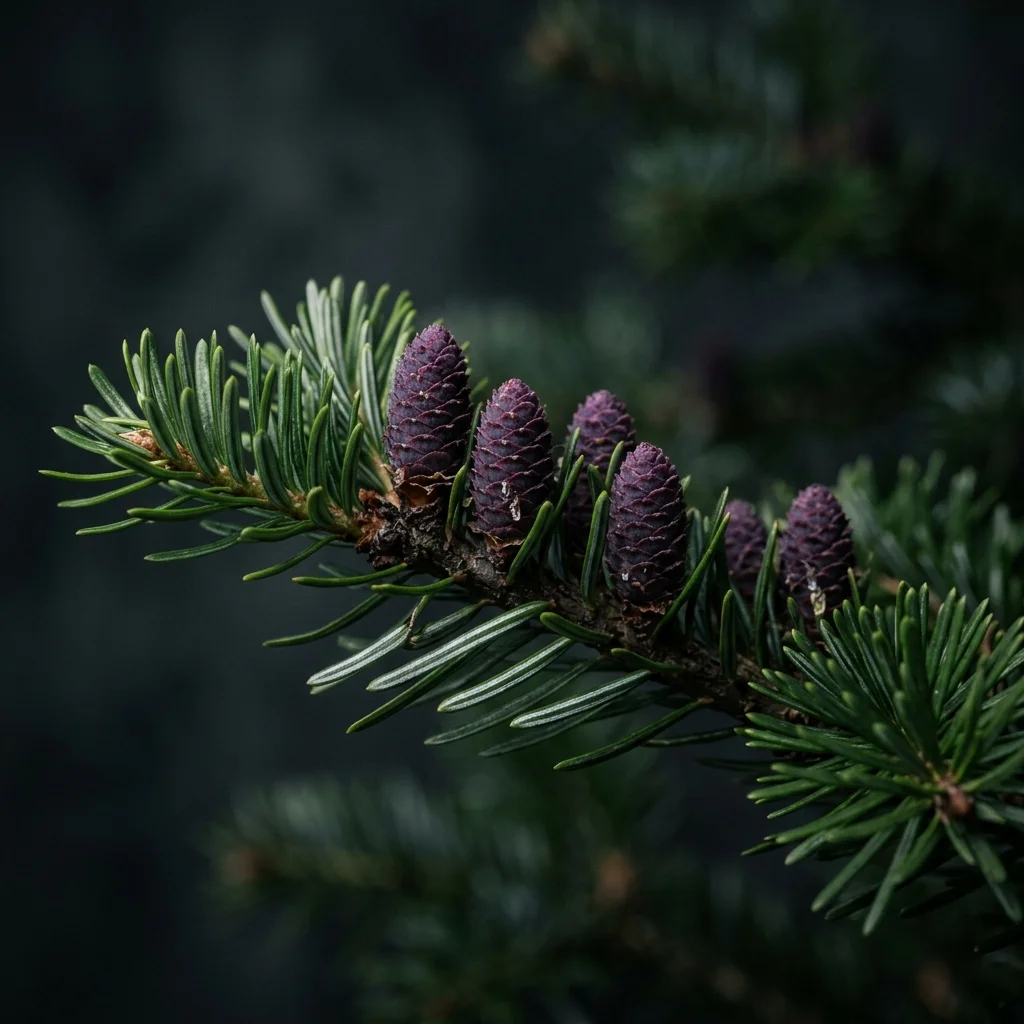
The magnificent Balsam Fir (Abies balsamea) is a highly spectacular evergreen conifer native to the cool boreal forests of North America, celebrated globally for its intense, sweet pine-balsam fragrance, narrow conical form, and beautiful upright dark purple cones. It features flat, dark green needles with two silvery stomatal bands beneath, arranged in flat sprays. It requires moist, rich, organic acidic soil, full sun to partial shade, and moderate watering. It is the leading source of Canada balsam.



How to Identify Balsam Fir
Identify Balsam Fir immediately by its highly distinct biological features. Native to its specific ecosystem, it showcases spectacular foliage and structural habits optimized for its environment.
-
✓
Distinctive Features: Narrow conical crown, flat dark green needles with two silver bands beneath, and upright dark purple-brown cones that disintegrate on the branch.
-
✓
Typical Coloration: Glossy dark green needles, silver-white bands beneath, and dark purple-black young cones.
-
✓
Potential Confusions: Similar to Fraser Fir, but distinguished by its smaller cones whose bracts do not extend past the scales (Fraser Fir has highly visible yellow-green reflexed bracts).
11-Step Professional Care & Planting Guide
💧 【Watering & Moisture】 Water moderately. Prefers consistently moist, cool soil. Highly sensitive to drying out; irrigate deeply once a week during warm, dry summer spells.
☀️ 【Sunlight & Exposure】 Thrives in full direct sun to partial afternoon shade. Prefers cool, north-facing slopes and damp, humid mountain climates.
🪴 【Ideal Soil Mix】 Requires rich, deep, moist, organic-rich acidic soil. Blend 50% organic loam, 30% organic peat moss, and 20% compost (optimal pH 4.5-6.0).
🌡️ 【Temperature & Winter Care】 Cold-hardy down to -40°C (USDA Zone 3-6). Extremely cold-tolerant. Dislikes hot, humid subtropical summers; apply compost mulch.
✂ 【Pruning & Grooming】 Minimal pruning required. Prune lightly in late winter only to shape or remove dead wood. Maintain its narrow, neat spire-like crown.
🧪 【Fertilization】 Feed once in early spring with a slow-release organic acidic fertilizer. Mulch deeply with composted pine needles or pine bark.
🏺 【Potting & Garden Planting】 Plant in cool, moist garden spots. Dig a wide hole twice the root ball, backfill with rich organic acidic loam, and mulch deeply.
🌱 【Propagation】 Propagated by sowing seeds in spring after 60 days of cold stratification, or by grafting premium cultivars.
🐛 【Common Pests】 Susceptible to spruce budworms, aphids, or spider mites. Spray manually with organic neem oil or systemic treatments.
🦠 【Common Diseases】 Susceptible to rust fungi or root rot in heavy wet soils. Ensure outstanding drainage and organic-rich loam.
🎓 【Botanist Advice】 The sticky liquid resin blisters on the bark contain premium **Canada balsam**, traditionally used in optics and microscopy as a highly transparent lens glue!
Frequently Asked Questions
Q: Why does it smell so strongly of pine?
A: It is Balsam Oil! The needles and bark resin contain high levels of fragrant terpenes. This intense, refreshing aroma is highly prized for Christmas trees and essential oils.
Q: Is the Balsam Fir safe for domestic pets?
A: Yes, Abies balsamea is completely non-toxic and pet-safe for cats and dogs.
Q: Why do the cones point straight up?
A: This is a key botanical distinction of true firs (Abies)! Unlike spruces and pines whose cones hang downwards, fir cones always stand upright like candles on the branches.
Q: Why did my fir cones disappear?
A: They disintegrated! Unlike pine cones that fall in one piece, mature fir cones shed their scales on the branch, leaving only a thin, central spike behind.