Arborvitae Care & Identification Guide
The magnificent Arborvitae (Thuja occidentalis), also known as the Eastern White Cedar or Northern White Cedar, is a highly spectacular evergreen conifer native to Eastern North America, celebrated globally for its neat pyramidal form, scale-like leaves in flat fan-like sprays, and legendary role as a premier hedge tree. Its foliage contains highly aromatic essential oils. Named 'Arborvitae' (tree of life) because its vitamin-C rich leaves cured scurvy for early French explorers. It requires moist soil, full direct sun, and moderate watering.




How to Identify Arborvitae
Identify Arborvitae immediately by its highly distinct biological features. Native to its specific ecosystem, it showcases spectacular foliage and structural habits optimized for its environment.
-
✓
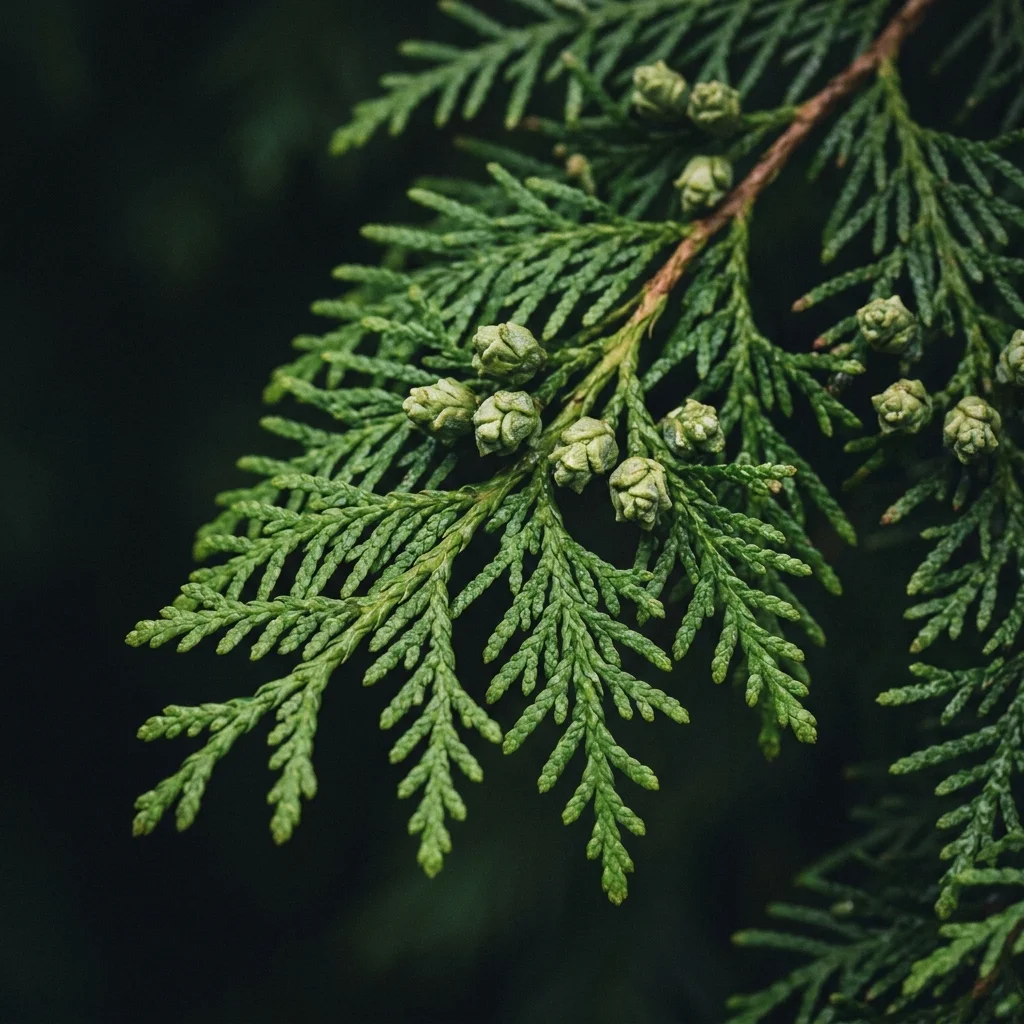
Distinctive Features: Neat pyramidal crown, flat fan-like sprays of scale-like bright green foliage, and tiny bell-like woody cones.
-
✓
Typical Coloration: Bright emerald-green foliage, turning bronze-green in winter, and fibrous reddish-brown bark.
-
✓
Potential Confusions: Similar to Leyland Cypress, but easily distinguished by its more flattened, fan-like foliage sprays and tiny elongated bell-like cones (Leyland has globose round cones).
11-Step Professional Care & Planting Guide
💧 【Watering & Moisture】 Water moderately. Prefers consistently moist, well-aerated soil. Highly sensitive to extreme drought; water deeply once a week during dry summers.
☀️ 【Sunlight & Exposure】 Requires full direct sun. Can tolerate very light partial shade, but maximum density and bright green color are achieved in open, bright lawns.
🪴 【Ideal Soil Mix】 Thrives in deep, rich, organic loam. Highly adaptable to clay or alkaline soils. Blend 50% loam, 30% organic compost, and 20% perlite (pH 6.0-7.5).
🌡️ 【Temperature & Winter Care】 Cold-hardy (USDA Zone 3-7). Extremely cold-hardy down to -40°C. Dislikes dry, scorching winds in winter which cause winter burn; apply mulch.
✂ 【Pruning & Grooming】 Exceptionally tolerant of shearing! Prune in late spring to shape hedges and promote dense branch development.
🧪 【Fertilization】 Apply a slow-release organic balanced fertilizer in early spring. Mulch with composted bark to retain soil moisture.
🏺 【Potting & Garden Planting】 Ideal container tree for patios! Choose a large pot with excellent drainage, backfill with rich organic loam, and mulch deeply.
🌱 【Propagation】 Propagated by taking semi-hardwood cuttings in late summer, or by sowing seeds in spring.
🐛 【Common Pests】 Watch out for bagworms, leafminers, or spider mites. Spray manually with organic neem oil or systemic treatments.
🦠 【Common Diseases】 Susceptible to needle blight or root rot in waterlogged clay. Ensure outstanding soil drainage.
🎓 【Botanist Advice】 **Warning for livestock:** The foliage contains **Thujone**, which is highly toxic to horses and cattle if eaten in large amounts! However, it is an outstanding, highly durable landscaping hedge.
Frequently Asked Questions
Q: Why is it called the Tree of Life?
A: It has historic medical rescue! The name 'Arborvitae' is Latin for 'tree of life', named by the King of France in the 16th century after Native Americans used a tea brewed from its leaves (rich in Vitamin C) to cure scurvy among early French explorers.
Q: Is the Arborvitae safe for household pets?
A: No, Thuja occidentalis foliage contains Thujone, which is toxic to dogs, cats, and horses, causing stomach upset and skin irritation.
Q: How fast does it grow?
A: It grows at a moderate rate, about 1 to 2 feet per year, making it an extremely stable, reliable, and easily managed hedge choice for residential borders.
Q: Why is the top of my arborvitae turning brown?
A: This is often winter desiccation or bagworm infestation! High winds in winter dry out the needles when the roots are frozen. Ensure deep watering in autumn and check for bagworm cocoons.