American Sycamore Care & Identification Guide
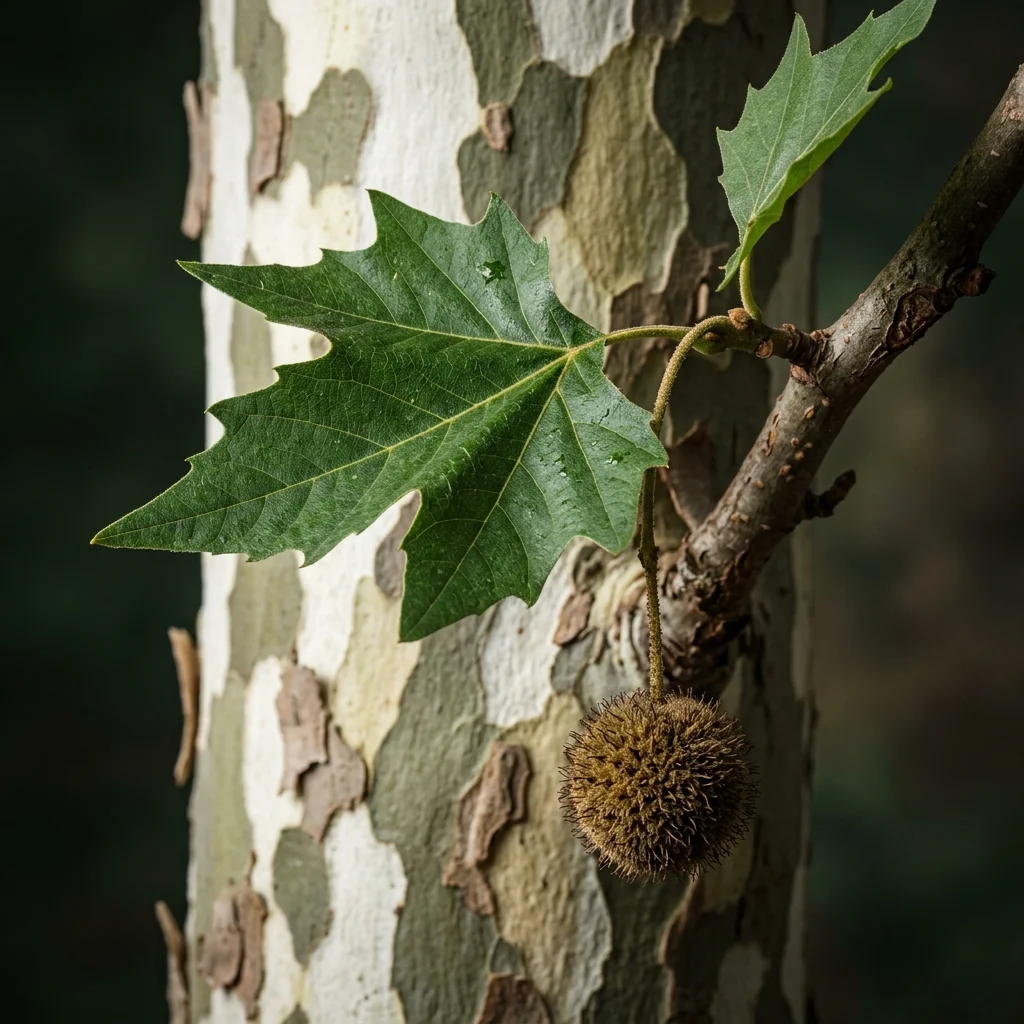
The magnificent American Sycamore (Platanus occidentalis) is a colossal and highly spectacular deciduous hardwood native to Eastern North America, celebrated globally for its massive trunk diameter, fast growth, and beautiful mottled peeling bark. As the tree grows, its outer bark flakes off in large jigsaw pieces, revealing a smooth, chalky-white and olive-grey inner trunk. It carries huge, hand-like leaves and dangling fuzzy ball-like seed fruits. It requires highly moist soils, full sun, and deep planting.





How to Identify American Sycamore
Identify American Sycamore immediately by its highly distinct biological features. Native to its specific ecosystem, it showcases spectacular foliage and structural habits optimized for its environment.
-
✓
Distinctive Features: Massive thick trunk with dramatic mottled bark peeling to reveal chalky-white branches, huge 3-5 lobed maple-like leaves, and dangling ball-like seed fruits.
-
✓
Typical Coloration: Bright green leaves in summer, turning to a subtle warm golden-bronze or copper-brown in autumn.
-
✓
Potential Confusions: Similar to London Plane, but distinguished by its seed balls which are almost always produced singly (London Plane has seed balls in pairs).
11-Step Professional Care & Planting Guide
💧 【Watering & Moisture】 Water highly. Prefers consistently damp, wet organic soils. Thrives along riverbanks, lakesides, and low-lying garden spots; keep soil moist.
☀️ 【Sunlight & Exposure】 Requires full direct sun. Dislikes shade, which slows its massive trunk development and thins the canopy.
🪴 【Ideal Soil Mix】 Requires deep, rich, moisture-retentive organic soil. Blend 50% organic loam, 30% compost, and 20% sand (pH 6.0-7.5).
🌡️ 【Temperature & Winter Care】 Extremely cold-hardy (USDA Zone 4-9). Tolerates deep winter freezes and hot, humid summers perfectly. Robust.
✂ 【Pruning & Grooming】 Prune in late autumn or winter during dormancy to shape the massive crown. Remove lower branches to highlight the white trunk.
🧪 【Fertilization】 Spread a thick layer of organic compost or aged manure under the drip line in early spring. Mulch deeply.
🏺 【Potting & Garden Planting】 Plant only in very spacious ground away from foundations. Dig a very deep, wide hole, backfill with organic loam, and water deeply.
🌱 【Propagation】 Propagated by taking hardwood cuttings in winter, or by harvesting and sowing seed balls in spring.
🐛 【Common Pests】 Watch out for sycamore lace bugs, which feed on leaf undersides. Spray with organic neem oil or insecticidal soap.
🦠 【Common Diseases】 Highly susceptible to Sycamore Anthracnose (a fungal disease that kills new leaves and twigs in cool, wet springs). Keep trees well-spaced.
🎓 【Botanist Advice】 The American Sycamore grows to an immense size (over 100 feet tall) and has powerful, water-seeking roots! Never plant it close to houses, driveways, or sewer lines.
Frequently Asked Questions
Q: What is a buttonball?
A: It is the popular name for the fuzzy ball-like seed fruit of the American Sycamore. It hangs from a slender stem, matures in autumn, and breaks apart in spring to release fluffy seeds.
Q: Is the American Sycamore safe for pets?
A: Yes, Platanus occidentalis is completely non-toxic and pet-safe for cats and dogs.
Q: Why does the tree shed its bark in big chunks?
A: It is a natural growth process! The bark of the Sycamore is rigid and cannot stretch as the massive trunk expands rapidly, causing the outer bark to crack and peel off.
Q: What causes leaf drop in early spring?
A: This is typically caused by Sycamore Anthracnose, a common fungal disease triggered by cool, wet spring weather. It causes young leaves to wilt and drop, but healthy trees will grow a second flush of leaves as summer warms up.