American Beech Care & Identification Guide
The magnificent American Beech (Fagus grandifolia) is a colossal and highly spectacular deciduous native of Eastern North America, celebrated globally for its light silver-grey smooth bark, deep shade canopy, and majestic form. It features papery green leaves with prominent parallel veins ending in sharp, distinct serrated teeth. It produces sweet triangular nuts in soft prickly husks. It requires deep, rich, moisture-retentive acidic soils and bright filtered light.





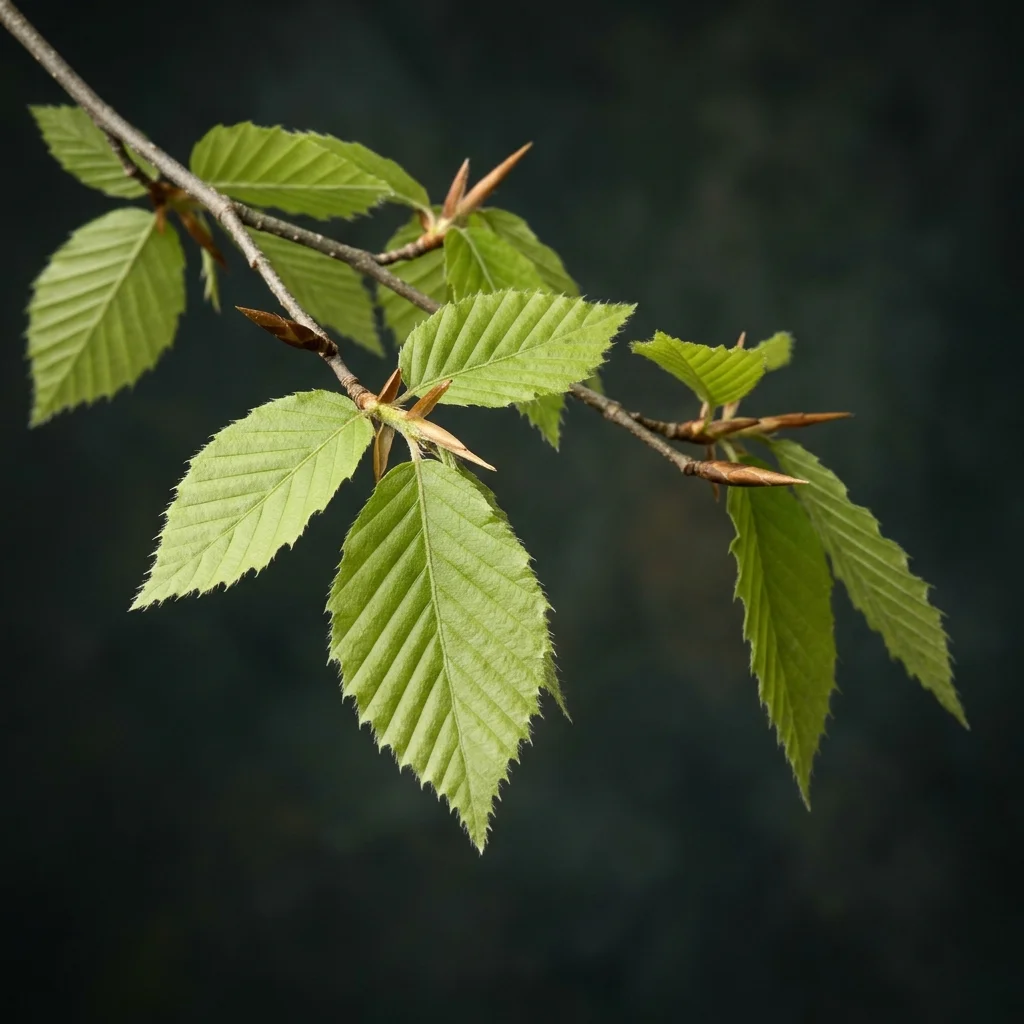
How to Identify American Beech
Identify American Beech immediately by its highly distinct biological features. Native to its specific ecosystem, it showcases spectacular foliage and structural habits optimized for its environment.
-
✓
Distinctive Features: Smooth, light silver-grey elephant-hide bark, and papery leaves with prominent parallel veins ending in sharp teeth.
-
✓
Typical Coloration: Lively bright green in summer, turning to a breathtaking, bright golden-bronze or copper-yellow in autumn.
-
✓
Potential Confusions: Similar to European Beech, but distinguished by its longer, papery leaves (8-15cm) with sharp, serrated margins.
11-Step Professional Care & Planting Guide
💧 【Watering & Moisture】 Water moderately. Keep soil consistently damp. Highly sensitive to clay compaction and standing water; ensure excellent drainage.
☀️ 【Sunlight & Exposure】 Requires bright filtered light to partial shade. Can tolerate full morning sun, but direct afternoon light can bleach its papery leaves.
🪴 【Ideal Soil Mix】 Prefers deep, rich, moisture-retentive acidic soil. Blend 50% organic loam, 30% peat moss, and 20% coarse sand (pH 5.0-6.5).
🌡️ 【Temperature & Winter Care】 Extremely cold-hardy (USDA Zone 3-9). Thrives in cool, damp summers and snowy winters. Highly robust.
✂ 【Pruning & Grooming】 Prune only in late winter to remove dead or crossing limbs. Retain low branches to naturally shade the thin silver bark.
🧪 【Fertilization】 Apply a slow-release organic balanced fertilizer once in early spring. Mulch the drip line with aged pine bark.
🏺 【Potting & Garden Planting】 Plant in spacious ground away from foot traffic. Dig a wide hole, backfill with rich organic acidic loam, and mulch deeply.
🌱 【Propagation】 Propagated by sowing seeds harvested from bristly husks in autumn, requiring 90 days of cold stratification in wet sand.
🐛 【Common Pests】 Watch out for beech scale insects which can attack the bark. Treat manually with organic insecticidal soap or neem oil.
🦠 【Common Diseases】 Highly susceptible to Beech Bark Disease (spread by scale insects and nectria fungus). Keep trees stress-free and aerated.
🎓 【Botanist Advice】 The American Beech has incredibly thin, silver bark that is highly sensitive to solar scald and physical damage! Never carve into the bark, and keep lawnmowers away from its trunk.
Frequently Asked Questions
Q: How does it differ from European Beech?
A: The American Beech has longer, papery leaves (8-15cm) with sharp serrated teeth, and lighter silver bark, whereas the European Beech has smaller wavy leaves with non-toothed margins.
Q: Is the American Beech safe for domestic pets?
A: Yes, Fagus grandifolia is completely non-toxic and pet-safe for cats and dogs.
Q: What is Beech Bark Disease?
A: It is a destructive disease caused when the beech scale insect feeds on the bark, creating entry points for a damaging nectria fungus. Keep the bark healthy and pest-free.
Q: Why do the leaves stay on the tree in winter?
A: This is called marcescence! Young beech trees and lower branches of mature trees retain their dry, papery copper leaves all winter, dropping them only in spring.