Jade Plant Care & Identification Guide
The Jade Plant is a legendary succulent houseplant symbolizing prosperity and good fortune. Native to South Africa and Mozambique, it features thick, woody, miniature tree-like trunks and glossy, oval, jade-green leaves that often develop beautiful red margins when exposed to bright direct sunlight. It is widely celebrated by botanists for its distinct environmental adaptability and structural appeal.





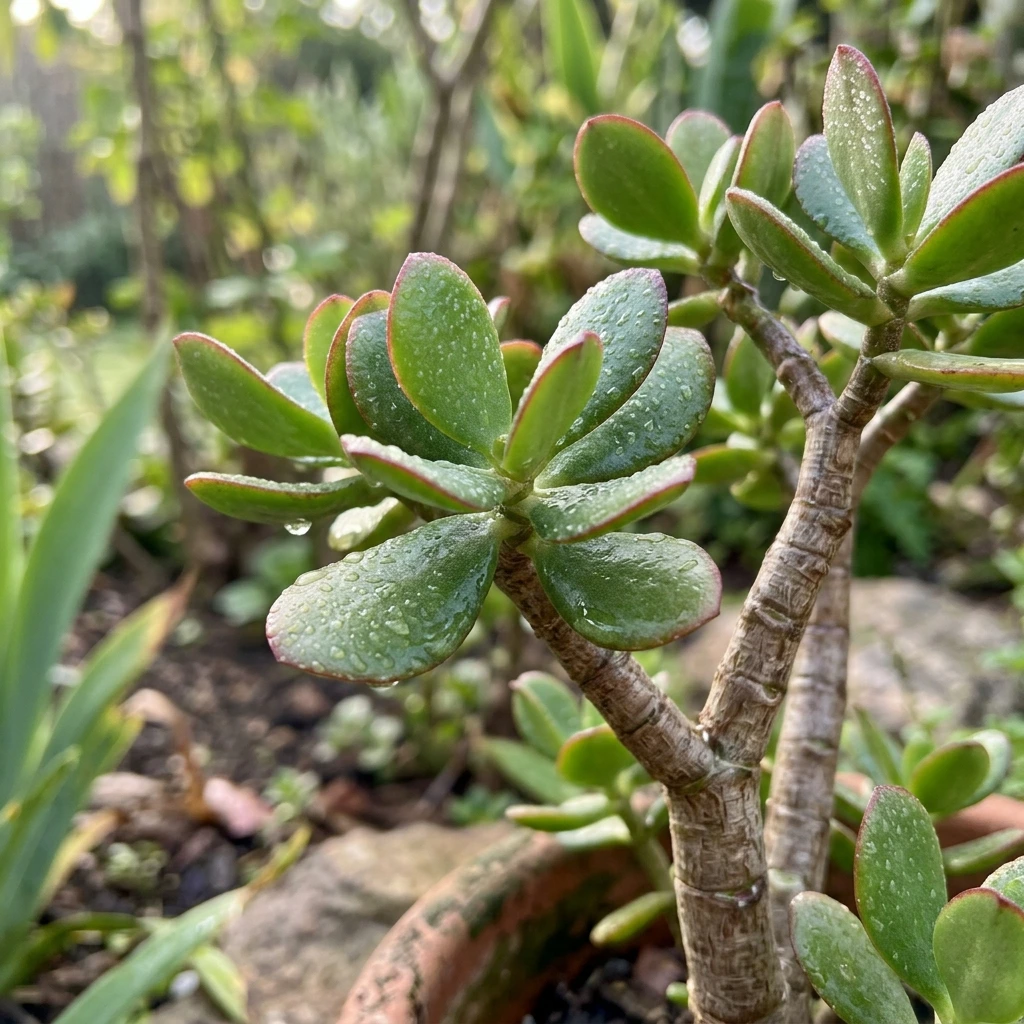
How to Identify Jade Plant
-
✓
Distinctive Features: Plump vertical rosettes of fleshy leaves.
-
✓
Typical Coloration: Pastel green, blue-gray, turning pink or red under sun stress.
-
✓
Potential Confusions: Confused with other similar looking rosettes, but distinguished by leaf thickness.
11-Step Professional Care Guide
Apply the strict 'soak and dry' method: water thoroughly only when the entire container mix is 100% dry. Succulents are highly adapted to absorb sudden heavy rain and survive long, dry desert cycles. Reduce watering significantly in winter, as dormant roots rot rapidly in cold, damp soil.
Jade Plant requires Bright, Consistent Indirect Light to Full Sun (Appreciates 4-6 hours of sunlight for compact growth). West or south-facing windows are ideal. Low light causes leggy stems.
Use an exceptionally gritty, fast-draining substrate. A perfect succulent mix consists of 65% mineral grit (pumice, perlite, granite grit, coarse sand) and 35% organic peat moss or general loam (pH 6.0-7.2), enabling maximum root aeration and preventing moisture trap.
Thrives in standard warm conditions: 18°C - 27°C (64°F - 80°F); protect from freezing winter temperatures below 10°C. Keep safe from cold drafts and AC vents.
Prune in spring during active growth. Use sterilized sharp shears to prune leggy branches to encourage a thick, sturdy trunk and miniature bonsai tree shape. Gently pinch off dried leaves at the base.
Apply a balanced liquid organic succulent fertilizer diluted to half strength monthly from spring through late summer. Do not fertilize during the autumn and winter dormant phases.
Propagate Jade Plant extremely easily using single leaf cuttings or branch cuttings in spring. Let cuttings callus for 3 days, insert into dry cactus soil, and water sparingly in 2 weeks.
Choose a heavy ceramic or terracotta container with multiple bottom drainage holes to prevent tipping. Terracotta allows excess soil moisture to breathe and evaporate safely. Repot every 2 to 3 years.
Inspect waxy leaves and stems for cottony mealybugs or flat scale insects. Treat immediately by dabbing with a cotton swab dipped in rubbing alcohol. Avoid spraying heavy oils on leaves.
Fungal root rot due to overwatering is the primary threat. Leaves turn yellow, become soft, and fall off. Improve air circulation, keep soil dry, and spray with organic copper fungicide.
The secret to a gorgeous Jade Plant is bright sunlight. Exposure to 4-6 hours of direct sun will trigger a stress response that turns the outer margins of the glossy green leaves a beautiful, vibrant red color.
Frequently Asked Questions
Q: How do I care for Jade Plant?
A: Jade Plant requires sandy soil and very sparse watering to thrive.
Q: How often should I water Jade Plant?
A: Water deeply only when the potting soil is 100% dry throughout the container.
Q: What is the ideal soil for Jade Plant?
A: Use a grit-rich, porous cactus and succulent potting mix containing perlite and pumice.
Q: Can Jade Plant survive freezing winter?
A: No. They are highly frost-sensitive. Bring them indoors if temperature drops below 10°C.