Haworthia Cooperi Care & Identification Guide
Haworthia Cooperi is a globally prized collector succulent, celebrated for its unique rosettes and highly distinctive translucent bulbous leaf tips, botanically known as 'leaf windows' or 'fenestrations'. Native to shaded rocky crevices in South Africa, these glassy window tips allow sunlight to penetrate deep into the underground cellular tissue for photosynthesis, while protecting the plant from scorching surface heat.





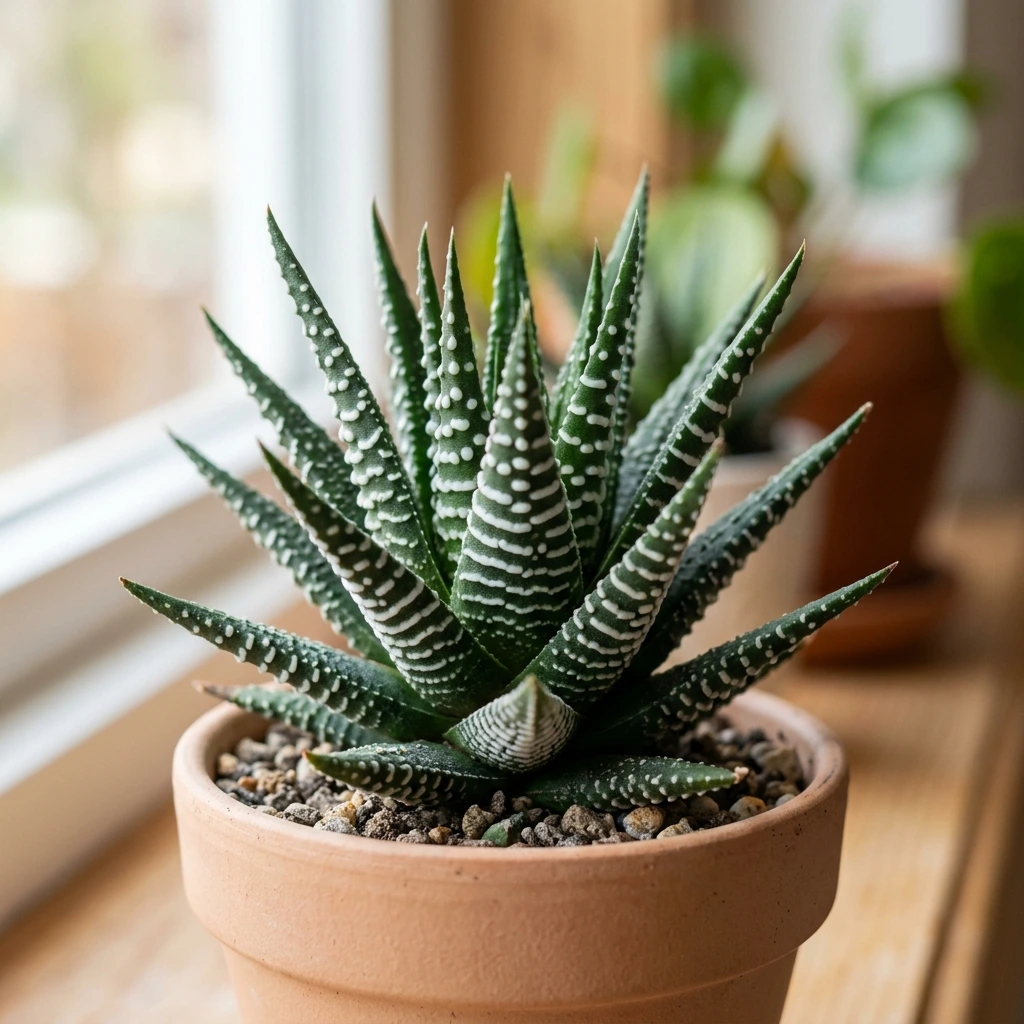
How to Identify Haworthia Cooperi
-
✓
Distinctive Features: Plump vertical rosettes of fleshy leaves.
-
✓
Typical Coloration: Pastel green, blue-gray, turning pink or red under sun stress.
-
✓
Potential Confusions: Confused with other similar looking rosettes, but distinguished by leaf thickness.
11-Step Professional Care Guide
Water deeply only when the gritty potting medium is 100% dry. The leaf windows will feel slightly soft to a gentle touch when the plant is dehydrated. To maintain glass-like translucent bubbles, provide consistent low-level moisture without letting roots sit in water.
Haworthia Cooperi requires Bright, Filtered Indirect Light. Avoid harsh direct sun which quickly bleaches the translucent leaf windows, turning them a stressed brown, greyish, or dull red. Place near an east-facing window or under a 50% shade cloth. If kept in deep shade, the rosette will lose its plump crystal shine.
The optimal substrate for Haworthia cooperi is a highly porous, grit-rich mix with excellent drainage. Standard mix consists of 70% mineral grit (pumice, lava rock, coarse sand) and 30% organic peat or coco coir (pH 6.0-7.2).
Thrives in standard warm environmental conditions: 15°C - 28°C (59°F - 82°F); protect from cold drafts and frost below 8°C. Ensure winter protection to prevent cellular damage and floppy leaf decay.
Haworthia cooperi requires minimal pruning. Gently remove old, dried-out lower leaves at the base using sterile tweezers to maintain neat aesthetics. Trim off faded flower stalks once the blooming season ends in spring.
Apply a balanced liquid organic cactus and succulent fertilizer diluted to quarter strength once or twice during the active spring and summer growing season. Stop all fertilizer feeds in winter.
Propagate Haworthia cooperi easily by separating offsets or pups from the mother plant in spring. Let the cut calluses dry for 2 days, and plant in dry cactus soil.
Choose a small, shallow terracotta or heavy ceramic container with multiple bottom drainage holes. Terracotta allows excess soil moisture to breathe and evaporate safely. Repot every 2 years in spring.
Regularly inspect Haworthia cooperi leaf joints for mealybugs hiding in crevices. Treat immediately by dabbing with a cotton swab dipped in rubbing alcohol or spraying with organic neem oil.
Root rot due to overwatering is the primary threat. Stems turn soft and transparent. Discard rotted parts, wash remaining roots, treat with fungicide, and repot in highly porous dry grit soil.
To achieve a breathtaking, crystal-clear translucent 'window' effect, horticulturists frequently employ the high-level 'smothering method' (humidity therapy): cover the rosette with a clean, transparent plastic cup or glass dome for a few hours daily. This traps humidity and swells the leaf tips into highly translucent shimmers. Ensure you remove the dome afterward to avoid stagnant heat or root decay.
Frequently Asked Questions
Q: How do I care for Haworthia Cooperi?
A: Haworthia Cooperi requires sandy soil and very sparse watering to thrive.
Q: How often should I water Haworthia Cooperi?
A: Water deeply only when the potting soil is 100% dry throughout the container.
Q: What is the ideal soil for Haworthia Cooperi?
A: Use a grit-rich, porous cactus and succulent potting mix containing perlite and pumice.
Q: Can Haworthia Cooperi survive freezing winter?
A: No. They are highly frost-sensitive. Bring them indoors if temperature drops below 10°C.