Christmas Cactus Care & Identification Guide
The Christmas Cactus is a highly popular epiphytic succulent cactus native to the humid coastal rainforests of southeastern Brazil. Unlike desert cacti, it grows on tree branches in shaded environments. It features flat, segmented green stems with scalloped margins and blooms massive, exotic, tubular flowers in late autumn and winter. It is widely celebrated by botanists for its distinct environmental adaptability and structural appeal.





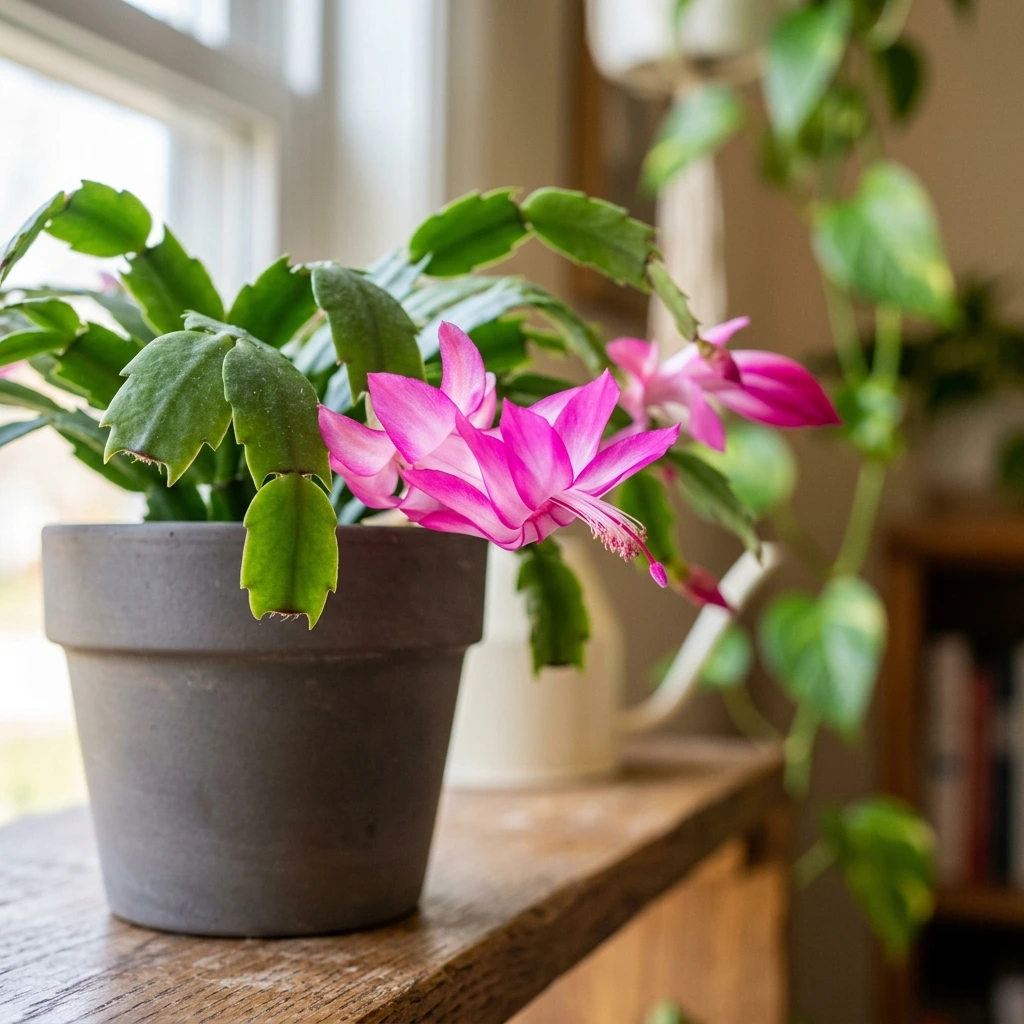
How to Identify Christmas Cactus
-
✓
Distinctive Features: Plump vertical rosettes of fleshy leaves.
-
✓
Typical Coloration: Pastel green, blue-gray, turning pink or red under sun stress.
-
✓
Potential Confusions: Confused with other similar looking rosettes, but distinguished by leaf thickness.
11-Step Professional Care Guide
Apply the strict 'soak and dry' method: water thoroughly only when the entire container mix is 100% dry. Cacti are highly adapted to absorb sudden heavy rain and survive long, dry desert cycles. Reduce watering significantly in winter, as dormant roots rot rapidly in cold, damp soil.
Christmas Cactus requires Bright, Indirect Light (Avoid direct sun which easily burns the flat segmented leaf joints). Place near an east-facing window. Direct summer sun will bleach or scorch the segments.
Use an exceptionally gritty, fast-draining substrate. A perfect cactus mix consists of 70% mineral grit (pumice, perlite, granite grit, coarse volcanic rock) and 30% organic peat moss or general loam (pH 6.0-7.5), enabling maximum root aeration.
Thrives in standard warm conditions: 18°C - 24°C (64°F - 75°F); protect from frost. Requires cool night temperatures between 10°C and 15°C in autumn to initiate flower bud development.
Prune in late spring after the blooming season. Gently pinch off 1 to 2 segments from the ends of the stems using your fingers. This stimulates the plant to branch out, resulting in a bushier habit and double the flowers next winter.
Apply a balanced liquid organic houseplant fertilizer diluted to half strength monthly from late spring through late summer. Stop all fertilizing in autumn to allow the plant to focus on setting buds.
Propagate easily using stem segment cuttings in spring. Snip a healthy stem section that has 3 connected segments, let it dry for 1 day, and plant it upright in moist peat and perlite mix. Roots develop in 3 weeks.
Choose a heavy container with multiple bottom drainage holes. Christmas Cacti prefer to be slightly root-bound, so only repot every 3 years in a pot that is 1 inch wider. Hanging baskets are ideal.
Inspect stem joints for mealybugs, spider mites, or fungus gnats in soggy soil. Treat immediately by spraying with mild insecticidal soap or organic neem oil. Avoid keeping soil constantly waterlogged.
Stem rot or root decay caused by overwatering is the primary threat. Stems turn limp, soft, and greyish-green. Repot in fresh, highly aerated peaty soil after cutting away any mushy roots.
To ensure a massive flower bloom for Christmas, starting in October, give the plant 'dark treatment' (12-14 hours of continuous pitch darkness daily, such as putting it in a closet at night) and cool night temperatures (12°C-15°C) for 6 weeks.
Frequently Asked Questions
Q: How do I care for Christmas Cactus?
A: Christmas Cactus requires sandy soil and very sparse watering to thrive.
Q: How often should I water Christmas Cactus?
A: Water deeply only when the potting soil is 100% dry throughout the container.
Q: What is the ideal soil for Christmas Cactus?
A: Use a grit-rich, porous cactus and succulent potting mix containing perlite and pumice.
Q: Can Christmas Cactus survive freezing winter?
A: No. They are highly frost-sensitive. Bring them indoors if temperature drops below 10°C.