Black Rose Aeonium Care & Identification Guide
The Black Rose Aeonium is a spectacular rosette-forming succulent shrub that features large, glossy, dark purple-black leaf rosettes perched at the ends of thick woody branches. Native to dry volcanic slopes, it is winter-active and goes into a deep dormant state during hot summer, contracting its rosettes into tight protective rosebud shapes.





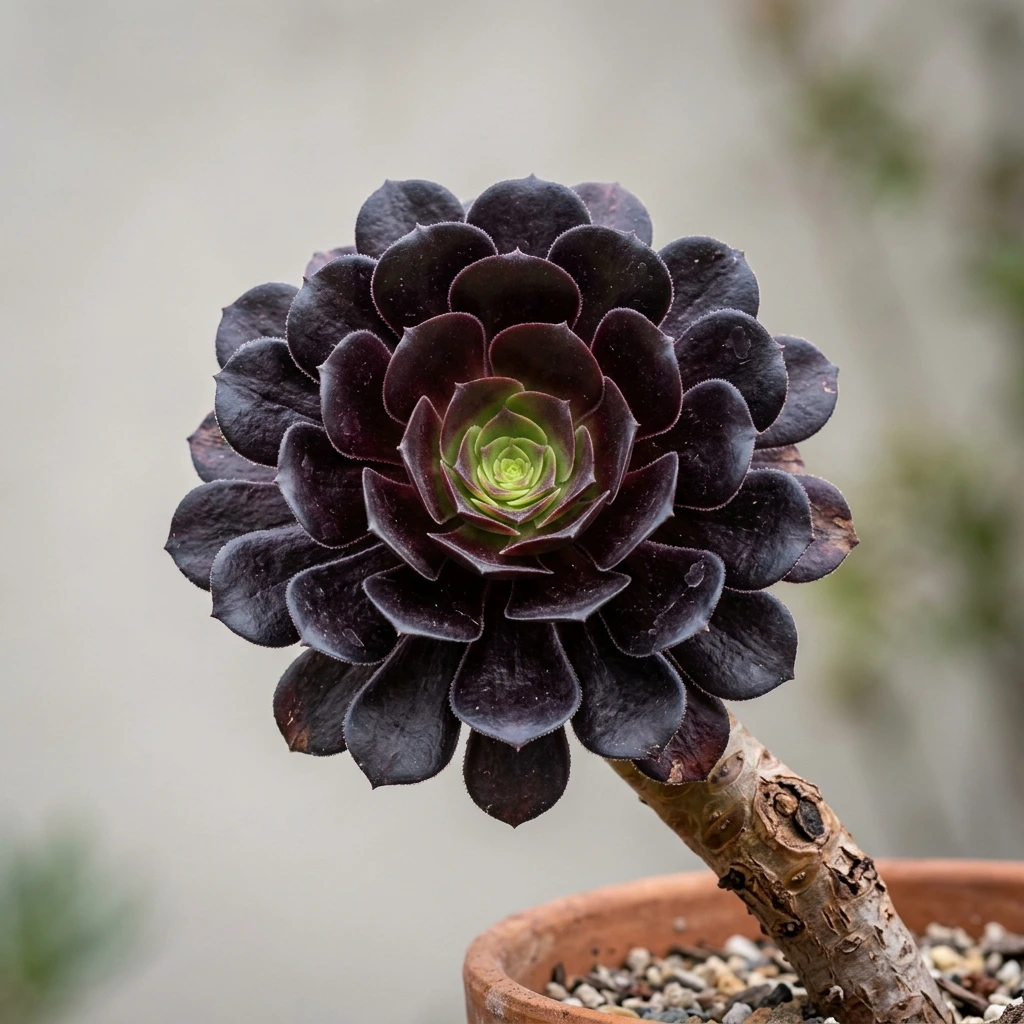
How to Identify Black Rose Aeonium
-
✓
Distinctive Features: Plump vertical rosettes of fleshy leaves.
-
✓
Typical Coloration: Pastel green, blue-gray, turning pink or red under sun stress.
-
✓
Potential Confusions: Confused with other similar looking rosettes, but distinguished by leaf thickness.
11-Step Professional Care Guide
Black Rose Aeonium requires a highly measured water supply. Typically, water thoroughly only when the potting mix is dry. Unlike most succulents, they grow actively in autumn and winter and prefer slightly more moisture. In hot summer (above 30°C), they enter dormancy: reduce watering to a absolute minimum to prevent fungal rot.
Black Rose Aeonium requires Full Sun to Bright Indirect Light (Strong sun deepens the dramatic near-black purple foliage). If kept in deep shade, the rosette centers turn bright green.
The optimal substrate is a loose, rich, well-draining loamy potting mix. A standard high-aeration mix consists of 40% organic compost or peat moss, 30% perlite or pumice, and 30% coarse sand (pH 6.0-7.0).
Thrives in standard warm conditions: 18°C - 24°C (64°F - 75°F); dormant in hot summer; keep above 5°C in winter. Keep safe from cold drafts and AC vents.
Prune in early spring. Use sterile shears to trim away dried, shriveled lower leaves along the woody branches. If the shrub becomes too leggy, cut off a rosette stem to encourage branching.
Apply a balanced liquid organic succulent fertilizer diluted to half strength once a month during its active autumn and winter growing season. Do not fertilize in hot summer.
Propagate easily using stem cuttings in autumn. Cut a healthy branch rosette with 3 inches of stem, let it callus for 3 days, and plant it in moist cactus soil in a warm, shaded spot. Roots form in 3 weeks.
Choose a heavy ceramic or terracotta container with multiple bottom drainage holes to support its top-heavy branching structure. Repot every 2 years in autumn.
Inspect rosettes for cottony mealybugs or spider mites. Treat immediately by spraying with mild insecticidal soap or dabbing with organic neem oil.
Fungal root rot due to overwatering in summer dormancy is the primary threat. Stem will soften and blacken. Improve air circulation, keep soil dry in summer, and spray with organic copper fungicide.
The secret to a gorgeous Black Rose Aeonium is understanding its summer dormancy. In hot summer (above 30°C), its rosettes will curl tightly inward into green-purple cups resembling tight rosebuds to conserve water, and lower leaves will shed. This is normal; reduce watering significantly, place in cool ventilated shade, and avoid hot stagnant air.
Frequently Asked Questions
Q: How do I care for Black Rose Aeonium?
A: Black Rose Aeonium requires sandy soil and very sparse watering to thrive.
Q: How often should I water Black Rose Aeonium?
A: Water deeply only when the potting soil is 100% dry throughout the container.
Q: What is the ideal soil for Black Rose Aeonium?
A: Use a grit-rich, porous cactus and succulent potting mix containing perlite and pumice.
Q: Can Black Rose Aeonium survive freezing winter?
A: No. They are highly frost-sensitive. Bring them indoors if temperature drops below 10°C.