Winterberry Holly Care & Identification Guide
The magnificent Winterberry Holly (Ilex verticillata) is an iconic, structural deciduous shrub celebrated for its colossal, dense clusters of waxy scarlet-red berries that line bare grey woody stems in winter. Native to swampy wetlands and forest understories of eastern North America, this highly resilient wood perennial is a classic garden favorite. Unlike常绿冬青, it drops all its leaves in autumn, exposing the brilliant red berry spikes that last throughout the winter. **WARNING: All parts of Winterberry, especially the berries, are highly toxic to humans and pets**, containing saponins and alkaloids (illicin) that cause severe gastrointestinal distress.





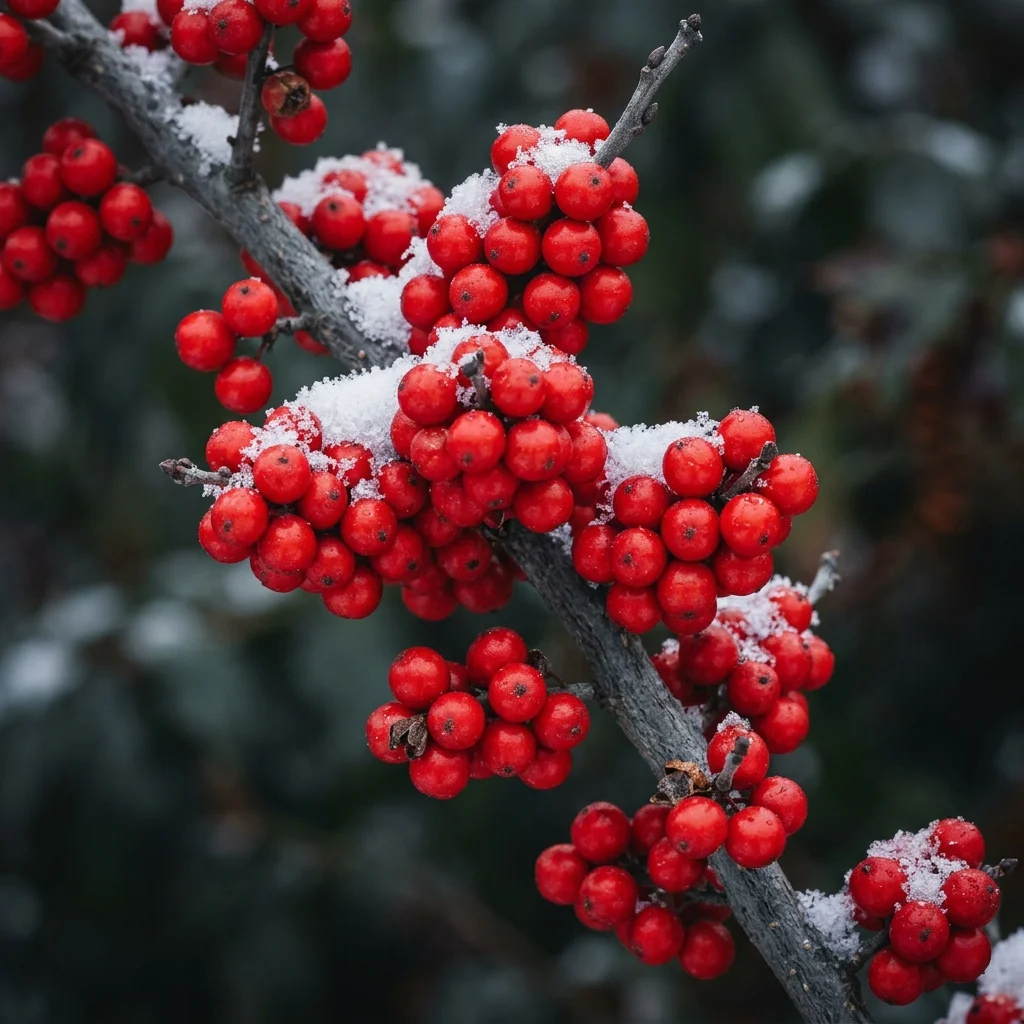
How to Identify Winterberry Holly
Identify Winterberry Holly (Ilex verticillata) immediately by its distinctive leaf arrangements, wood structures, and flowers. Recognizing its definitive visual traits is key to distinguishing it from other similar species.
-
✔
Distinctive Features: Colossal, dense clusters of waxy scarlet-red berries lining bare grey woody stems after deciduous autumn leaf drop.
-
✔
Typical Coloration: Vibrant scarlet-red berries, with alternate, serrated medium green leaves turning dark bronze before dropping.
-
✔
Potential Confusions: Sometimes confused with English Holly, but easily distinguished by its completely deciduous nature, thin non-spiny leaves, and wetlands habitat.
Complete Care & Cultivation Guide
Follow our detailed scientific care guide to keep your Winterberry Holly thriving and gorgeous all year round.
Frequently Asked Questions
Why is my Winterberry not producing any red berries?
Winterberry is dioecious (unisexual). You must have a female plant to produce berries, and there must be a compatible male winterberry plant nearby (within 50 feet) that blooms at the exact same time.
Is Winterberry toxic to cats and dogs?
Yes! All parts, especially the bright red waxy berries, contain toxic saponins, methylxanthines, and the alkaloid illicin. Ingestion of berries by pets causes severe vomiting, diarrhea, extreme drooling, and depression.
Why does Winterberry drop all its leaves in autumn?
Unlike English Holly, Winterberry (Ilex verticillata) is deciduous. Dropping its leaves in autumn is a natural process that showcases the spectacular, densely clustered red berries on bare woody branches all winter.
Can I grow Winterberry in dry alkaline soil?
No, Winterberry is a wetland-native acid lover. It will develop severe iron deficiency (yellow leaves) in alkaline soils and wither in dry conditions. Always plant in rich, acidic moist loam.