Winter Creeper Care & Identification Guide
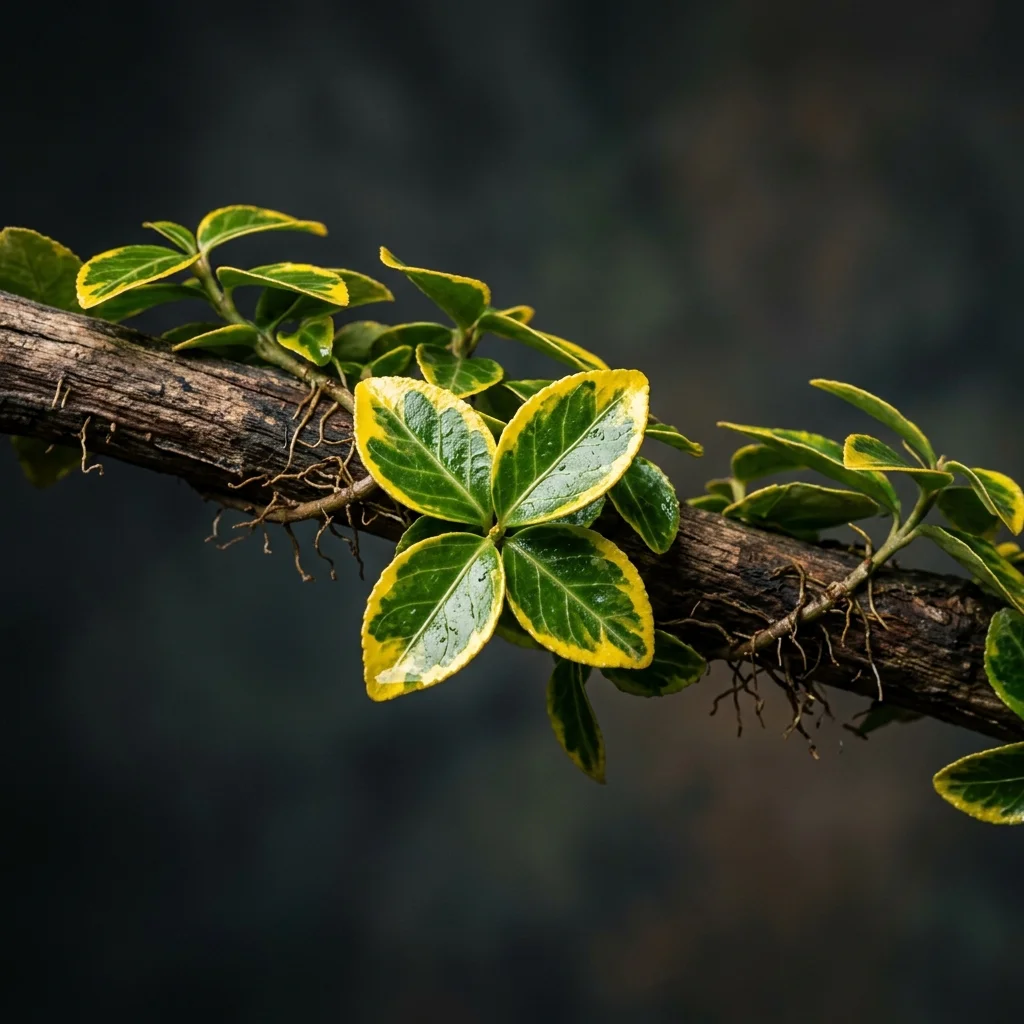
Winter Creeper (Euonymus fortunei), specifically the 'Emerald 'n' Gold' cultivar, is an exceptionally versatile, evergreen ornamental shrub native to eastern Asia. Highly valued in landscaping for its continuous show of spectacular golden-variegated foliage and multi-functional climbing or creeping habit, it is exceptionally hardy and adaptable. Botanically, it utilizes tiny, aggressive aerial rootlets along its gnarled stems to cling and climb vertical brick walls or trees. MILD PET WARNING: Winter Creeper is toxic if ingested. Like other Euonymus species, it contains toxic alkaloids and glycosides that cause vomiting, drooling, digestive irritation, and weakness in pets.





How to Identify Winter Creeper
Identify Winter Creeper (Euonymus fortunei) immediately by its distinctive leaf arrangements, wood structures, and flowers. Recognizing its definitive visual traits is key to distinguishing it from other similar species.
-
✔
Distinctive Features: Highly glossy, thick leathery green leaves with spectacular, broad golden-yellow margins, climbing or creeping using tiny aerial roots along gnarled woody twigs.
-
✔
Typical Coloration: Deep green leaves with bright golden-yellow borders, grayish trailing branches, and small copper-green flower capsules.
-
✔
Potential Confusions: Sometimes superficially confused with Variegated Ivy (Hedera) due to the climbing variegated habit, but easily distinguished by its opposite, oval leathery leaves (Ivy has alternate lobed leaves) and absence of toxic black berries.
Complete Care & Cultivation Guide
Follow our detailed scientific care guide to keep your Winter Creeper thriving and gorgeous all year round.
Frequently Asked Questions
Why is my Winter Creeper climbing my brick wall?
Because of its aerial rootlets! The plant produces tiny, root-like structures along its stems that cling to textured surfaces like brick, stone, or tree bark, allowing it to climb.
Is Winter Creeper toxic to cats and dogs?
Yes! Ingesting the leaves or stems can cause mild gastrointestinal upset, drooling, vomiting, and diarrhea. Keep it out of reach of curious household pets.
Why is my Winter Creeper turning green?
This is almost always caused by a lack of sunlight. Provide at least 4-6 hours of direct sun to trigger the vibrant golden-yellow variegation.
Can I grow Winter Creeper as a groundcover?
Yes! Naturally a climbing vine, it will easily form a dense, weed-blocking groundcover carpet if left prune to spread horizontally along the soil.