Weigela Variegated Care & Identification Guide
Variegated Weigela (Weigela florida 'Variegata'), native to the woodland margins of eastern Asia, is an exceptionally beautiful, floriferous deciduous shrub highly valued for its striking foliage and abundant blooms. Celebrated as the ultimate choice for adding high-contrast color to garden borders, it features elegant green leaves with broad, creamy-white variegated margins. In late spring and early summer, its arching branches are heavily loaded with clusters of spectacular, tubular trumpet-like bell flowers that open pure white and rapidly darken to deep rose-pink, creating a beautiful dual-toned display that is highly attractive to hummingbirds.





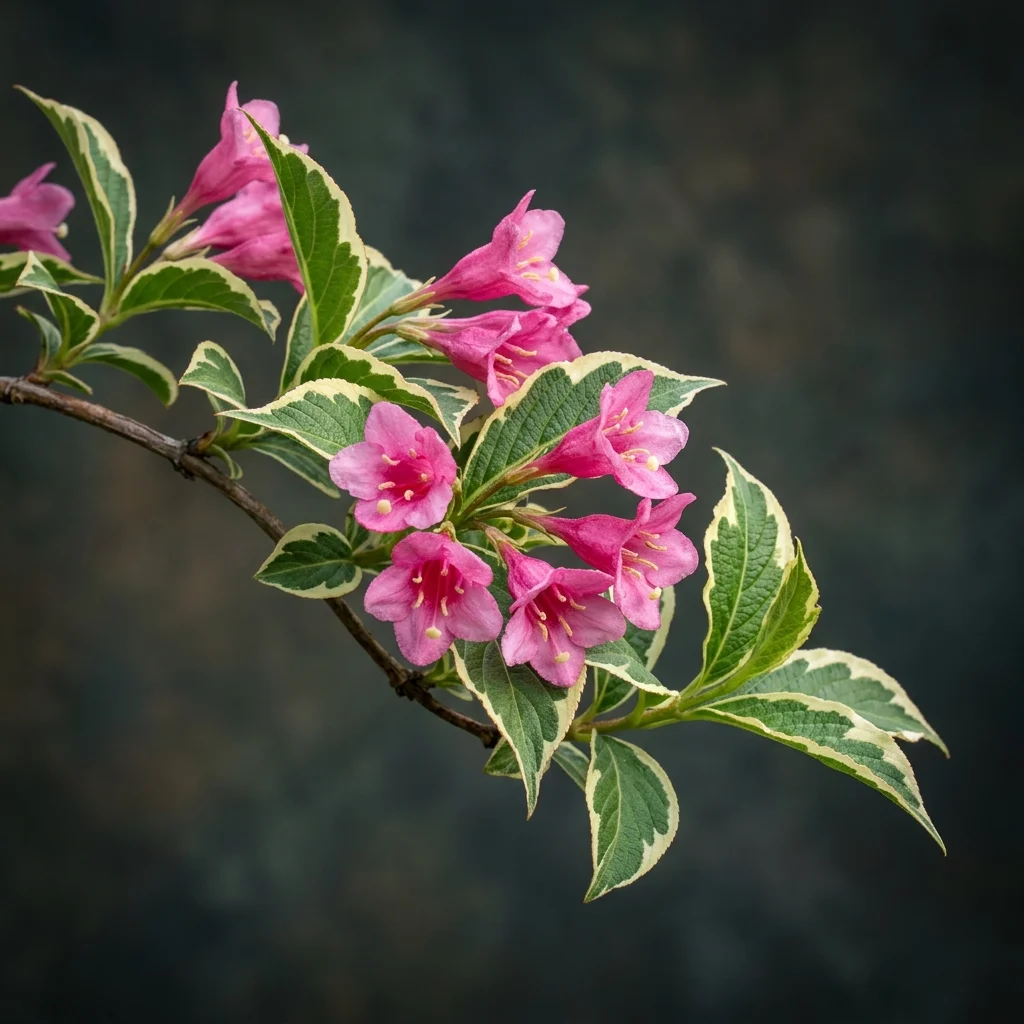
How to Identify Weigela Variegated
Identify Weigela Variegated (Weigela florida) immediately by its distinctive leaf arrangements, wood structures, and flowers. Recognizing its definitive visual traits is key to distinguishing it from other similar species.
-
✔
Distinctive Features: Elegant green leaves with broad, creamy-white variegated margins, bearing heavy clusters of tubular, trumpet-like pink flowers on gracefully arching branches.
-
✔
Typical Coloration: Vibrant rose-pink trumpet flowers, green leaves with creamy-white borders, and light-brown gnarled branches.
-
✔
Potential Confusions: Superficially confused with Abelias due to similar tubular flowers, but easily distinguished by its much larger, coarser leaves, strictly deciduous habit, and early summer bloom time.
Complete Care & Cultivation Guide
Follow our detailed scientific care guide to keep your Weigela Variegated thriving and gorgeous all year round.
Frequently Asked Questions
Why are my Variegated Weigela flowers turning two different colors?
This is a natural trait of the plant! The flowers open a soft, creamy-white or pale pink and gradually mature to a deep rose-pink, creating a beautiful dual-toned display on the same branch.
Is Variegated Weigela toxic to dogs and cats?
No! Weigela florida 'Variegata' is completely non-toxic to dogs, cats, and horses. It is an exceptionally safe, color-rich and hardy choice for pet-friendly landscaping.
When is the best time to prune my Weigela?
Always prune immediately after the flowers fade in early summer. Since Weigela blooms on old wood, pruning too late in winter will cut off next year's flower buds.
How does Weigela tolerate cold winters?
It is highly cold-hardy, shedding its leaves in winter. It requires cool winter temperatures to break dormancy and fruit successfully.