Sweet Gale Care & Identification Guide
Sweet Gale (Myrica gale), commonly known as Bog Myrtle or Sweet Willow, is an exceptionally fragrant, deciduous wetland shrub native to the acidic peat bogs, lake shores, and wet moors of northern Europe and North America. It is globally celebrated for its highly aromatic foliage; its leaves are covered in glistening gold resinous glands that release a powerful, spicy, sweet-herbaceous fragrance when crushed. Botanically, it is a highly robust plant that hosts nitrogen-fixing Frankia actinomycetes in its root nodules, allowing it to enrich poor bog soils. In European history, before the widespread rise of hops, Sweet Gale was the essential flavoring and preservative agent used to brew traditional herb beer known as 'Gruit ale.'





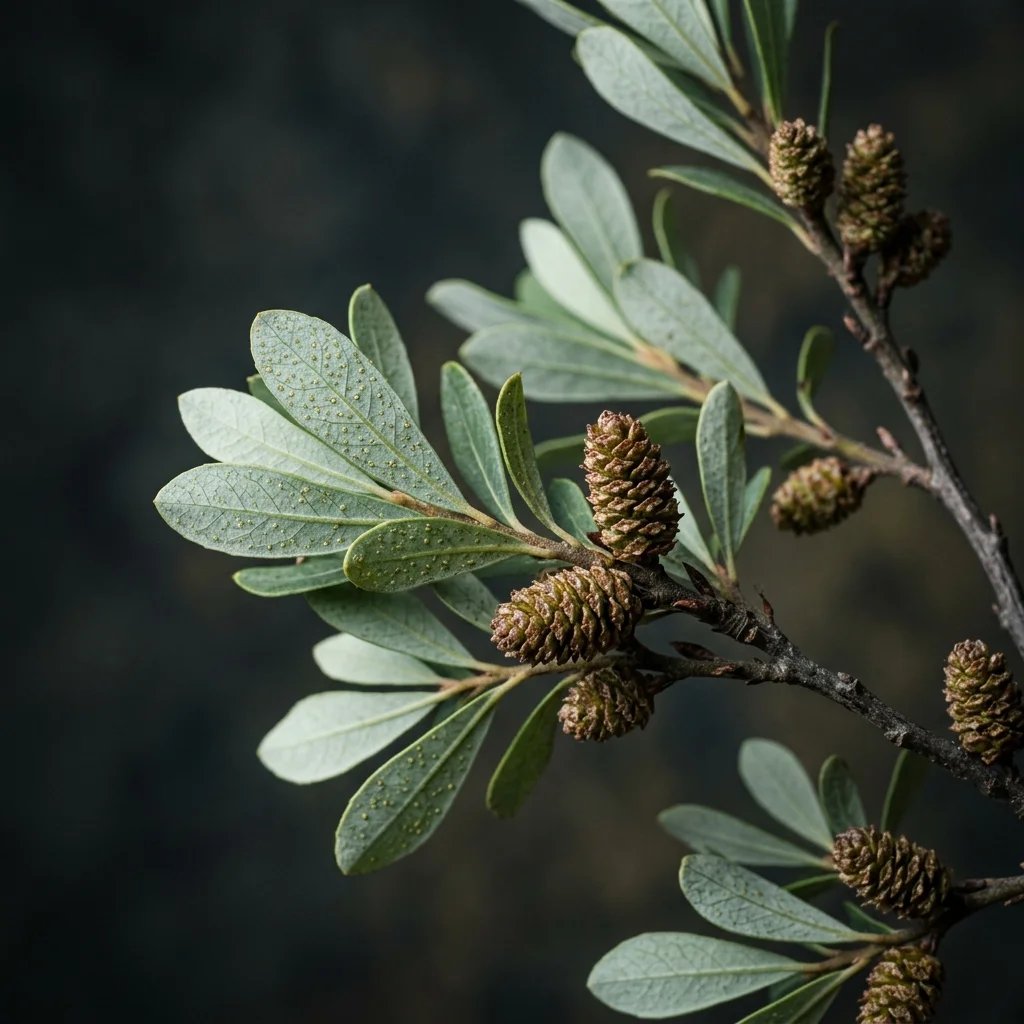
How to Identify Sweet Gale
Identify Sweet Gale (Myrica gale) immediately by its distinctive leaf arrangements, wood structures, and flowers. Recognizing its definitive visual traits is key to distinguishing it from other similar species.
-
✔
Distinctive Features: Oblanceolate, pale blue-green leaves with gold resinous glands, accompanied by small, scaly catkin cone-like structures on woody stems in spring, releasing a rich spicy fragrance.
-
✔
Typical Coloration: Soft pale blue-green to grayish-green leaves, copper-brown scaly catkins, and dark reddish-brown branches.
-
✔
Potential Confusions: Sometimes confused with Salix (Willow) due to similar leaf shape, but easily distinguished by the intense, spicy-sweet aroma of its foliage and the golden resin glands covering the leaves.
Complete Care & Cultivation Guide
Follow our detailed scientific care guide to keep your Sweet Gale thriving and gorgeous all year round.
Frequently Asked Questions
Why was Sweet Gale historically used in brewing beer?
Before hops became popular in the 16th century, Sweet Gale (Bog Myrtle) was the main flavoring agent used in traditional European 'Gruit' ale. Its leaves provided a rich, spicy bitterness and acted as a natural preservative.
Is Sweet Gale safe for dogs and cats?
Yes! Myrica gale is completely non-toxic to dogs, cats, and horses. Its leaves are safe to touch, though the highly concentrated essential oil should not be ingested in quantity by pets.
Can I grow Sweet Gale in regular dry soil?
No, it is a wetland specialist that requires consistently wet or damp soil conditions. Plant it next to a pond, stream, rain garden, or in a constantly watered pot.
How does Sweet Gale improve the soil in my garden?
It has nitrogen-fixing root nodules that host symbiotic Frankia bacteria. This allows the plant to absorb nitrogen from the air and enrich poor, acidic soils naturally.