Staghorn Sumac Care & Identification Guide
The magnificent Staghorn Sumac (Rhus typhina) is an outstanding deciduous ornamental shrub, widely celebrated for its colossal, upright velvety fruit cones and spectacular, fiery orange-red autumn foliage. Native to dry rocky hillsides and open woodland edges of eastern North America, this highly resilient wood perennial is named for its thick, velvety-haired branches that closely resemble a stag's horns in velvet. Highly prized by wildlife and traditional herbalists, its acidic crimson berries can be used to brew a tangy, vitamin-C rich drink, requiring full sun and loose well-drained soil.





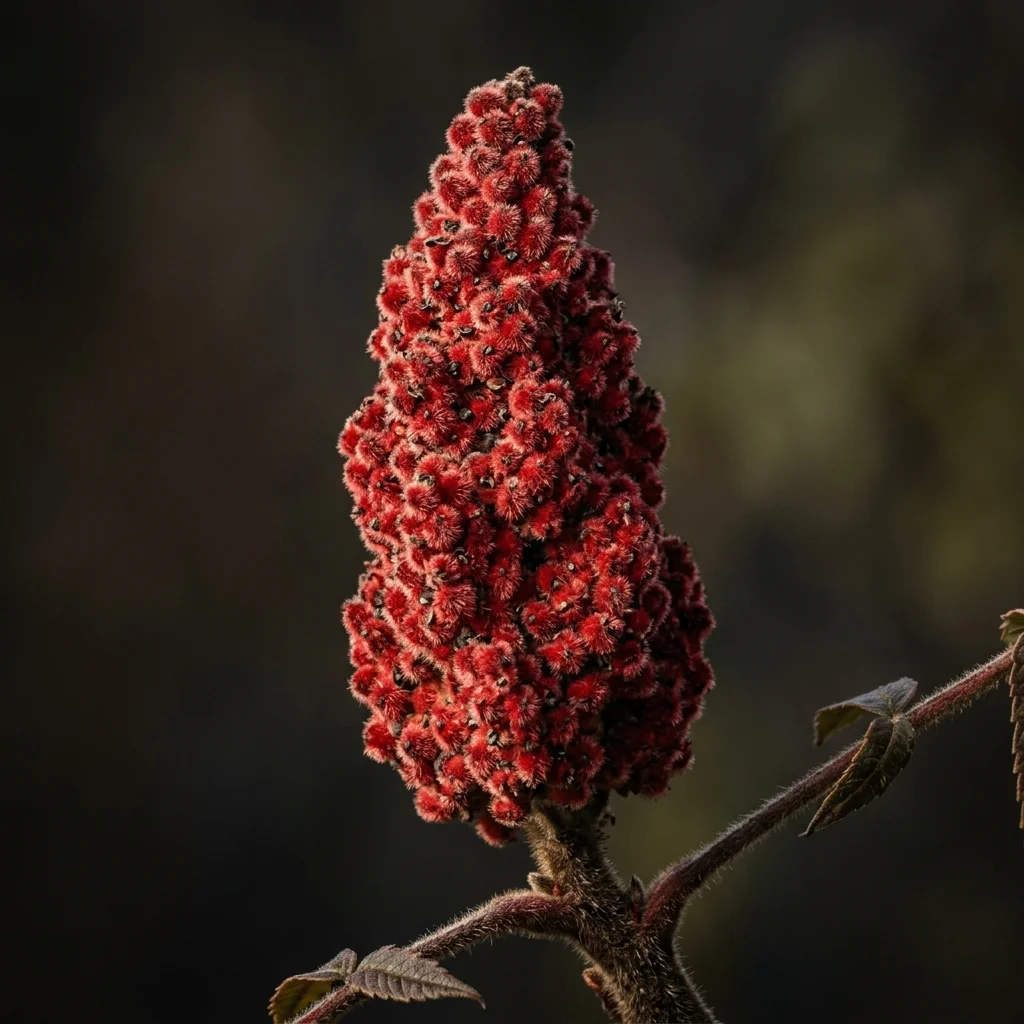
How to Identify Staghorn Sumac
Identify Staghorn Sumac (Rhus typhina) immediately by its distinctive leaf arrangements, wood structures, and flowers. Recognizing its definitive visual traits is key to distinguishing it from other similar species.
-
✔
Distinctive Features: Colossal, dense upright velvety cones covered in tiny crimson-red fuzzy hairs, rising above thick, velvety-haired branches.
-
✔
Typical Coloration: Crimson-red fruit cones, with large, pinnately compound medium green leaves turning brilliant fiery orange-red in autumn.
-
✔
Potential Confusions: Sometimes confused with Poison Sumac (Toxicodendron vernix), but easily distinguished by its completely safe, hairy upright red fruit cones rather than toxic hanging white berries.
Complete Care & Cultivation Guide
Follow our detailed scientific care guide to keep your Staghorn Sumac thriving and gorgeous all year round.
Frequently Asked Questions
Is Staghorn Sumac poisonous like Poison Sumac?
No! Staghorn Sumac (Rhus typhina) is completely safe and non-poisonous. It has hairy stems and upright red fruit cones. Poison Sumac (Toxicodendron vernix) has smooth stems and dangling white berries. They are totally different species.
Is Staghorn Sumac toxic to cats and dogs?
No, Rhus typhina is completely non-toxic and pet-safe, offering a beautiful, highly colorful, and worry-free garden choice for homes with pets.
How do I control the spreading root suckers of my Sumac?
Once established, Staghorn Sumac spreads aggressively by root suckers. Simply mow over any unwanted suckers that emerge in the lawn, or install a root barrier 12 inches deep to restrict its spread.
Does Staghorn Sumac attract wildlife?
Yes! The massive velvet-red fruit cones remain on the branches throughout the winter, providing a highly crucial high-energy food source for wild birds during freezing winter months.