Japanese Skimmia Care & Identification Guide
The magnificent Japanese Skimmia (Skimmia japonica) is an outstanding evergreen ornamental shrub, highly celebrated for its thick, glossy aromatic leaves and spectacular, dense clusters of cherry-red winter flower buds. Native to cool, highly humid forest understories of East Asia, this highly elegant woody perennial thrives in dense shade where most plants wither. A member of the Rutaceae (Citrus) family, its foliage releases a rich, spicy citrus aroma when crushed. **WARNING: All parts of Skimmia japonica, particularly the red berries, are highly toxic**, containing skimmianine alkaloids that cause severe gastrointestinal distress.





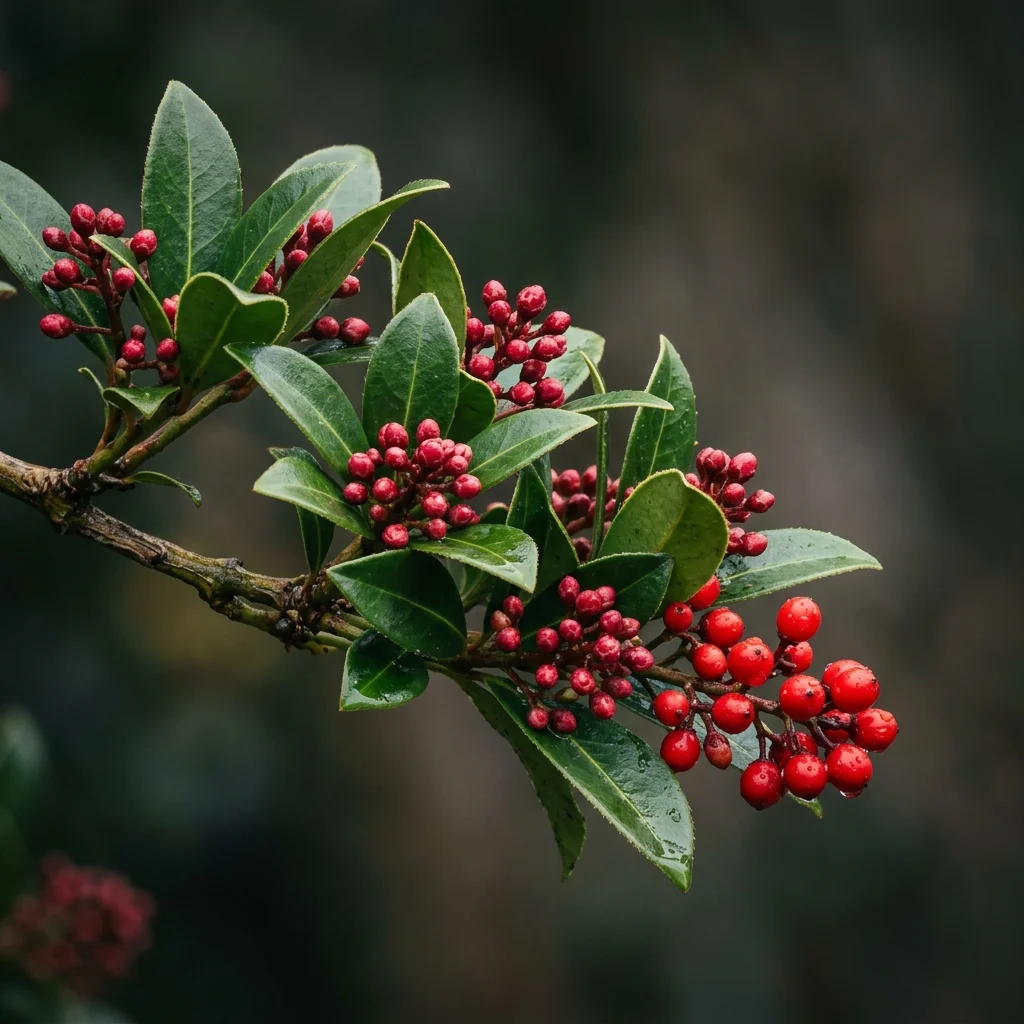
How to Identify Japanese Skimmia
Identify Japanese Skimmia (Skimmia japonica) immediately by its distinctive leaf arrangements, wood structures, and flowers. Recognizing its definitive visual traits is key to distinguishing it from other similar species.
-
✔
Distinctive Features: Dense clusters of waxy cherry-red flower buds sitting on twigs all winter, rising above thick, glossy dark green leaves.
-
✔
Typical Coloration: Waxy cherry-red buds and bright scarlet-red berries, with thick glossy dark green aromatic leaves.
-
✔
Potential Confusions: Sometimes confused with Holly due to red berries, but easily distinguished by its smooth, entire leaf margins without spines and strong citrus-aromatic foliage.
Complete Care & Cultivation Guide
Follow our detailed scientific care guide to keep your Japanese Skimmia thriving and gorgeous all year round.
Frequently Asked Questions
Why are the leaves on my Japanese Skimmia turning yellow and bleached?
This is typically caused by too much direct sun exposure or alkaline soil (pH too high). Move the shrub to a deep, shaded forest-like location, and apply chelated iron and peat moss to acidify the soil.
Is Japanese Skimmia toxic to cats and dogs?
Yes! All parts, especially the bright scarlet berries, contain the toxic alkaloid skimmianine. Ingestion by pets causes severe salivation, vomiting, diarrhea, abdominal pain, and potential cardiac suppression.
What is the difference between male and female Japanese Skimmia?
Male plants produce exceptionally large, highly fragrant white flower spikes from winter-long cherry-red buds. Female plants produce less fragrant flowers but set the iconic, brilliant scarlet-red berries in autumn.
Does Japanese Skimmia foliage smell like oranges?
Yes! As a member of the Rutaceae (Citrus) family, crushing the thick glossy leaves of Skimmia japonica releases a highly pleasant, rich aroma resembling sweet orange and spicy bay leaf.