Russian Olive Shrub Care & Identification Guide
The Russian Olive Shrub (Elaeagnus angustifolia) is an exceptionally hardy, drought-resistant deciduous shrub or small tree. Famed for its striking, willow-like silver foliage covered in minute stellate scales, it thrives in nutrient-poor, saline soils thanks to its symbiotic nitrogen-fixing root nodules. While highly valued in dryland xeriscaping for erosion control and windbreaks, its aggressive spread has classified it as an invasive species in several North American riparian zones, where it alters soil chemistry and crowds out native cottonwoods and willows.





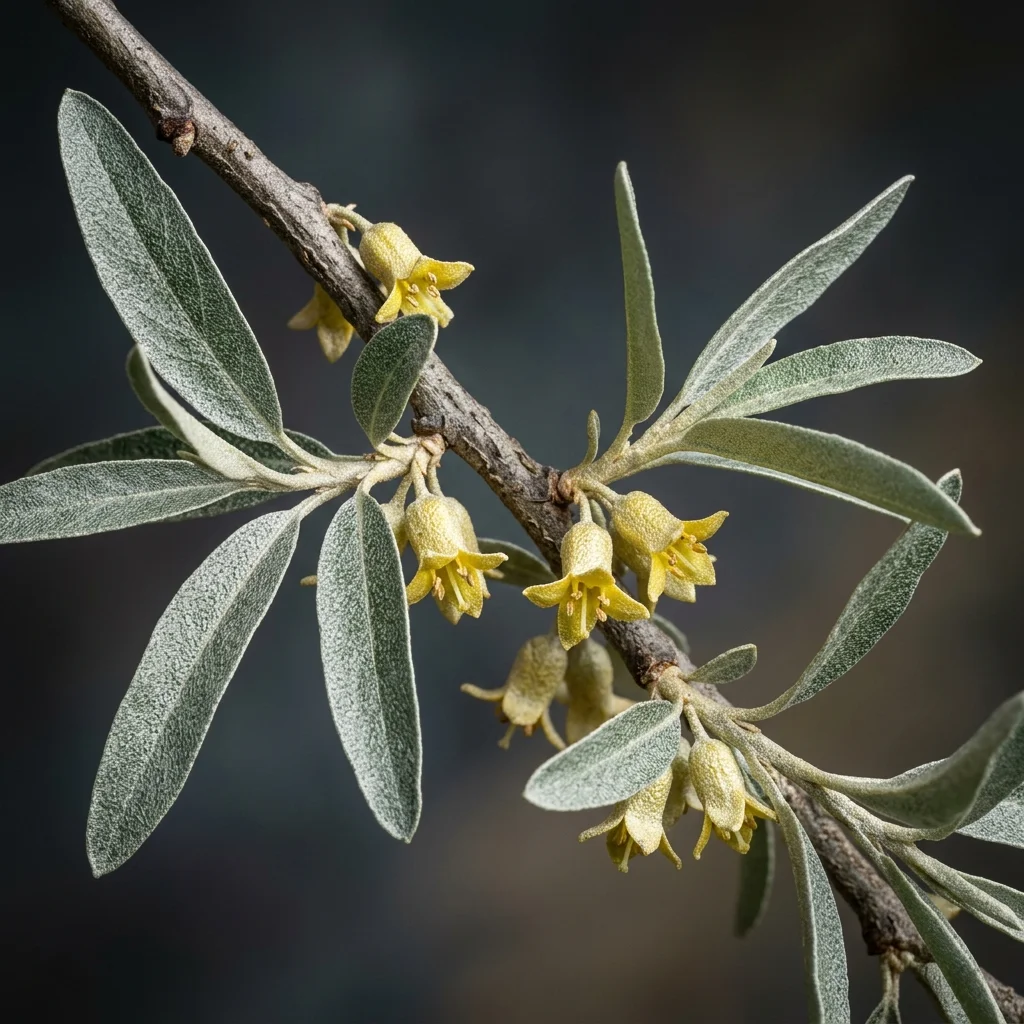
How to Identify Russian Olive Shrub
Identify Russian Olive Shrub (Elaeagnus angustifolia) immediately by its distinctive leaf arrangements, wood structures, and flowers. Recognizing its definitive visual traits is key to distinguishing it from other similar species.
-
✔
Distinctive Features: Narrow, lanceolate leaves densely covered in silver scales on both sides, accompanied by highly aromatic, bell-shaped yellow blossoms in late spring, and small, silvery-red dry drupes resembling olives.
-
✔
Typical Coloration: Silvery-white to pale dusty green leaves, dark gray furrowed bark, tiny yellow blossoms, and silvery-red fruit berries.
-
✔
Potential Confusions: Commonly confused with real Olives (Olea europaea) due to leaf and fruit shapes, but easily distinguished by its dry, mealy drupes and the intense silver scale-layer covering its younger branches and foliage.
Complete Care & Cultivation Guide
Follow our detailed scientific care guide to keep your Russian Olive Shrub thriving and gorgeous all year round.
Frequently Asked Questions
Why is the Russian Olive Shrub considered invasive in some regions?
Because of its extreme drought tolerance, salt resistance, and ability to fix nitrogen, it aggressively outcompetes native vegetation. It consumes large amounts of water in riparian zones, drying out local water tables and displacing native species like cottonwoods.
Does the Russian Olive Shrub have thorns?
Yes. Mature branches of Elaeagnus angustifolia produce sharp, woody thorns that can grow up to 2 inches long. Wear heavy-duty leather gloves when pruning or handling this shrub to avoid deep skin punctures.
How often should I water a newly planted Russian Olive?
Water weekly during its first growing season to help establish its deep taproot system. Once established (usually by the second year), it requires virtually no supplemental watering except during extreme droughts.
Can I grow Russian Olive Shrub in alkaline soil?
Absolutely. It thrives in high pH (alkaline) and saline soils where other shrubs fail. It is an excellent choice for coastal areas or arid regions with heavy sodium deposits in the soil.