Rockrose Care & Identification Guide
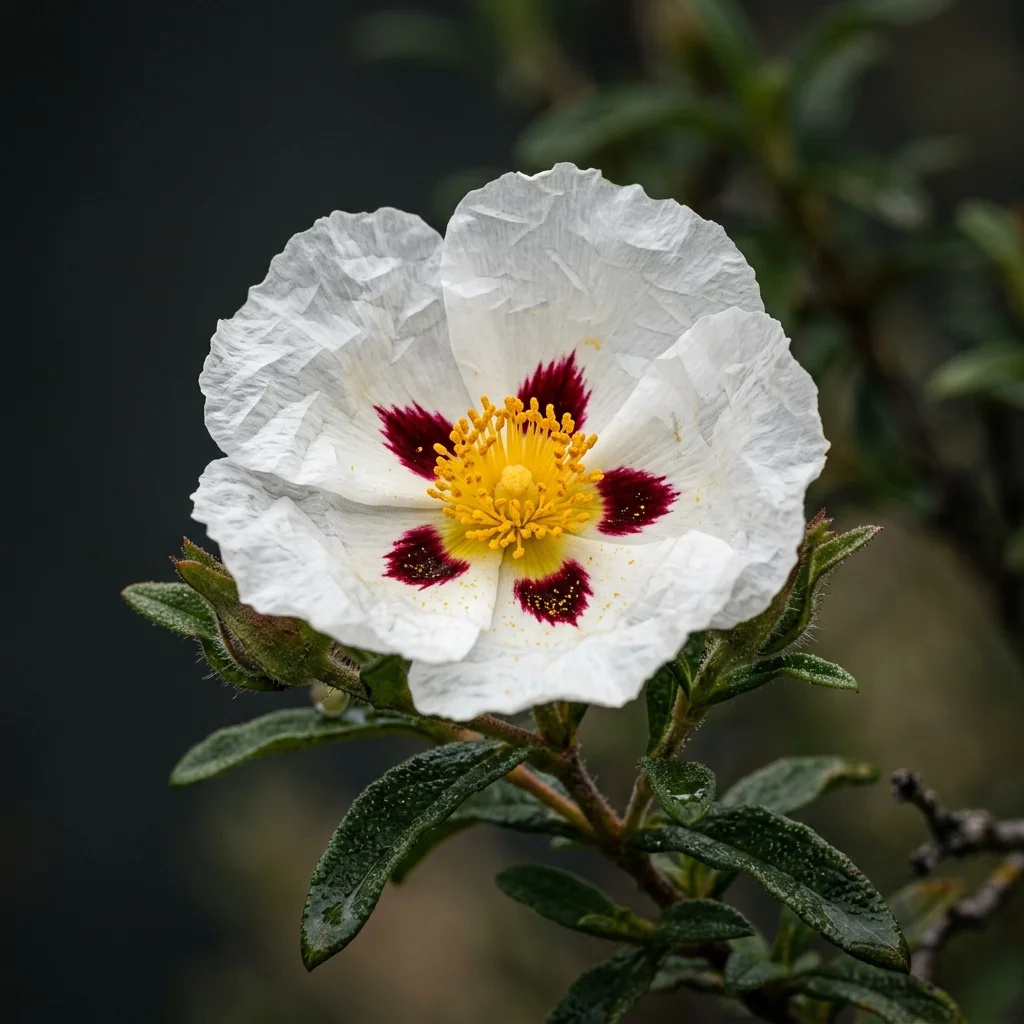
The Rockrose (Cistus ladanifer), specifically the Crimson-spot Rockrose or Gum Cistus, is a highly spectacular, resinous evergreen shrub native to the dry, sun-baked hillsides of the Mediterranean region. It is globally famous for its large, papery white blossoms that feature a dramatic, deep crimson-maroon spot at the base of each petal. To survive the brutal, dry Mediterranean summers, its foliage secretes a highly sticky, aromatic resin called 'Ladanum' (or labdanum). This thick, balsamic resin acts as a powerful physical sealant that prevents transpiration (water loss) and has been harvested for centuries as a vital base fixative in the luxury perfume industry.





How to Identify Rockrose
Identify Rockrose (Cistus ladanifer) immediately by its distinctive leaf arrangements, wood structures, and flowers. Recognizing its definitive visual traits is key to distinguishing it from other similar species.
-
✔
Distinctive Features: Narrow, sticky dark green leaves with silver-white hairy undersides, bearing large, delicate five-petaled white flowers with prominent deep crimson spots near the bright golden stamens.
-
✔
Typical Coloration: Sticky dark green leaves, reddish-brown stems, papery white petals with wine-red spots, and brilliant golden-yellow stamens.
-
✔
Potential Confusions: Often confused with Halimium or other white-flowered Cistus species, but Cistus ladanifer is easily identified by its extremely sticky, highly fragrant leaves and the distinctive crimson spots on the flower petals.
Complete Care & Cultivation Guide
Follow our detailed scientific care guide to keep your Rockrose thriving and gorgeous all year round.
Frequently Asked Questions
What is the sticky resin on Rockrose leaves?
It is Ladanum (labdanum), a sticky, aromatic resin secreted by Cistus ladanifer to survive summer heat. It reduces water evaporation and is harvested for use as a base note and fixative in high-end perfumes.
Is Rockrose safe for pets?
Yes! Cistus ladanifer is completely non-toxic to dogs, cats, and horses. It is a highly safe and robust addition to pet-friendly xeriscape gardens.
Why is my Rockrose growing woody and leggy?
This is a natural aging process for Rockroses, which typically have a lifespan of 10 to 15 years. Regular light pruning after flowering from a young age helps maintain a bushy, compact form.
Does Rockrose tolerate salt spray in coastal gardens?
Yes! It is highly salt-tolerant and wind-resistant, making it a perfect, beautiful choice for dry, exposed coastal cliff gardens.