Red Osier Dogwood Care & Identification Guide
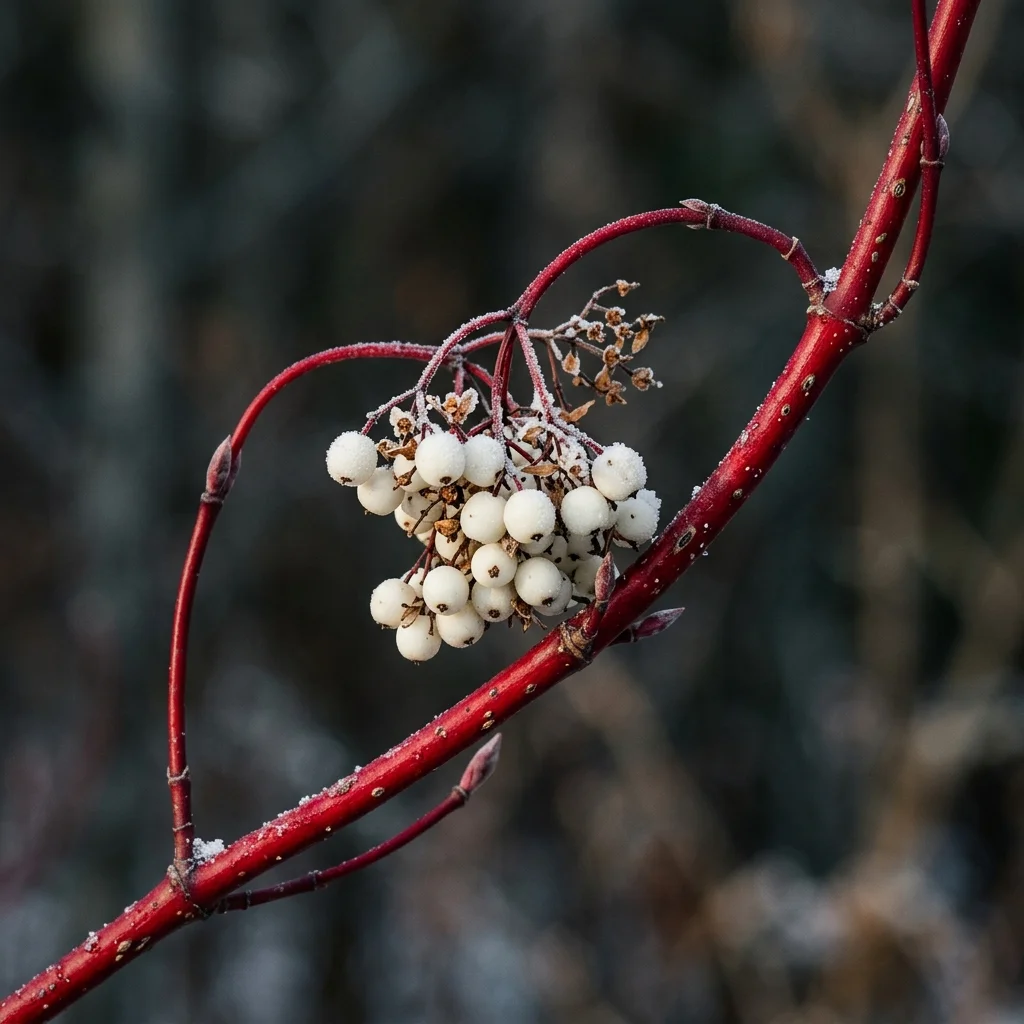
The magnificent Red Osier Dogwood (Cornus sericea) is the absolute king of the winter landscape, widely celebrated for its extremely brilliant lacquered red bare stems that erupt in vibrant color after autumn leaf drop. Native to moist riverbanks and swampy wetlands of North America, this highly resilient deciduous shrub thrives in waterlogged organic soils where other plants drown. In deep winter, as a survival mechanism against heavy freezes, it accumulates massive concentrations of crimson anthocyanin pigments in its bark, demanding high moisture, full sun, and annual early-spring pruning.





How to Identify Red Osier Dogwood
Identify Red Osier Dogwood (Cornus sericea) immediately by its distinctive leaf arrangements, wood structures, and flowers. Recognizing its definitive visual traits is key to distinguishing it from other similar species.
-
✔
Distinctive Features: Brilliant, upright lacquered red bare stems standing out in winter snow, rising above fibrous, multi-stemmed roots.
-
✔
Typical Coloration: Fiery scarlet-red stems, with flat clusters of small white early-summer flowers followed by white waxy berry clusters.
-
✔
Potential Confusions: Sometimes confused with Siberian Dogwood (Cornus alba), but distinguished by its native North American wetland origin and more spreading, fibrous root system.
Complete Care & Cultivation Guide
Follow our detailed scientific care guide to keep your Red Osier Dogwood thriving and gorgeous all year round.
Frequently Asked Questions
Why are my Red Osier Dogwood stems turning grey and losing their red color?
As stems age past three years, the bark naturally thickens and turns dull grey-brown. To maintain a brilliant red display, prune one-third of the oldest grey branches down to the ground every early spring (coppicing).
Is Red Osier Dogwood toxic to cats and dogs?
No, Cornus sericea is completely non-toxic and pet-safe, offering a beautiful, highly colorful, and worry-free structural shrub for pet-owning households.
Can I plant Red Osier Dogwood in dry sand?
No, this is a wetland-native shrub that transpires water rapidly. It requires consistently moist, organic loam and will rapidly wither, scorch, and die in dry, sandy soils.
What is a rain garden and why is this shrub good for it?
A rain garden is a depressed landscape area designed to capture rainwater runoff. Red Osier Dogwood is perfect because its fibrous roots tolerate temporary deep flooding and filter runoff pollutants.