Plumbago Care & Identification Guide
Plumbago (Plumbago auriculata), commonly known as the Cape Plumbago or Cape Leadwort, is an exceptionally beautiful, fast-growing semi-scandent evergreen shrub native to the dry, sunny hillsides of South Africa. Globally famed for producing abundant, round clusters of delicate, sky-blue five-petaled starry flowers, it is one of the very few plants in the world to exhibit a true blue blossom color, derived from a unique compound called Plumbagin. Botanically, its calyces (outer flower bases) are densely covered in tiny, sticky glandular hairs that act as a sticky trap. While not a true carnivorous plant, scientists suggest this 'glue' serves as a defense against crawling insects and represents a fascinating protocarnivorous evolutionary stage.





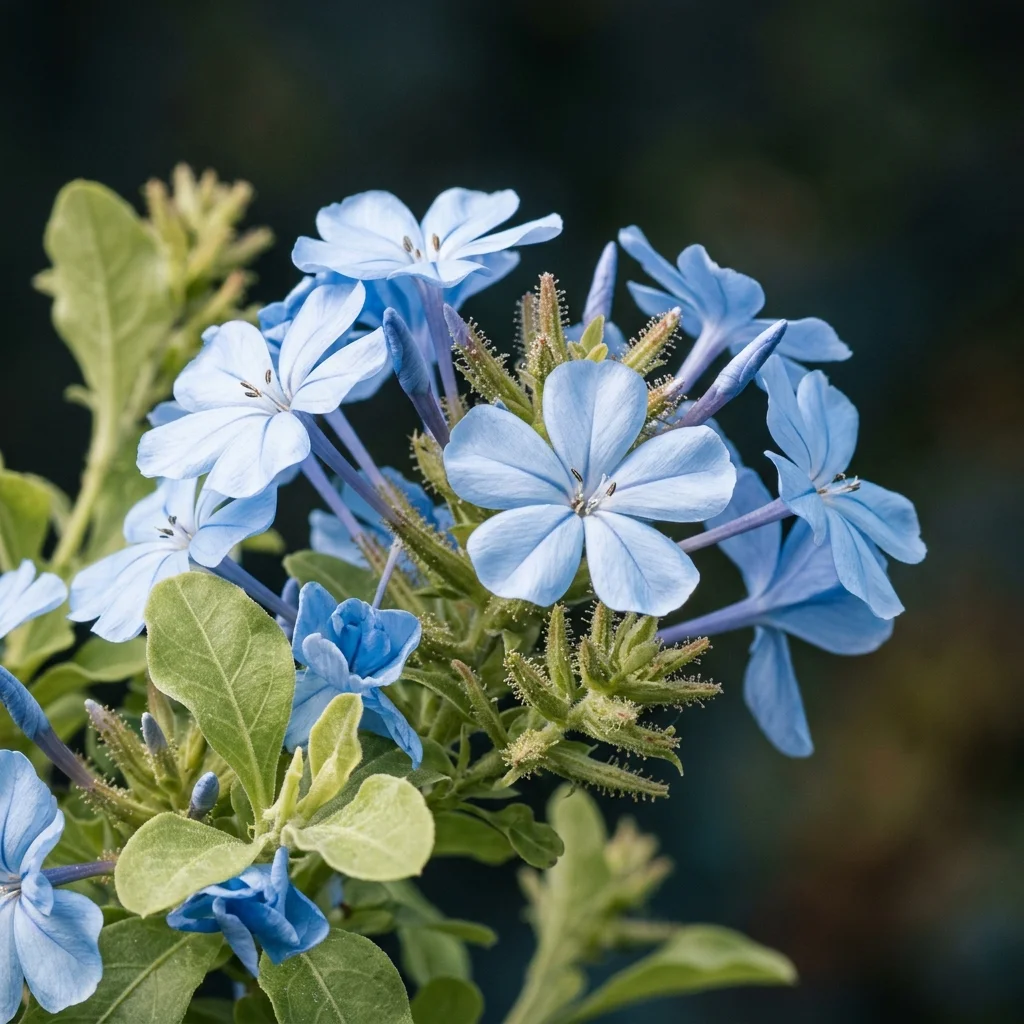
How to Identify Plumbago
Identify Plumbago (Plumbago auriculata) immediately by its distinctive leaf arrangements, wood structures, and flowers. Recognizing its definitive visual traits is key to distinguishing it from other similar species.
-
✔
Distinctive Features: Delicate, sky-blue starry flowers clustered in dense round heads, with small, sticky glandular hairs on the calyx, and light green oblong leaves.
-
✔
Typical Coloration: Luminous sky-blue to pale azure flowers, soft apple-green leaves, and light green scrambling woody stems.
-
✔
Potential Confusions: Sometimes confused with Phlox due to the similar round flower heads, but Plumbago is easily distinguished by its scrambling shrubby habit, sticky glandular hairs on the flower calyx, and distinct sky-blue color.
Complete Care & Cultivation Guide
Follow our detailed scientific care guide to keep your Plumbago thriving and gorgeous all year round.
Frequently Asked Questions
Why does Plumbago have sticky hairs on its flowers?
The calyx of Plumbago auriculata is covered in sticky glandular hairs that trap small crawling insects. This serves as a physical defense to prevent non-pollinating insects from climbing the flowers, representing a protocarnivorous evolutionary trait.
Is Plumbago toxic to cats and dogs?
No. Plumbago auriculata is completely non-toxic to dogs, cats, and horses. It is a highly safe, color-rich choice for pet-friendly gardens.
How often should I prune my Plumbago?
Prune hard in late winter or early spring before new growth starts. Cutting the stems back by half or more encourages a bushier habit and results in a massive abundance of flowers, as it blooms on new wood.
Can I grow Plumbago as a climbing vine?
Yes! Plumbago has a scrambling, semi-scandent habit. While it cannot climb by itself, you can easily tie its long, flexible branches to a trellis, wall, or fence to train it as a stunning blue climber.