Pittosporum Care & Identification Guide
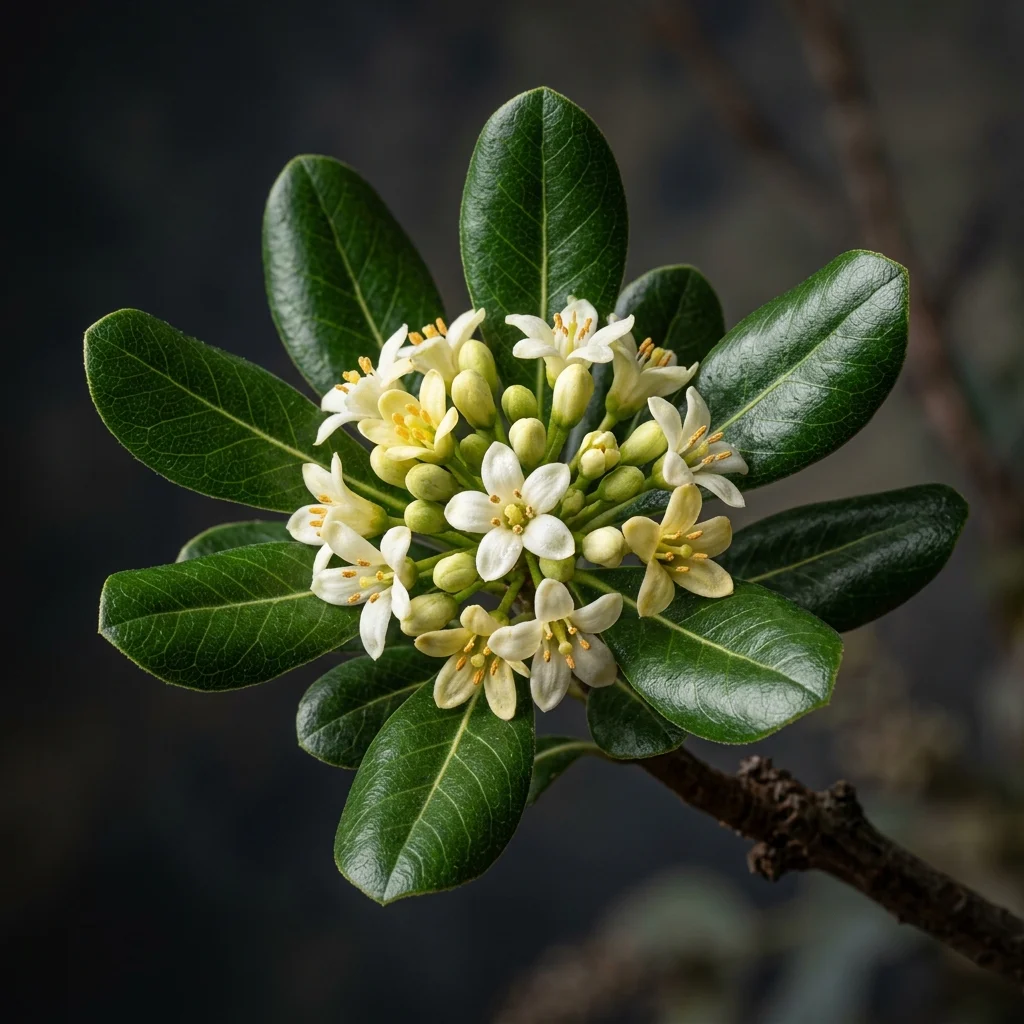
Pittosporum (Pittosporum tobira), commonly known as Mock Orange or Japanese Pittosporum, is a highly popular, exceptionally fragrant evergreen shrub native to the coastal scrub of Japan, Korea, and China. Famed for its highly fragrant, starry white flowers that mature to a creamy-yellow, it fills late spring gardens with a sweet, orange-blossom aroma. Botanically, it features thick, leathery, dark-green leaves characterized by slightly recurved (downward-rolling) margins, which protect the leaf stomata from dry winds and ocean salt spray. TOXICITY WARNING: Pittosporum contains saponins in its leaves and red seeds, which are mildly toxic to pets, causing drooling and vomiting if ingested.





How to Identify Pittosporum
Identify Pittosporum (Pittosporum tobira) immediately by its distinctive leaf arrangements, wood structures, and flowers. Recognizing its definitive visual traits is key to distinguishing it from other similar species.
-
✔
Distinctive Features: Thick, leathery obovate leaves arranged in whorls, featuring glossy dark-green surfaces and slightly recurved (rolled down) edges, bearing highly aromatic starry white-to-yellow spring flowers.
-
✔
Typical Coloration: Deep glossy emerald-green leaves, starry pure white flowers that age to a soft cream-yellow, and woody brown stems.
-
✔
Potential Confusions: Sometimes confused with Mock Orange (Philadelphus) due to the similar common name and flower scent, but Japanese Pittosporum is strictly evergreen with thick leathery leaves, while Philadelphus is deciduous with thin leaves.
Complete Care & Cultivation Guide
Follow our detailed scientific care guide to keep your Pittosporum thriving and gorgeous all year round.
Frequently Asked Questions
Why are my Mock Orange (Pittosporum) leaves curling downwards?
Slight downward curling (recurving) is a natural botanical trait of Pittosporum tobira. This adaptation helps the plant conserve water and protect itself from coastal salt winds.
Is Pittosporum toxic to cats and dogs?
Yes. Pittosporum tobira leaves and red seeds contain toxic saponins. Ingestion can cause gastrointestinal distress, drooling, vomiting, and diarrhea in dogs and cats.
Does Japanese Pittosporum have a strong fragrance?
Yes! Its spring blossoms release an exceptionally sweet, heavy, orange-blossom scent that can be detected from yards away, making it a highly popular garden shrub.
Can I grow Pittosporum in heavy shade?
It will survive, but it will grow thin, loose, and leggy, and produce very few flowers. For a dense hedge and abundant fragrant blooms, plant in full sun or partial shade.