Oleaster Care & Identification Guide
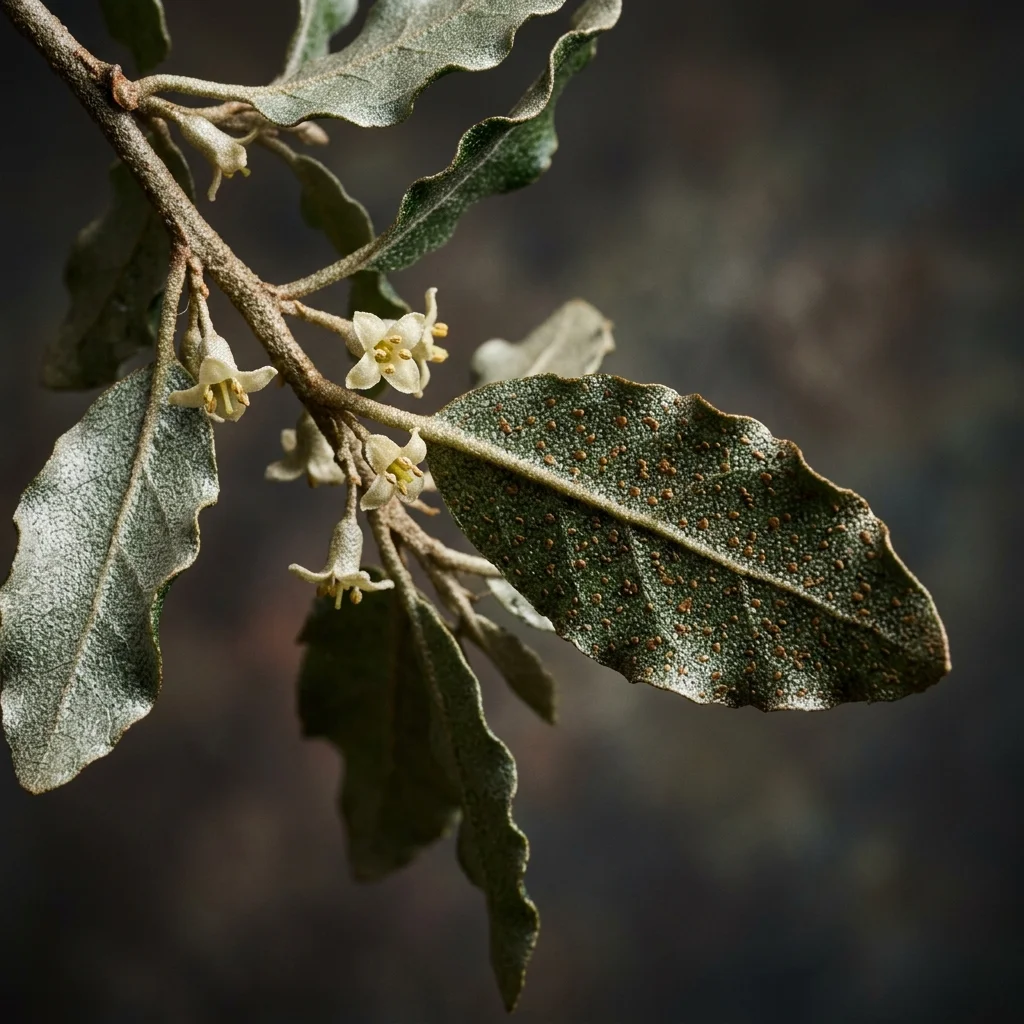
Oleaster (Elaeagnus pungens), commonly known as Thorny Elaeagnus or Silverthorn, is an incredibly robust, fast-growing evergreen shrub native to the hillsides of East Asia. Highly valued for its extreme resilience and dense barrier habit, it features thick, olive-green leaves with beautifully wavy edges, characterized by silvery-scaled undersides speckled with prominent, rust-colored bronze dots. Botanically, it possesses excellent nitrogen-fixing root systems that enrich poor, depleted soils. In autumn, it produces inconspicuous, cream-colored flowers that release a wonderfully sweet, gardenia-like scent, followed by small red drupes that are highly prized by birds.




How to Identify Oleaster
Identify Oleaster (Elaeagnus pungens) immediately by its distinctive leaf arrangements, wood structures, and flowers. Recognizing its definitive visual traits is key to distinguishing it from other similar species.
-
✔
Distinctive Features: Wavy-edged, thick leathery green leaves with metallic silver undersides covered in brown bronze scales, with thorny lower branches and sweet-scented cream winter flowers.
-
✔
Typical Coloration: Wavy olive-green leaves, metallic silver-bronze undersides, brownish scaly twigs, tiny cream blossoms, and red-bronze speckled drupes.
-
✔
Potential Confusions: Can be confused with Russian Olive (Elaeagnus angustifolia), but Oleaster is strictly evergreen with much broader, thicker, wavy-edged leaves, and is far more shade-tolerant.
Complete Care & Cultivation Guide
Follow our detailed scientific care guide to keep your Oleaster thriving and gorgeous all year round.
Frequently Asked Questions
Why does my Oleaster have brown spots on the underside of its leaves?
This is completely normal! The brown dots are specialized bronze scales that help the plant regulate water loss and absorb air nutrients. They are a signature botanical feature of Elaeagnus pungens.
Are the berries of Thorny Elaeagnus (Oleaster) toxic?
No, they are completely non-toxic and edible. When fully ripe in spring, the red-speckled drupes are tart and sweet, and are highly loved by garden birds and wildlife.
How fast does Oleaster grow?
It is an exceptionally fast grower, often producing shoots up to 3 to 4 feet in a single season. This makes it an outstanding choice for rapid privacy screens or windbreaks.
Can I plant Oleaster in heavy clay soil?
Yes! Unlike many other drought-tolerant shrubs, Oleaster is highly adaptable and can grow in heavy clay soil, provided the planting spot is not constantly sitting in pooled water.