Myrtle Care & Identification Guide
Myrtle (Myrtus communis), specifically Common Myrtle or True Myrtle, is a highly elegant, evergreen shrub native to the dry woodlands and scrub of the Mediterranean basin. Deeply steeped in history and Greek mythology, it was revered as the sacred plant of Aphrodite (Venus) and symbol of pure love and peace. Botanically, it features highly glossy, dark green lance-like leaves that release a refreshing, spicy-aromatic scent when crushed. In midsummer, it produces an abundance of delicate, starry white flowers packed with dozens of exceptionally long, elegant stamens, followed by dark blue-purple berries that attract wildlife.





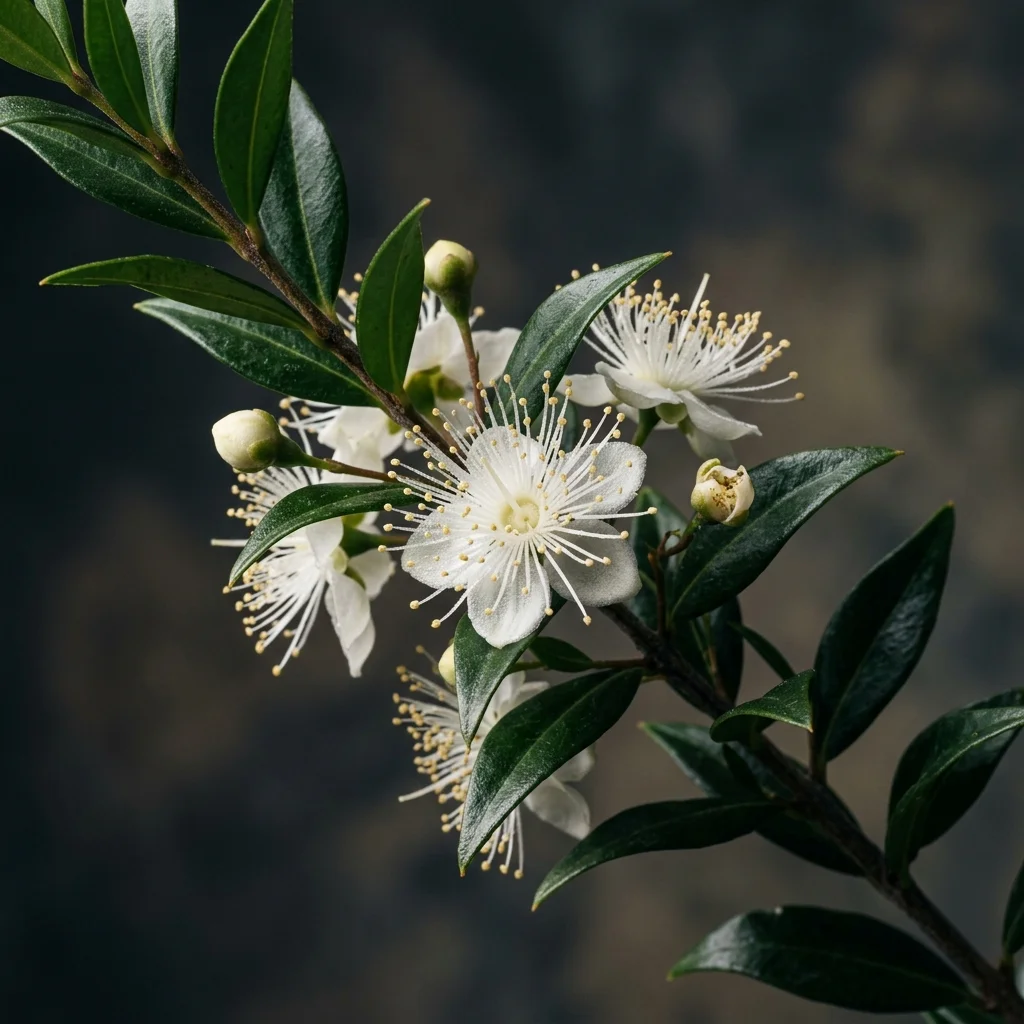
How to Identify Myrtle
Identify Myrtle (Myrtus communis) immediately by its distinctive leaf arrangements, wood structures, and flowers. Recognizing its definitive visual traits is key to distinguishing it from other similar species.
-
✔
Distinctive Features: Glossy, pointed dark green leaves growing oppositely on reddish stems, bearing delicate starry white flowers filled with prominent long feathery stamens, followed by small blue-black berries.
-
✔
Typical Coloration: Rich glossy dark green leaves, reddish twigs, brilliant pure white petals, and dark blue-purple fruit berries.
-
✔
Potential Confusions: Often confused with Wax Myrtle (Morella cerifera) or Crepe Myrtle (Lagerstroemia), but True Myrtle is distinguished by its small, opposite, highly aromatic leaves and its signature multi-stamened Mediterranean white flowers.
Complete Care & Cultivation Guide
Follow our detailed scientific care guide to keep your Myrtle thriving and gorgeous all year round.
Frequently Asked Questions
Why is Myrtle historically associated with weddings?
In ancient Greece and Rome, Myrtle was sacred to Venus, the goddess of love, symbolizing fertility and marital fidelity. It remains a European tradition to include a sprig of Myrtle in royal wedding bouquets.
Is Myrtle toxic to dogs and cats?
Yes. Myrtus communis leaves contain aromatic essential oils (e.g., eucalyptol) that can cause vomiting, diarrhea, and mild lethargy if ingested in significant quantities by household pets.
Are the berries of True Myrtle edible?
Yes. The dark blue-purple berries are edible, featuring a sweet, juniper-like, spicy flavor. In Sardinia and Corsica, they are widely harvested to produce the famous digestive liqueur called 'Mirto.'
Can I grow Myrtle as an indoor plant?
Yes, it is excellent for cool sunrooms or bright windowsills. Ensure it gets plenty of direct sunlight, moderate watering, and occasional misting to maintain humidity and prevent spider mites.