Leatherleaf Care & Identification Guide
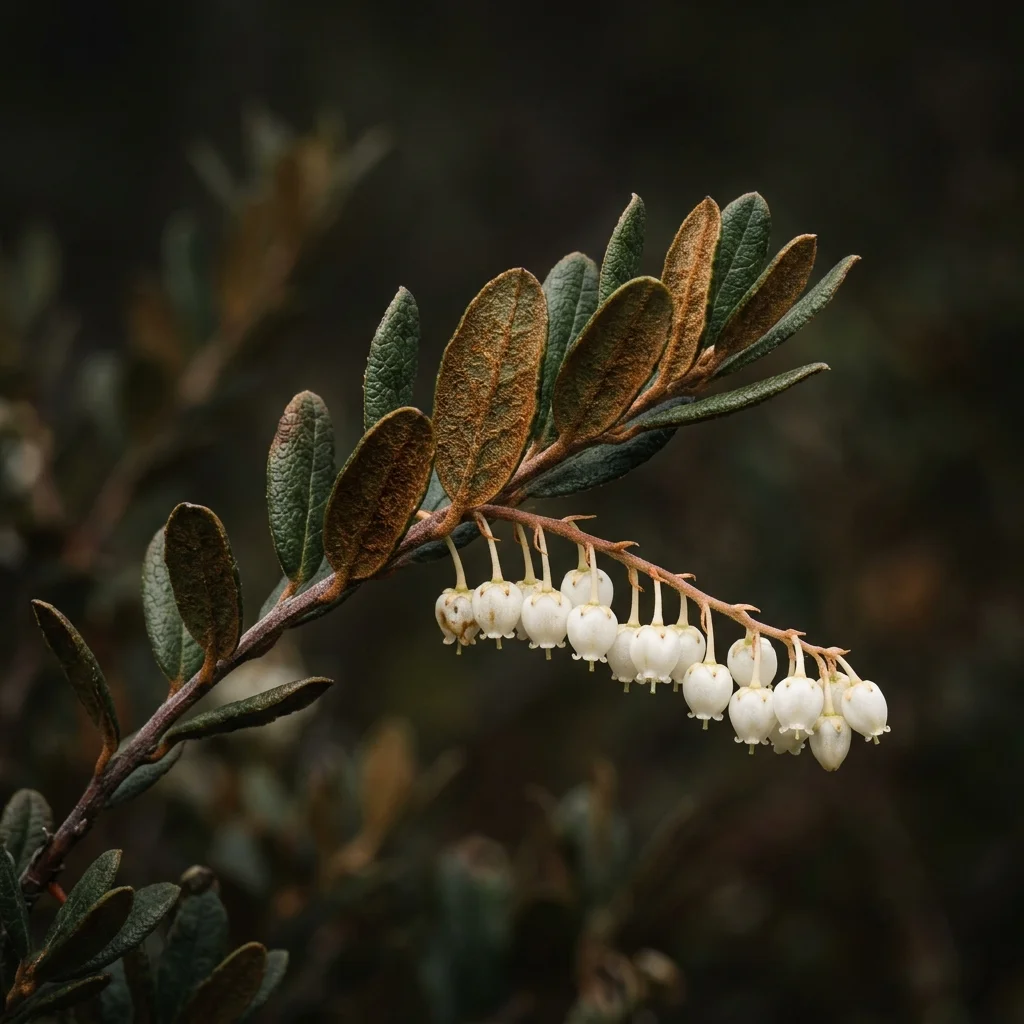
Leatherleaf (Chamaedaphne calyculata) is an incredibly tough, highly specialized dwarf evergreen shrub native to the extremely cold, acidic peat bogs and tundra wetlands of the circumboreal northern hemisphere. Famed for its ability to survive in waterlogged, nutrient-poor sphagnum moss layers where other woody plants drown, it features thick, leathery oblong leaves covered in a dense coating of rusty-brown scales on the undersides. This unique scale layer acts as a powerful physiological barrier, preventing dehydration caused by harsh, freezing arctic winds. In early spring, it produces a spectacular, one-sided row of tiny white bell flowers nodding gracefully along the stems.





How to Identify Leatherleaf
Identify Leatherleaf (Chamaedaphne calyculata) immediately by its distinctive leaf arrangements, wood structures, and flowers. Recognizing its definitive visual traits is key to distinguishing it from other similar species.
-
✔
Distinctive Features: A nodding, one-sided row of tiny, white urn-shaped flowers along the stem ends, growing over thick, leathery oblong leaves with distinctive rusty-scaly undersides.
-
✔
Typical Coloration: Pure white tiny bell blossoms, leathery deep olive-green leaves with bronze-rusty brown scaly undersides, and dark gray twigs.
-
✔
Potential Confusions: Can be confused with Cassandra or bog rosemary (Andromeda) due to the similar bog habitat and bell-shaped flowers, but Leatherleaf is easily distinguished by its thick leathery leaves with rusty-scaly undersides.
Complete Care & Cultivation Guide
Follow our detailed scientific care guide to keep your Leatherleaf thriving and gorgeous all year round.
Frequently Asked Questions
Why does Leatherleaf grow a row of flowers on only one side of the stem?
This is a botanical trait called 'secund.' The one-sided nodding row of white bell flowers helps protect the blossoms from cold winds and makes them easily accessible to early spring bumblebees.
Is Leatherleaf safe for cats and dogs?
Yes! Chamaedaphne calyculata is completely non-toxic to dogs, cats, and humans. It is an exceptionally safe, tough plant for pet-friendly water gardens.
What is the purpose of the rusty scales on the leaves?
The tiny scales on the undersides of the leaves act as an insulating barrier that reduces water loss caused by freezing arctic winds, allowing this evergreen to survive cold winters in frozen tundra bog soils.
Can I grow Leatherleaf in regular garden soil?
No, regular garden soil is too high in nutrients, too dry, and not acidic enough. It will wither and die. It must be grown in saturated sphagnum peat bog conditions.