Lavender Cotton Care & Identification Guide
Lavender Cotton (Santolina chamaecyparissus) is a highly ornamental, Mediterranean evergreen shrub famous for its low, dense, spreading mound of highly aromatic silver-gray foliage. The leaves are small, finely divided, and look like miniature dense coral. In midsummer, it is covered in a spectacular display of bright yellow, button-like flower heads on slender stems. Historically, it has been used in European formal knot gardens. The foliage contains high levels of Artemisia ketone, which gives it a powerful camphor-like scent that naturally repels moths, fleas, and garden pests.





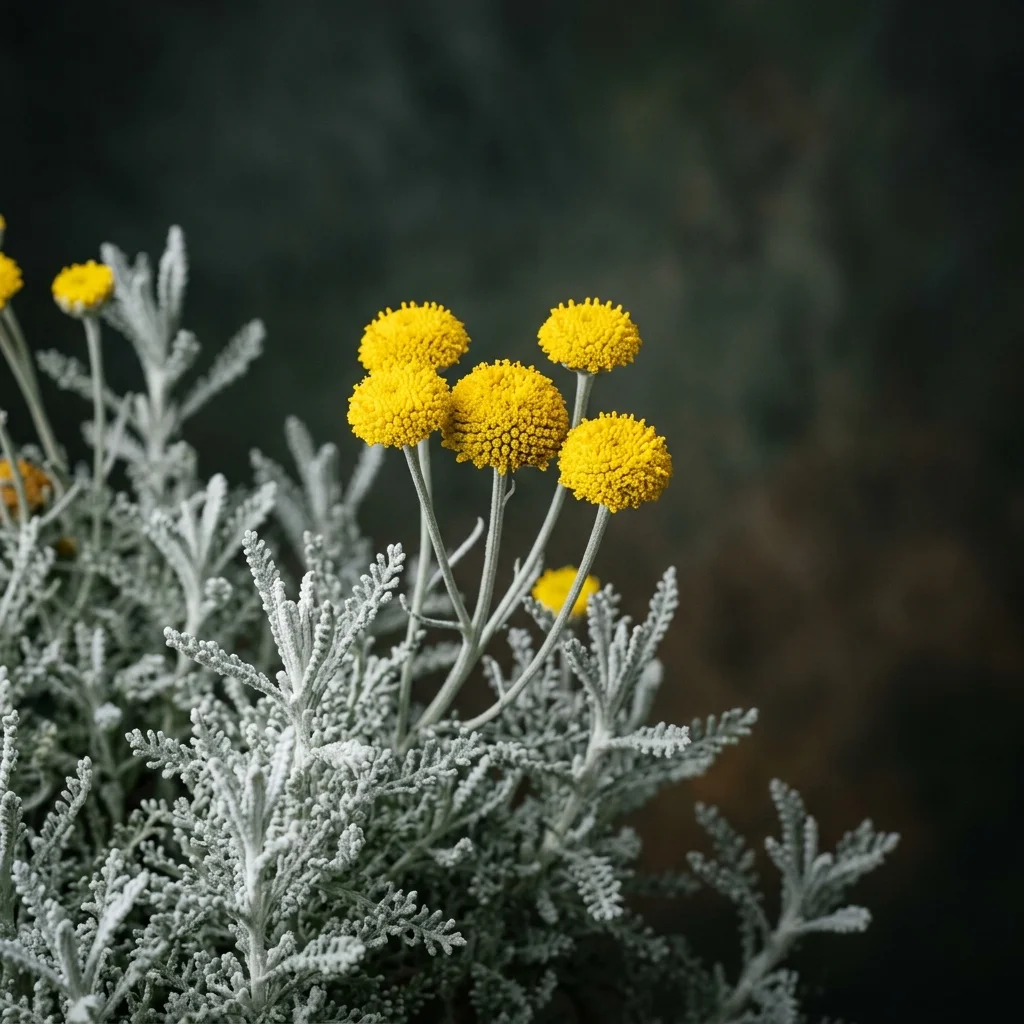
How to Identify Lavender Cotton
Identify Lavender Cotton (Santolina chamaecyparissus) immediately by its distinctive leaf arrangements, wood structures, and flowers. Recognizing its definitive visual traits is key to distinguishing it from other similar species.
-
✔
Distinctive Features: Finely textured, comb-like silvery-gray leaves on dense woody stems, topped with bright, golf-ball-shaped yellow flower buttons lacking outer ray petals in midsummer.
-
✔
Typical Coloration: Shimmering silvery-gray foliage, woody light brown stems, and extremely vibrant sunshine-yellow button flowers.
-
✔
Potential Confusions: Often confused with French Lavender (Lavandula dentata) due to similar foliage texture and color, but easily distinguished by its bright yellow, round button-like flowers instead of blue-purple flower spikes.
Complete Care & Cultivation Guide
Follow our detailed scientific care guide to keep your Lavender Cotton thriving and gorgeous all year round.
Frequently Asked Questions
Why is my Lavender Cotton turning green and falling apart?
This happens when the plant receives too much water, excessive fertilizer, or is planted in too much shade. Move it to a full-sun location and reduce watering to restore its compact silver form.
Is Lavender Cotton toxic to dogs and cats?
Yes. Santolina chamaecyparissus contains volatile essential oils that can cause salivation, vomiting, and mild skin irritation if ingested or rubbed against in large quantities by pets.
Can I grow Lavender Cotton as a hedge?
Yes, it is excellent for low, formal hedges (under 2 feet tall) or border edgers, especially in knot gardens. Prune in early spring to keep it tight and dense.
Does Lavender Cotton survive freezing winters?
It is hardy down to USDA zone 6. In colder zones, it must be grown in pots and brought indoors, or heavily mulched with dry pine needles to protect the crown from freezing moisture.