Kalmia Care & Identification Guide
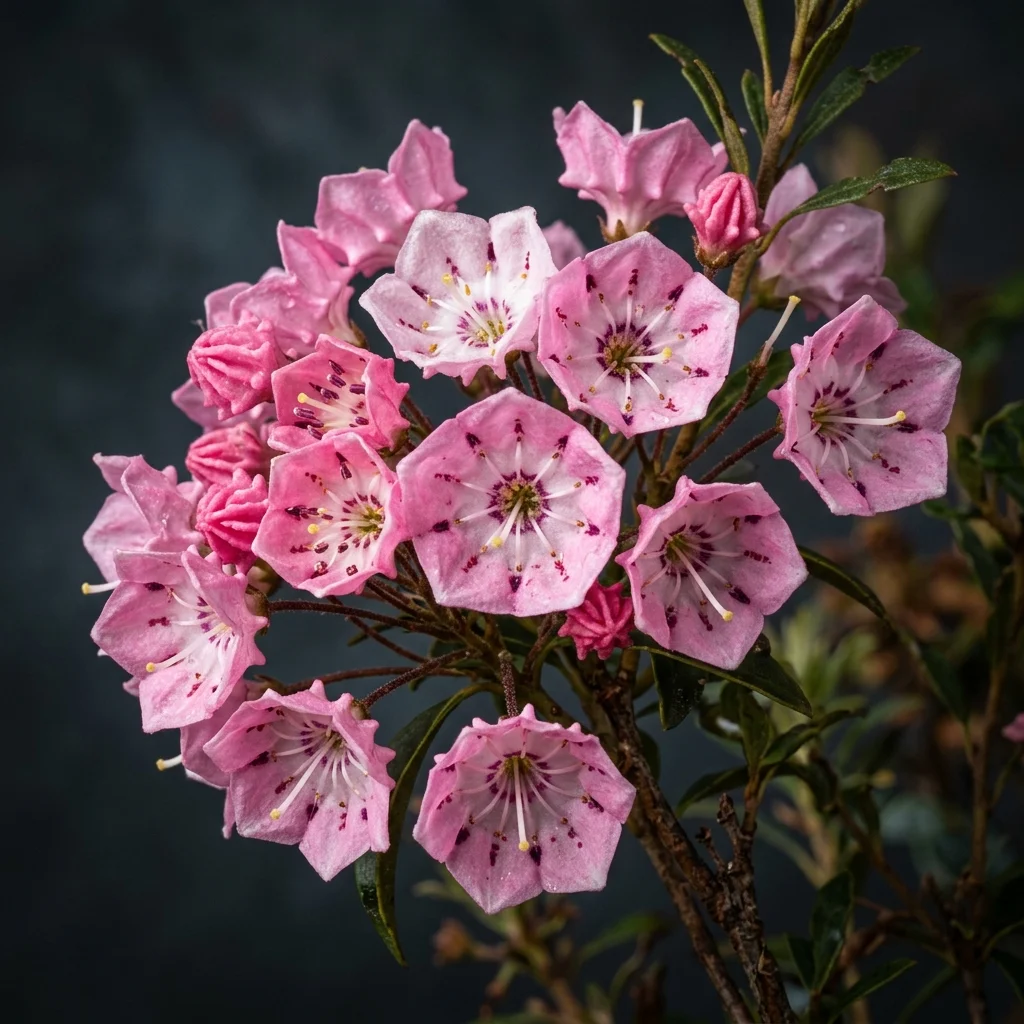
Kalmia (Kalmia latifolia), commonly known as the Mountain Laurel or Calico Bush, is a highly spectacular, evergreen woodland shrub native to the rocky, acidic mountain forests of eastern North America. Celebrated for its unique, geometric pink blossoms with distinctive dark purple pocket markings, it features one of the most sophisticated biomechanical pollination mechanisms in the plant kingdom: its ten stamens are held under high tension in small pockets of the flower cup, acting like miniature spring-loaded catapults that violently snap upward when triggered by a heavy insect, showering the pollinator's back with pollen. TOXICITY WARNING: Mountain Laurel is highly toxic. It contains grayanotoxins and arbutin in all tissues, which can cause severe cardiac arrhythmia, respiratory distress, and death if ingested by pets or livestock.





How to Identify Kalmia
Identify Kalmia (Kalmia latifolia) immediately by its distinctive leaf arrangements, wood structures, and flowers. Recognizing its definitive visual traits is key to distinguishing it from other similar species.
-
✔
Distinctive Features: Dense, rounded clusters of geometric, cup-shaped pink-and-white blossoms with unique purple pocket markings, set against thick, glossy dark-green lanceolate leaves.
-
✔
Typical Coloration: Geometric pale pink to white cup-like blossoms with wine-red internal spots, glossy olive-green leaves, and gnarled brownish stems.
-
✔
Potential Confusions: Commonly confused with Rhododendron or Azalea due to the similar glossy leaves and forest habitat, but easily distinguished by its completely unique, geometric star-cup flowers and spring-loaded catapult stamens.
Complete Care & Cultivation Guide
Follow our detailed scientific care guide to keep your Kalmia thriving and gorgeous all year round.
Frequently Asked Questions
How does the catapult pollination of Mountain Laurel work?
Its ten stamens are tucked into small pockets on the petals under high tension. When a heavy bee lands, the tension is released, and the stamen snaps up like a catapult, firing pollen onto the bee's back.
Is Mountain Laurel toxic to dogs and cats?
Yes! Kalmia latifolia is highly toxic to cats, dogs, and horses. All parts of the plant contain grayanotoxins, which cause severe cardiac depression, vomiting, muscle weakness, and cardiac arrest.
Can I grow Mountain Laurel in alkaline soil?
No, it will develop severe chlorosis (leaves turning yellow while veins stay green) and die. It requires strongly acidic soil with a pH below 5.5 to absorb essential iron and nutrients.
What is the cultural history of Mountain Laurel?
It was first recorded in North America in 1624. Its wood is incredibly dense, hard, and heavy, and was traditionally used by Native Americans and early settlers to carve spoons, pipes, and tool handles.