English Holly Care & Identification Guide
The magnificent English Holly (Ilex aquifolium) is an iconic, structural evergreen shrub celebrated for its extremely glossy, spiny-toothed leaves and brilliant clusters of scarlet-red waxy berries. Native to cool temperate moist woodlands of western Europe, this highly elegant woody perennial is a classic garden showstopper. **WARNING: All parts of English Holly, particularly the attractive red berries, contain highly toxic saponins and wintergreen-like alkaloids (Illicin)**, which cause severe vomiting and dehydration in pets and children. English Holly is dioecious, requiring both a male and a female plant to set berries.





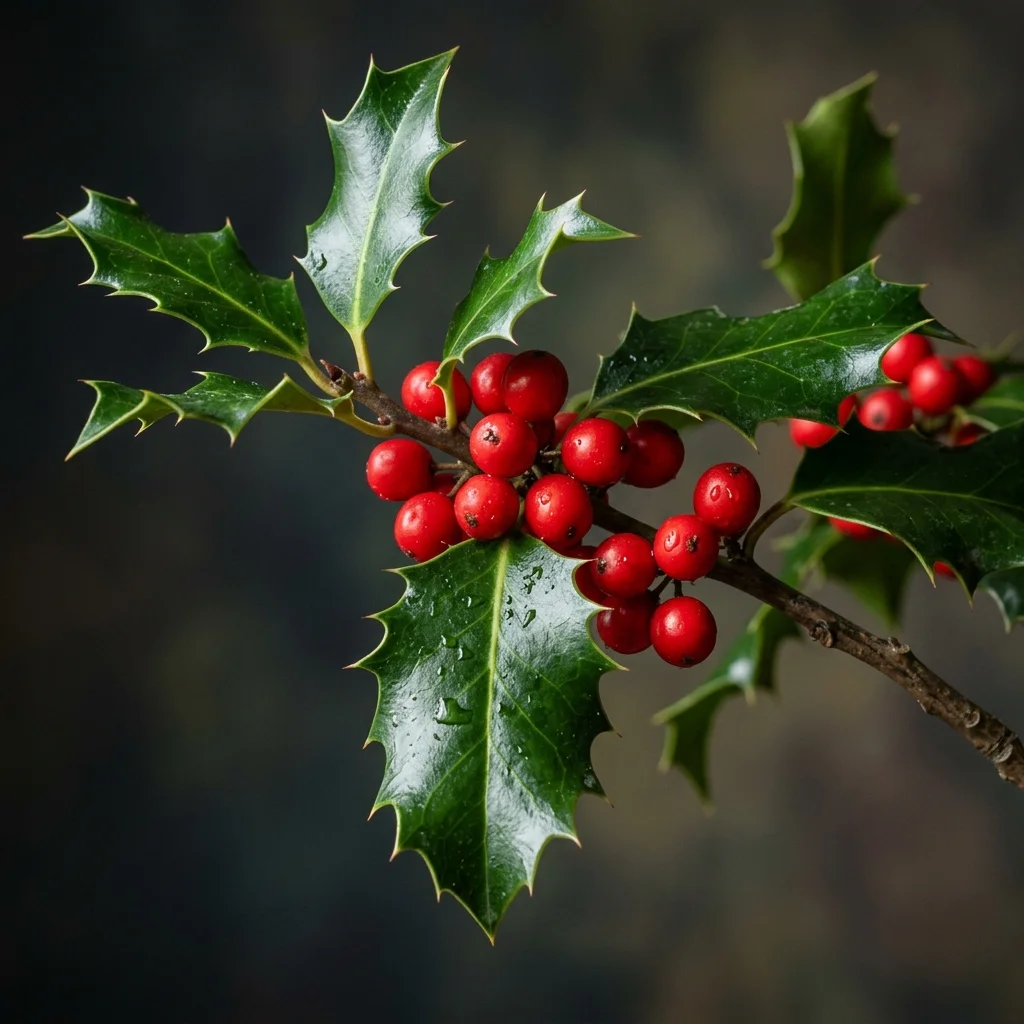
How to Identify English Holly
Identify English Holly (Ilex aquifolium) immediately by its distinctive leaf arrangements, wood structures, and flowers. Recognizing its definitive visual traits is key to distinguishing it from other similar species.
-
✔
Distinctive Features: Extremely glossy, thick evergreen leaves with sharp, wavy spiny-toothed margins, clustered around rigid woody stems.
-
✔
Typical Coloration: Glossy dark olive-green leaves with bright scarlet-red berries, and tiny four-petaled white early-summer flowers.
-
✔
Potential Confusions: Sometimes confused with Osmanthus heterophyllus (False Holly), but distinguished by its alternate leaf arrangement rather than opposite, and much glossier waxy thick leaves.
Complete Care & Cultivation Guide
Follow our detailed scientific care guide to keep your English Holly thriving and gorgeous all year round.
Frequently Asked Questions
Why is my English Holly not producing any red berries?
English Holly is dioecious (unisexual). You must have a female plant to produce berries, and there must be a male holly plant nearby (within 50 feet) for wind/insect pollination during early-summer flowering.
Is English Holly toxic to cats and dogs?
Yes! All parts, especially the bright red waxy berries, contain toxic saponins, methylxanthines, and the alkaloid illicin. Ingestion of 10-20 berries by pets causes severe vomiting, diarrhea, extreme drooling, and depression.
How do I distinguish English Holly from False Holly?
Look at the leaf nodes: English Holly (Ilex aquifolium) has an alternate leaf arrangement (one leaf per node). False Holly (Osmanthus heterophyllus) has an opposite leaf arrangement (two leaves facing each other at each node).
When is the best time to prune my Holly shrub?
Always prune in late winter or early spring before active growth starts. Pruning in late winter also allows you to harvest the gorgeous berry-laden stems for winter holiday decorations.