Heather Care & Identification Guide
Heather (Calluna vulgaris), commonly known as Scotch Heather or Ling, is the highly iconic, slow-growing dwarf evergreen shrub native to the wild, windy peatlands and mountainous moors of Europe and Asia Minor. Celebrating as the rugged soul of the Scottish Highlands, it dominates acidic, nutrient-deficient sandy soils. Botanically, it utilizes a highly sophisticated physiological strategy where its colorful, petal-like sepals (calyx) act as the primary visual display, hiding the tiny true petals inside. Even after the flowers dry in autumn, the rigid sepals remain colorful and intact, forming a natural protective shield that minimizes dehydration caused by freezing alpine winds.





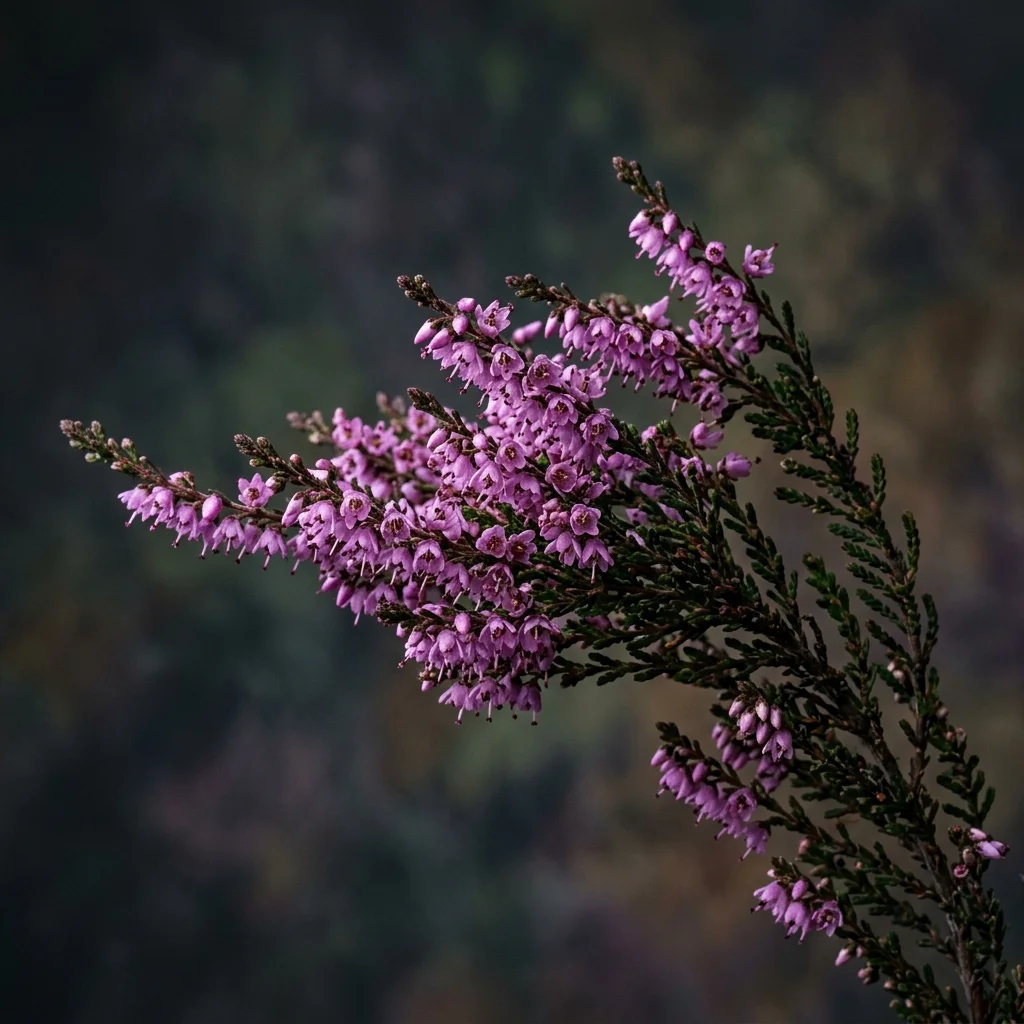
How to Identify Heather
Identify Heather (Calluna vulgaris) immediately by its distinctive leaf arrangements, wood structures, and flowers. Recognizing its definitive visual traits is key to distinguishing it from other similar species.
-
✔
Distinctive Features: Wiry, creeping stems packed with dense, overlapping tiny scale-like evergreen leaves, bearing highly dense vertical spikes of small, bell-shaped purplish-pink flowers.
-
✔
Typical Coloration: Spectacular purplish-pink to lavender blossoms, small dull-green leaves, and copper-brown wiry branches.
-
✔
Potential Confusions: Commonly confused with Heath (Erica) species due to similar heather-like appearance, but Calluna has tiny, scale-like leaves that overlap in 4 rows, whereas Erica has needle-like leaves arranged in whorls.
Complete Care & Cultivation Guide
Follow our detailed scientific care guide to keep your Heather thriving and gorgeous all year round.
Frequently Asked Questions
Why is my Heather not blooming?
The most common causes are insufficient sunlight (needs full sun) or a lack of pruning. Shear back the spent flower spikes in early spring to stimulate new blooming wood.
Is Heather toxic to cats and dogs?
No! Calluna vulgaris is completely non-toxic to dogs, cats, and humans. It is an exceptionally safe, tough plant for pet-friendly rock gardens.
How does Heather tolerate acidic, nutrient-poor soils?
It has an ericoid mycorrhizal association – symbiotic fungi in its roots that help it absorb vital nutrients from poor, acidic peat soils where other plants starve.
Can I grow Heather in alkaline soil?
No, it will develop severe chlorosis (leaves turning yellow while veins stay green) and die. It requires strongly acidic soil with a pH below 5.5 to absorb essential iron.