Hawthorn Shrub Care & Identification Guide
The Hawthorn Shrub (Crataegus monogyna), commonly known as Common Hawthorn or Quickthorn, is a highly rugged, long-lived deciduous shrub native to Europe, northwest Africa, and western Asia. Globally celebrated for forming the classic, impenetrable boundaries of the European countryside, it features branches heavily armed with extremely sharp, stiff woody thorns that grow up to 2.5 cm long. Historically, it was named 'Quickthorn' due to its fast growth and defensive capabilities, which made it the primary choice for agricultural barriers. In spring, it produces a spectacular, fragrant blanket of pinkish-white flowers, followed in autumn by clusters of deep red haw berries that are valuable for wildlife.





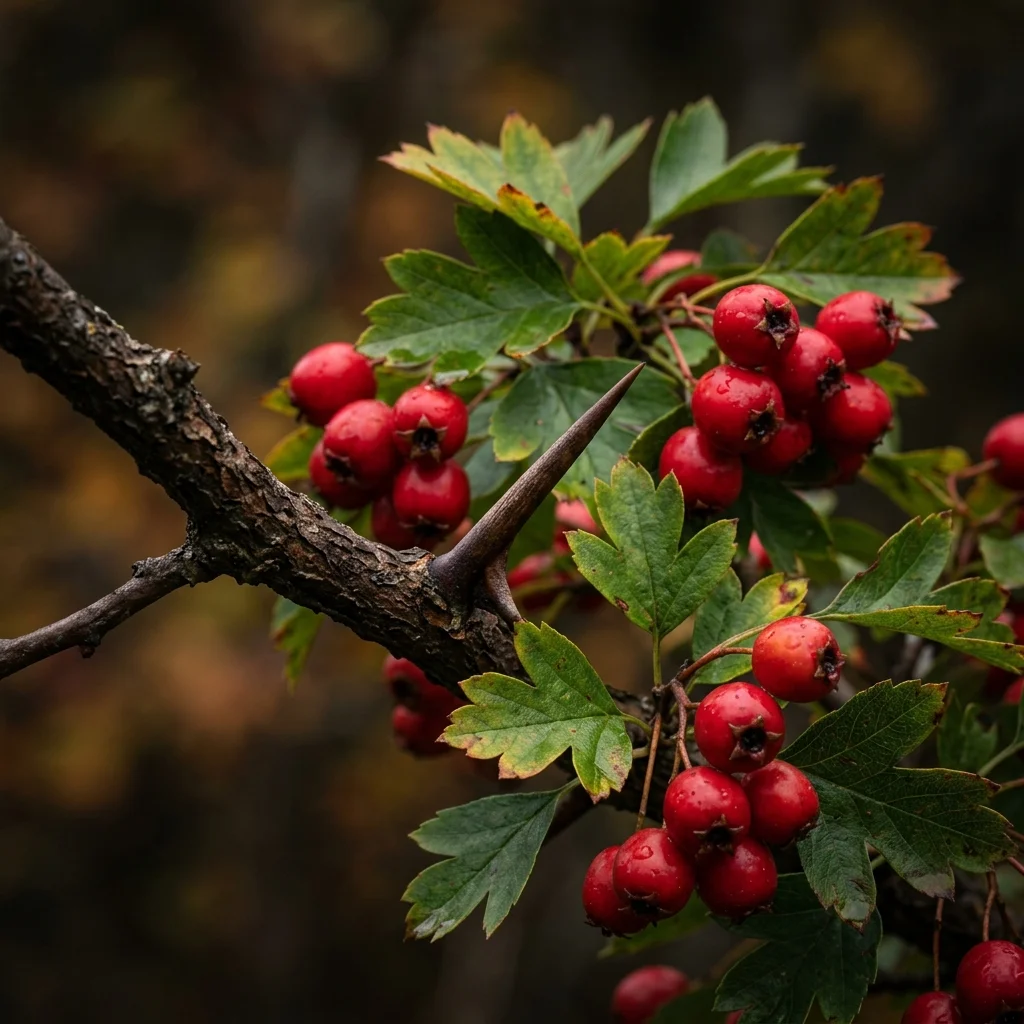
How to Identify Hawthorn Shrub
Identify Hawthorn Shrub (Crataegus monogyna) immediately by its distinctive leaf arrangements, wood structures, and flowers. Recognizing its definitive visual traits is key to distinguishing it from other similar species.
-
✔
Distinctive Features: Dense, gnarled branches armed with sharp, stiff woody thorns up to 2.5 cm long, carrying deeply lobed green leaves and heavy clusters of round red haw berries.
-
✔
Typical Coloration: Deep red haw berries, pinkish-white spring blossoms, deeply lobed green leaves, and dark charcoal-gray bark.
-
✔
Potential Confusions: Sometimes superficially confused with Blackthorn (Prunus spinosa) due to similar thorny hedges, but Hawthorn Shrub is easily distinguished by its lobed leaves and bright red berries (Blackthorn has simple leaves and blue sloe berries).
Complete Care & Cultivation Guide
Follow our detailed scientific care guide to keep your Hawthorn Shrub thriving and gorgeous all year round.
Frequently Asked Questions
Why was the Hawthorn historically called 'Quickthorn'?
Because of its fast growth and defensive capabilities. Early European farmers planted it as a 'quick' (living) hedge to contain livestock and protect fields.
Are Hawthorn berries safe for pets?
Yes! Crataegus monogyna berries (haws) are completely non-toxic to dogs, cats, and humans. They are widely harvested to make jams, jellies, and traditional herbal teas.
How long can a Hawthorn Shrub live?
Hawthorns are incredibly long-lived; some specimens in Europe are estimated to be over 500 years old, growing into beautiful gnarled trees with massive trunks.
Does Hawthorn tolerate strong winds?
Yes! Its dense, tough woody branches make it one of the absolute best windbreaks in cold northern climates, bending without breaking under strong winter winds.